Recipe for Peking Duck: Best Oven Method
A recipe for Peking duck at home requires blanching the duck in boiling water to tighten the skin, air-drying for 24 hours to achieve crispness, then roasting at high heat (425°F) for 1 hour. The key is the air-drying step—it removes moisture from the skin for that signature shatteringly crispy texture.
Soggy, flabby duck skin that tastes nothing like the crispy mahogany lacquer you get at Chinese restaurants. The disappointment of spending hours on a duck that looks pale and tastes greasy. Home cooks avoiding Peking duck because it seems impossible.
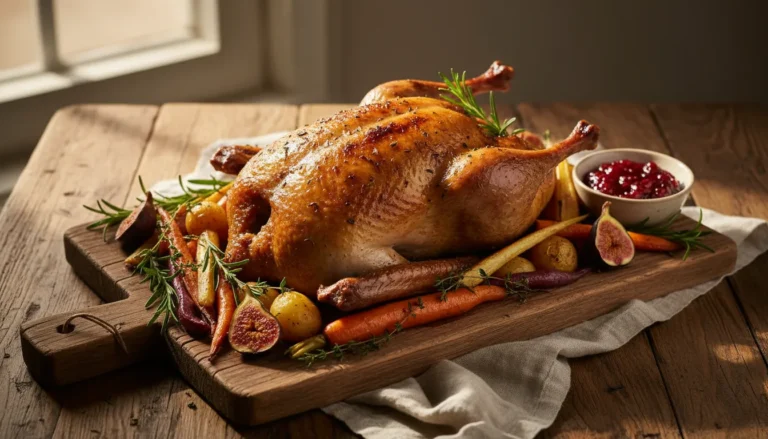
But restaurant-quality Peking duck with glass-crisp skin and succulent meat is absolutely achievable in your home oven. This recipe guides you through the authentic blanching and glazing techniques that Chinese chefs use.
The secret? Blanching tightens the skin, air-drying removes moisture, and maltose glaze creates that iconic mahogany color. For more poultry roasting fundamentals, explore our ultimate guide to cooking chicken techniques and tips.
Get ready to master one of the world’s most celebrated dishes.
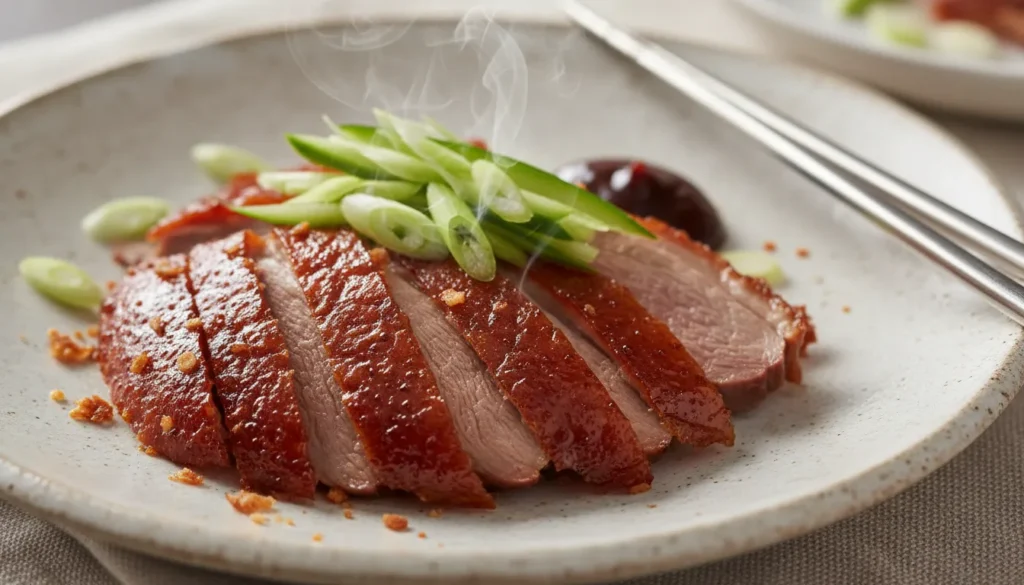
Why This Peking Duck Recipe Works
- Authentic Technique: Uses traditional blanching and air-drying methods
- Crispy Skin Guaranteed: Science-based approach to moisture removal
- Restaurant Results: Achieves that signature mahogany color and crackle
- Impressive Presentation: Perfect for special occasions and holidays
- Traditional Serving: Includes pancakes, scallions, and hoisin sauce
- Worth the Effort: The 24-hour process creates unforgettable results
Choosing the Best Duck
Whole Duck Selection: Look for a 4-5 lb Long Island (Pekin) duck. This breed has the right fat content and skin thickness for Peking duck. Avoid Muscovy or Moulard ducks—they’re leaner and won’t crisp the same way.
Fresh vs. Frozen: Fresh duck is vastly superior for this recipe. The skin is drier and crisps better. If using frozen, thaw in the refrigerator for 48 hours and pat extremely dry before starting.
Quality Indicators: The skin should be intact with no tears or bruising. Look for a thick, even layer of yellow fat under the skin—this renders during roasting and bastes the meat.
Safety First: Never wash the duck. According to the USDA poultry safety guidelines, washing spreads bacteria across your kitchen. Proper cooking to 165°F eliminates all pathogens.
Ingredients List
For the Duck:
| Quantity | Ingredient |
|---|---|
| 1 | Whole Duck (4-5 lbs, giblets removed) |
| 8 cups | Water (for blanching) |
| 2 tbsp | White Vinegar (for blanching) |
| 1 tbsp | Maltose or Honey |
| 2 tbsp | Shaoxing Wine (or dry sherry) |
| 1 tbsp | Soy Sauce |
| 1 tsp | Five-Spice Powder |
| 2 inches | Fresh Ginger (sliced) |
| 3 | Scallions (cut into 3-inch pieces) |
For Serving:
| Quantity | Ingredient |
|---|---|
| 12-16 | Mandarin Pancakes (or flour tortillas) |
| 6 | Scallions (julienned into 2-inch strips) |
| 1 | Cucumber (julienned) |
| ½ cup | Hoisin Sauce |
Ingredients Notes
The Maltose: This is the secret to authentic Peking duck’s glossy mahogany finish. Maltose is a thick, sticky sugar syrup sold in Asian markets. Honey works as a substitute but won’t create quite the same deep color.
The Shaoxing Wine: Chinese cooking wine adds complexity. Dry sherry is an acceptable substitute. Don’t use cooking wine from regular grocery stores—it’s loaded with salt.
The Five-Spice Powder: Traditional blend of star anise, cloves, cinnamon, Sichuan pepper, and fennel. This goes inside the cavity to flavor the meat from within.
The Pancakes: Authentic Mandarin pancakes are thin, steamed wrappers. Asian markets sell them frozen. In a pinch, small flour tortillas work but aren’t traditional.
Step-by-Step Instructions
Recipe Card
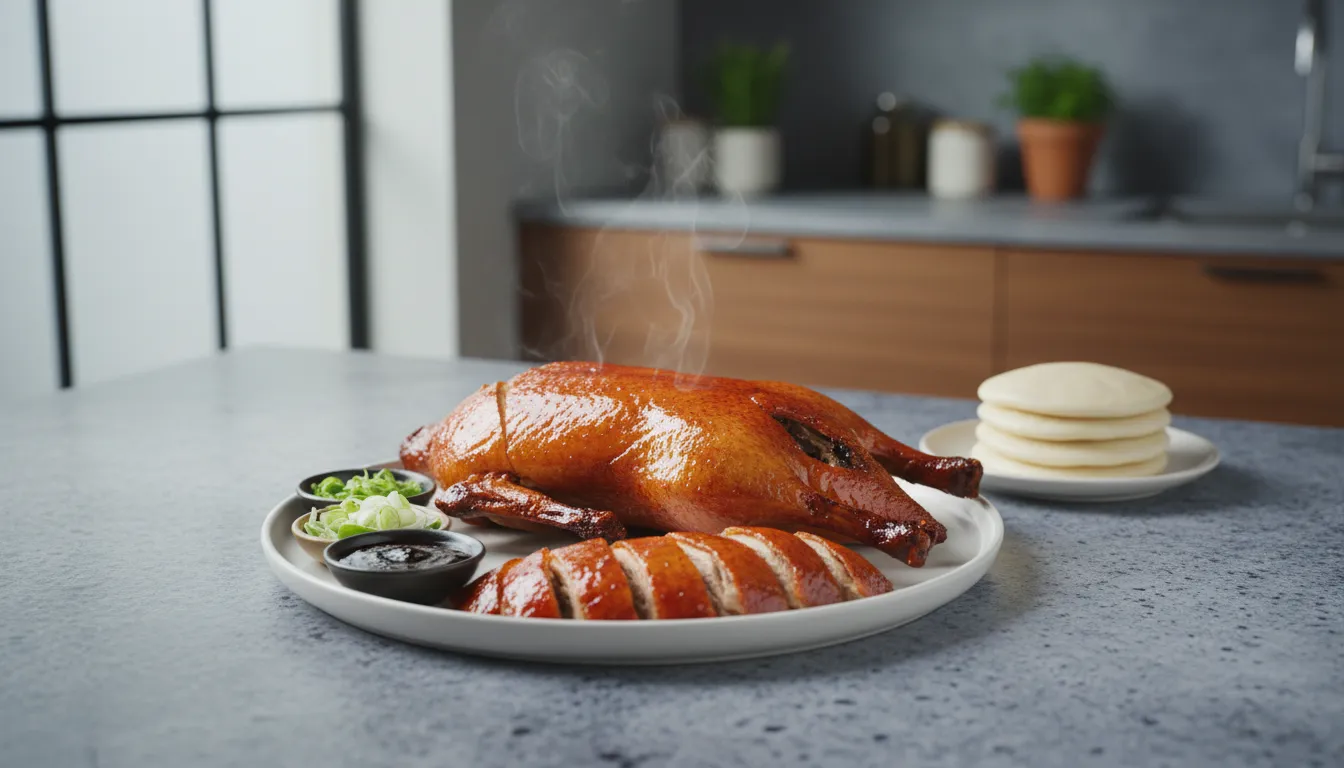
🛠 Equipment Needed
- Large pot for blanching
- wire rack
- roasting pan
- instant-read thermometer
- sharp carving knife
- basting brush
Day 1: Blanching and Glazing
Remove giblets and neck from the cavity. Trim excess fat from the opening. Pat the duck completely dry inside and out.
Bring 8 cups water and vinegar to a boil in a large pot. The vinegar helps tighten the skin.
Blanch the duck: Hold the duck over the sink using a large meat fork or hook through the neck cavity. Ladle boiling water over the entire duck, rotating to cover all sides. Do this for 2-3 minutes until the skin tightens and turns slightly opaque. This step is critical—it tightens the skin and opens the pores for fat to render.
Pat dry immediately with paper towels. The skin should feel firm and tight.
Stuff the cavity with ginger slices and scallion pieces. These aromatics flavor the meat from inside.
Make the glaze: Mix maltose (or honey), Shaoxing wine, and soy sauce in a small bowl. Microwave for 20 seconds to thin the maltose.
Brush the entire duck with the glaze, coating evenly. Pay special attention to the breast.
Air-Drying (Most Critical Step)
Place duck on a wire rack set over a baking sheet or roasting pan. Do not cover.
Refrigerate uncovered for 24 hours. The cold, dry air removes surface moisture from the skin. This is non-negotiable for crispy skin—don’t skip or shorten this step.
The skin should feel papery and dry to the touch after 24 hours. If it still feels moist, leave it another 12 hours.
Day 2: Roasting
Remove duck from refrigerator 30 minutes before roasting. Let it come to room temperature.
Preheat oven to 425°F. Place rack in the middle position.
Place duck breast-side up on a wire rack in a roasting pan. The rack elevates the duck so air circulates underneath.
Roast for 30 minutes without opening the oven. The skin will start to turn golden.
Reduce heat to 375°F and roast another 30-40 minutes, until the skin is deep mahogany and crackling-crisp. Total roasting time is about 1 hour 10 minutes.
Baste once halfway through the second roasting period with pan drippings.
The Doneness Test
Insert an instant-read thermometer into the thickest part of the thigh without touching bone. It should read 165°F (74°C).
Visual check: The skin should be a deep, glossy brown and visibly crisp. When you tap it with a spoon, it should sound hollow.
Juices should run clear when you pierce the thigh, not pink or red.
Resting
Transfer duck to a cutting board and tent loosely with foil. Rest for 15 minutes before carving. This allows juices to redistribute.
Don’t skip resting—cutting immediately causes all the juices to run out.
How to Carve and Serve Peking Duck
Remove the crispy skin first: Using a sharp knife, carefully remove large sections of the crackling skin. Cut into 2×3 inch pieces. Arrange on a serving platter.
Carve the meat: Slice the breast meat thinly against the grain. Remove the leg quarters and separate drumsticks from thighs.
Traditional serving: Each person takes a pancake, spreads hoisin sauce, adds duck skin and meat, tops with scallions and cucumber, then rolls it up like a burrito.
Serve immediately while the skin is still crispy.
3 Secrets for Perfect Peking Duck
Secret #1: The 24-Hour Air-Dry Is Non-Negotiable – This is what separates crispy Peking duck from regular roast duck. The uncovered refrigeration removes surface moisture. Without it, the skin steams instead of crisps.
Secret #2: Blanching Before Air-Drying – The boiling water tightens the skin and opens pores so fat can render out during roasting. Skipping this step leaves you with flabby, greasy skin.
Secret #3: High Heat Start, Lower Heat Finish – Starting at 425°F crisps the skin fast. Reducing to 375°F ensures the meat cooks through without burning the skin.
Serving Suggestions
Traditional Presentation: Serve with steamed pancakes, julienned scallions and cucumber, and hoisin sauce. Let guests assemble their own wraps.
Duck Fried Rice: Use leftover meat and rendered fat to make incredible fried rice the next day.
Duck Soup: Simmer the carcass with ginger and scallions for rich duck broth.
Modern Twist: Serve sliced duck over Asian slaw or in lettuce cups.
Storage & Reheating
Refrigerator: Store carved duck in airtight containers for 2-3 days. Keep skin separate from meat—it stays crispier this way.
Freezer: Freeze meat (not skin) for 2 months. The crispy skin doesn’t freeze well.
Reheating Meat: Warm in a 325°F oven for 10 minutes with a splash of broth.
Re-Crisping Skin: Place skin on a wire rack and heat under the broiler for 1-2 minutes. Watch carefully—it burns quickly.
Frequently Asked Questions
Can I skip the air-drying step?
Not if you want authentic crispy skin. The 24-hour drying is what makes Peking duck different from regular roast duck. Without it, you’ll get soft, chewy skin.
My duck skin is burning but the meat isn’t done. What do I do?
Tent the duck with foil and reduce oven temperature to 350°F. Continue roasting until the thigh reaches 165°F.
Can I use an air fryer?
Not recommended. A whole duck is too large for most air fryers, and you need the oven’s even heat distribution for proper rendering.
Where do I find maltose?
Asian grocery stores sell it in the baking aisle. It’s sometimes labeled “maltose syrup” or “malt sugar.” Online retailers also carry it.
Conclusion
Crispy, mahogany-lacquered Peking duck that rivals any restaurant proves this legendary dish isn’t just for professionals. When you follow the authentic three-step process, you control every element of this spectacular centerpiece.
The formula is simple: blanch to tighten, air-dry for 24 hours, roast hot then low. That’s how you achieve restaurant-quality Peking duck at home.
Pin this recipe, leave a comment about your Peking duck success, and tell me what ambitious recipe you want to tackle next!