Ground turkey recipes How to Season for Flavor
Ground turkey recipes require bold seasoning with garlic, onion powder, cumin, and paprika. Cook to 165°F (74°C), add moisture with broth or oil, and brown properly for maximum flavor. Season generously—turkey’s mild taste needs twice the spices of beef.
Let’s be honest: ground turkey has a reputation problem. Too many home cooks have suffered through bland, rubbery turkey burgers or crumbly, dry taco meat that tastes like cardboard. The complaint is always the same—”It just has no flavor!”
The solution? Strategic seasoning and proper cooking technique transform ground turkey from boring diet food into succulent, flavorful meals your family will actually request. The secret isn’t complicated: turkey’s mild, lean profile is actually a blank canvas that absorbs bold flavors beautifully when you know how to season it right.
Why this works: Unlikefatty ground beef that carries its own rich flavor, ground turkey needs assertive seasoning applied at the right time, plus a little added moisture to compensate for its low fat content. Master these techniques, and you’ll create juicy, golden-browned turkey that rivals any beef dish.
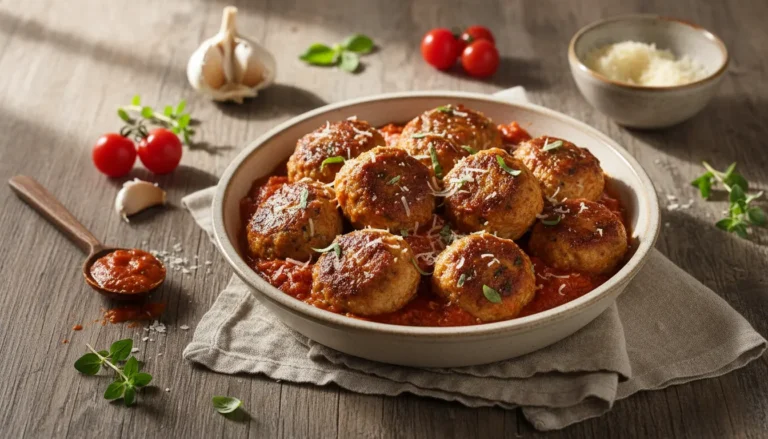
Preview: Get ready to add these ground turkey recipes to your weekly rotation—from zesty turkey tacos to Italian-style meatballs that’ll make you forget you’re eating the healthier option.
Why These Ground Turkey Recipes Work
- Budget-friendly protein – Turkey costs less per pound than quality ground beef
- Meal-prep champion – Batch-cook seasoned turkey for easy weeknight dinners
- Naturally lean – 93% lean turkey has half the saturated fat of 80/20 beef
- Kid-approved versatility – Mild base flavor works in everything from Asian lettuce wraps to Mediterranean bowls
- One-pan simplicity – Most ground turkey recipes dirty just one skillet
Choosing the Best Ground Turkey
Fat Content Selection: This matters more than you think. 85-87% lean ground turkey browns beautifully and stays moist—it contains dark meat that adds flavor. 93% lean is healthier but requires extra oil and vigilant temperature monitoring to avoid dryness. For burgers and meatballs, choose 85% lean. For tacos and pasta sauce, 93% works if you add moisture.
Quality Tips: Look for air-chilled turkey at farmers markets or specialty grocers. It has less water content than commercially processed turkey, which means better browning and texture. Organic or pasture-raised options have noticeably richer flavor—worth it if your budget allows.
Prep Safety—Crucial Tip: Do not wash raw poultry. Rinsing ground turkey splashes bacteria across your sink, countertops, and hands. Cooking to the proper internal temperature kills all pathogens—water can’t do that, it only spreads contamination. Always wash hands, utensils, and cutting boards with hot, soapy water after handling raw turkey.
Ingredients List
| Quantity | Ingredient |
|---|---|
| 1 lb | Ground Turkey (85-87% lean preferred) |
| 2 tbsp | Extra Virgin Olive Oil |
| 1 tsp | Garlic Powder |
| 1 tsp | Onion Powder |
| 1 tsp | Smoked Paprika |
| ¾ tsp | Ground Cumin |
| ½ tsp | Dried Oregano |
| ¾ tsp | Sea Salt |
| ½ tsp | Black Pepper |
| ¼ tsp | Cayenne Pepper (optional) |
| 2 tbsp | Low-Sodium Chicken Broth or Water |
| 1 tbsp | Fresh Lemon Juice |
Ingredient Notes
The Fat (Olive Oil): Even 85% lean turkey needs added fat for proper browning. Oil prevents sticking and helps develop that golden-brown crust that carries so much flavor. Don’t skip this—it’s the difference between gray, steamed turkey and restaurant-quality caramelization.
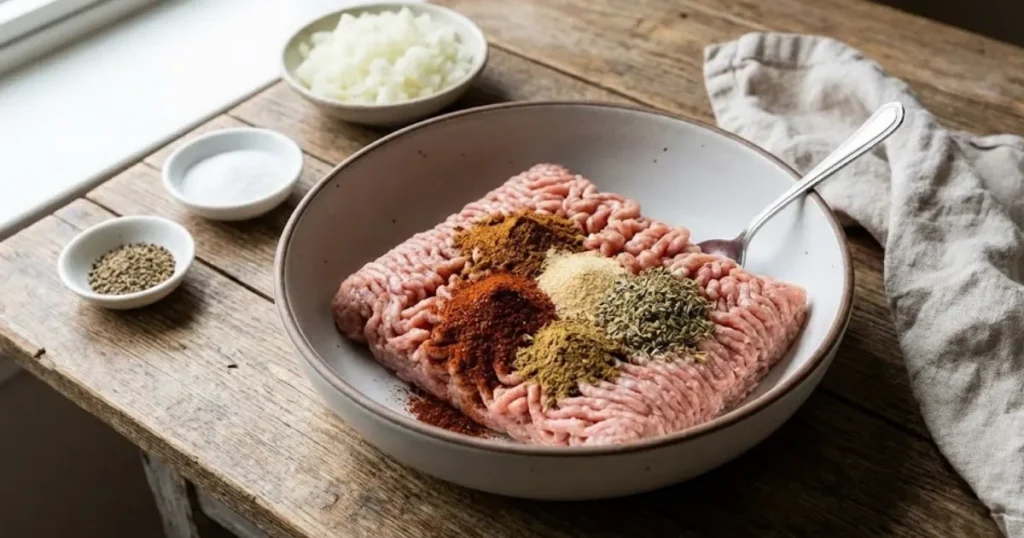
The Spice Blend: Ground turkey has delicate flavor that vanishes under aggressive cooking heat. Bold, layered seasoning is non-negotiable. Garlic and onion powder provide savory depth, smoked paprika adds color and subtle sweetness, cumin brings earthiness, and oregano rounds it out with herbal notes.
The Moisture (Broth & Lemon): Lean turkey dries out quickly. Adding 2 tablespoons of liquid while cooking keeps the meat juicy and helps spices distribute evenly. Lemon juice brightens the mild flavor and acts as a tenderizer, breaking down proteins for a softer texture.
Recipe Card
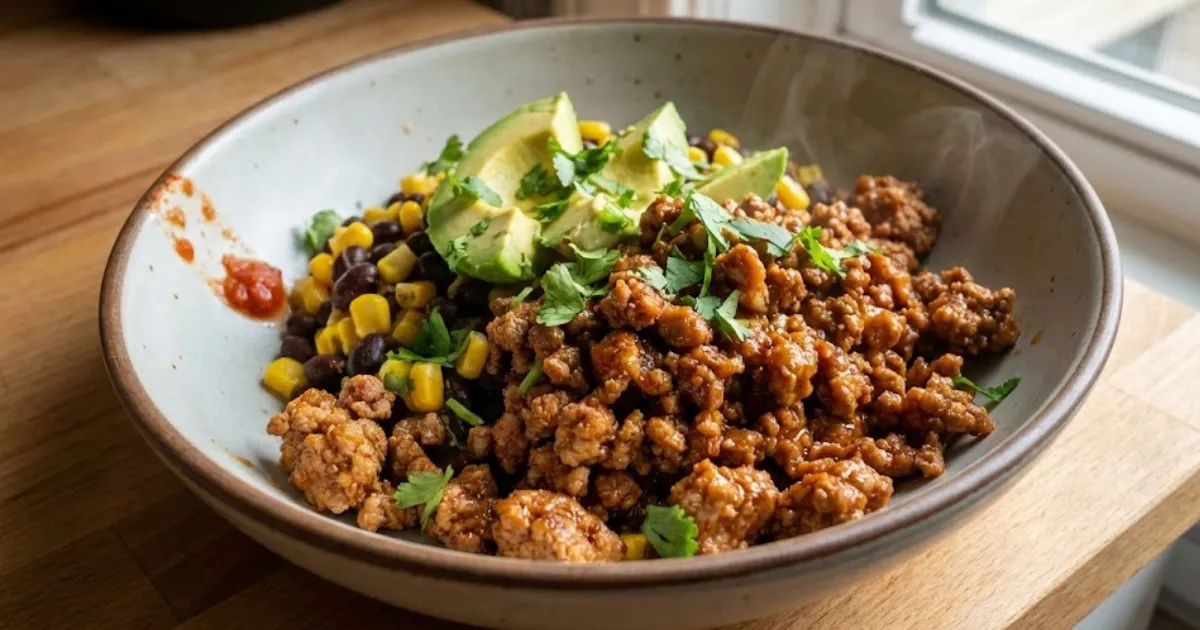
🛠 Equipment Needed
- Large skillet (12-inch preferred)
- wooden spoon
- instant-read meat thermometer
- small mixing bowl
Step-by-Step Instructions
Prep Work
Remove ground turkey from the refrigerator 15 minutes before cooking to take the chill off—cold meat hitting a hot pan causes uneven cooking. In a small bowl, combine all dry seasonings (garlic powder through black pepper). This pre-mixed spice blend ensures even distribution instead of random pockets of salt or paprika.
The Cook
Heat a large skillet over medium-high heat for 2 minutes. Add olive oil and swirl to coat. Add ground turkey in a single layer—resist the urge to stir immediately. Let it sit undisturbed for 3-4 minutes. This contact time creates the Maillard reaction, developing crispy, flavorful brown bits.
After 3 minutes, break up turkey with a wooden spoon into large crumbles. Sprinkle your spice blend over the meat and stir to coat. Add broth and continue cooking, breaking into smaller pieces, for 5-7 minutes until no pink remains.
The Doneness Test
Juices should run clear, not pink. Critical: Insert an instant-read meat thermometer into the thickest section of the crumbles. It must reach exactly 165°F (74°C) to kill Salmonella and other pathogens. This temperature is non-negotiable for food safety—color alone isn’t reliable since spices can make fully-cooked turkey look pink.
Finishing Touch
Remove from heat and stir in fresh lemon juice. Let the turkey rest in the pan for 2 minutes—this allows juices to redistribute and spices to bloom. Taste and adjust salt if needed (you’ll likely want a pinch more).
3 Secrets for Never-Dry Ground Turkey
Tip 1: Don’t Overcook the Browning Phase: Yes, you need 165°F for safety, but leaving turkey on high heat after it hits that temperature turns it into rubber. Once your thermometer confirms doneness, remove from heat immediately. Residual heat will finish the cooking.
Tip 2: Add Fat and Liquid Together: This is the game-changer most recipes miss. Mix 1 tablespoon of olive oil directly into raw ground turkey before cooking, then add another tablespoon to the pan. The internal fat keeps meat moist while external fat creates the crispy crust. Follow up with broth halfway through cooking.
Tip 3: Choose Dark Meat When Possible: If you can find ground turkey labeled “dark meat” or “thigh meat,” grab it. The extra fat means foolproof moisture and richer flavor. It’s still healthier than ground beef but far more forgiving than all-breast ground turkey.
Serving Suggestions
Starchy Sides: These ground turkey recipes shine over cilantro-lime rice, creamy mashed cauliflower, or roasted sweet potato wedges. For taco night, warm corn tortillas and load them with seasoned turkey, diced tomatoes, shredded lettuce, and cotija cheese.
Sauce It Up: Deglaze the pan with ¼ cup broth or white wine after removing the turkey. Scrape up those brown bits, add a tablespoon of butter, and reduce for 2 minutes—instant pan sauce that’s liquid gold over your turkey and vegetables.
Bowl Builds: Make Mediterranean bowls with this seasoned turkey over quinoa, topped with cucumber, feta, olives, and tzatziki. Or go Asian-inspired with turkey over rice noodles with shredded carrots, snap peas, and peanut sauce.
For more protein-cooking techniques, check out The Ultimate Guide to Cooking Chicken: Techniques & Tips.
Storage & Reheating
Refrigerator: Store cooked ground turkey in an airtight container for 3-4 days maximum. Let it cool to room temperature before sealing to prevent condensation, which causes sogginess.
Freezing: Portion into freezer bags, press out air, and freeze flat for up to 3 months. Label with the date and recipe name—frozen turkey looks identical to ground chicken or pork after a few weeks.
Reheating: The key is low and slow with added moisture. Microwave on 50% power in 30-second intervals, adding a splash of broth between cycles. Stovetop reheating works better: warm in a skillet over medium-low heat with 2 tablespoons of broth, stirring occasionally. This prevents the rubbery texture that happens when you nuke it on high.
Frequently Asked Questions
- Is it safe if the turkey looks slightly pink after cooking?
Yes, if your meat thermometer reads 165°F (74°C). Spices like paprika, cumin, or even the myoglobin in dark meat can tint fully-cooked turkey pink. Temperature is the only reliable indicator of safety—trust your thermometer, not your eyes. - Can I use frozen ground turkey?
Absolutely, but thaw it completely in the refrigerator overnight first. Cooking from frozen creates excess water that steams the meat instead of browning it. Never thaw turkey on the counter—it must stay below 40°F until cooking begins. - How do I get crispy, golden-brown bits instead of gray mush?
Three keys: (1) Pat turkey dry before seasoning, (2) Don’t overcrowd the pan—cook in batches if needed so steam can escape, and (3) Let it sit undisturbed for those crucial first 3-4 minutes. Moving it too soon releases moisture and prevents the crust from forming. - Can I substitute ground chicken?
Yes, these ground turkey recipes work perfectly with ground chicken. Use the same seasonings and techniques—chicken has similar lean protein content and benefits from the same moisture-adding tricks.
Conclusion
Ground turkey recipes no longer mean sacrificing flavor for health. With assertive seasoning, proper browning technique, and just a splash of added moisture, you’ll create juicy, golden turkey that outshines beef in both taste and nutrition. The key is treating turkey’s mild profile as an advantage—a protein that welcomes bold spices and adapts to any cuisine you crave.
Remember: season generously, brown patiently, cook to 165°F, and add back moisture. Master these four principles, and ground turkey transforms into your most versatile weeknight protein.
Did this recipe change your mind about ground turkey? Leave a comment below sharing your favorite way to season it—I read every single one!