Grilled bbq chicken recipes How to Avoid Burning
Perfect grilled bbq chicken recipes use a two-zone setup with medium heat (350-375°F). Start chicken on indirect heat for 25-30 minutes, then sear over direct heat for 2-3 minutes per side. Target internal temperature is 165°F, with sauce applied only during the final 5 minutes.
You know the struggle—burnt chicken skin with raw, bloody meat near the bone. Or maybe you’ve served dry, rubbery chicken that tastes like cardboard because you overcooked it trying to avoid the undercooked nightmare. The BBQ sauce is charred black, the smoke alarm is screaming, and your guests are politely pushing food around their plates.
The solution? Master the two-zone cooking method and understand when to apply that sauce. This grilled bbq chicken recipes approach delivers juicy meat with crispy, caramelized skin and a perfectly glazed exterior—no more guessing, no more disasters.
Here’s why it works: Indirect heat gently cooks chicken through without burning the exterior, while a quick sear over direct heat at the end creates beautiful char marks and crispy skin. The Maillard reaction develops that savory crust, while keeping the sauce application to the final minutes prevents sugar from burning into bitter char.
Fire up the grill. We’re making the best BBQ chicken of the summer.
Why This Grilled Chicken is a Backyard Hero
- Ultimate crowd-pleaser that works for family dinners, cookouts, and game day parties
- Budget-friendly protein that feeds a crowd without breaking the bank
- Versatile canvas for endless marinade and sauce combinations
- Smoky flavor profile that makes grocery store rotisserie chicken taste boring
- Prep-ahead friendly—marinate overnight and grill when ready
- Healthy option when you skip heavy sauces and focus on herb rubs
Choosing the Best Ingredients for the Grill
Chicken Selection: Bone-in, skin-on chicken is your best friend on the grill. Boneless skinless breasts dry out fast and lack flavor. The bones conduct heat evenly, while the skin protects the meat and crisps up beautifully. Thighs are more forgiving than breasts due to higher fat content—they stay juicy even if slightly overcooked.
Look for chicken pieces that are similar in size so they cook evenly. Pat them dry before seasoning—moisture is the enemy of crispy skin.
The Marinade Strategy: Oil in your marinade serves two purposes: it prevents sticking to grill grates and helps conduct heat for even cooking. Acid (lemon juice, vinegar) tenderizes meat but don’t overdo it—more than 2 hours in acidic marinade turns chicken mushy.
Sugar Content Warning: This is where most backyard cooks destroy their chicken. BBQ sauce, honey-based marinades, and sweet rubs contain sugar that burns fast over direct fire. That’s why we cook chicken over indirect heat first and apply sauce only at the very end.
Ingredients List
| Quantity | Ingredient |
|---|---|
| 3-4 lbs | Bone-in, skin-on chicken pieces (thighs, drumsticks, breasts) |
| 3 tbsp | Olive oil |
| 2 tbsp | Paprika (smoked or sweet) |
| 1 tbsp | Garlic powder |
| 1 tbsp | Onion powder |
| 2 tsp | Kosher salt |
| 1 tsp | Black pepper (freshly ground) |
| 1 tsp | Cayenne pepper (optional) |
| 1 cup | BBQ sauce (your favorite) |
| 2 tbsp | Apple cider vinegar |
| 1 tbsp | Honey |
Ingredients Notes
Oil Selection: Use high-heat oil like canola, avocado, or vegetable oil. Olive oil works for marinades but has a lower smoke point. Never use butter directly on the grill—it burns at grill temperatures and creates acrid smoke. Save butter for basting at the very end if desired.
Salt Timing: Apply salt at least 30 minutes before grilling, ideally 2-4 hours or overnight. This is called dry brining—salt draws moisture to the surface, then it reabsorbs along with the seasoning, creating juicier, more flavorful chicken. Don’t salt just 5-10 minutes before cooking; that’s the worst timing.
BBQ Sauce Application: This is critical for grilled bbq chicken recipes. Never brush sauce on at the beginning. Sugar burns at around 265°F, and your grill runs hotter than that. Apply BBQ sauce only during the final 5-10 minutes of cooking, building thin layers that caramelize without turning into charcoal.
Vinegar in Sauce: Adding a tablespoon of apple cider vinegar to your BBQ sauce balances sweetness and helps it adhere to the chicken without being cloying.
Recipe Card
🛠 Equipment Needed
- Grill (charcoal or gas)
- Tongs
- Instant-read meat thermometer
- Wire brush
- Basting brush
- Aluminum foil
Step-by-Step Instructions
Prep & Season
Remove chicken from refrigerator 30 minutes before grilling. Cold chicken doesn’t cook evenly—the exterior burns while the interior stays raw.
Pat chicken pieces completely dry with paper towels. This is crucial. Wet skin steams instead of crisping, and moisture prevents the dry rub from adhering properly.
Rub olive oil all over the chicken, then apply your dry rub generously on all sides, getting under the skin where possible for maximum flavor. Let seasoned chicken rest while your grill preheats.
The Grill Setup
This is where grilled bbq chicken recipes succeed or fail. You need a two-zone fire setup—the only way to cook chicken through without burning it.
For charcoal grills: Push all coals to one side, creating a hot zone (direct heat) and a cool zone (indirect heat). Place a drip pan with water on the cool side to catch drippings and add moisture. Target temperature: 350-375°F on the indirect side.
For gas grills: Light burners on one side only, setting them to medium. Leave the other side off. This creates your hot and cool zones.
Clean your grill grates thoroughly with a wire brush while heating. Dirty grates cause sticking and impart off-flavors. Once clean, oil the grates using tongs and a paper towel dipped in high-heat oil.
The Cook
Place chicken pieces skin-side up on the indirect heat zone, away from the flames. Close the lid and maintain 350-375°F throughout the cook.
Cook for 25-30 minutes without opening the lid. Resist the urge to constantly check—every peek drops temperature by 25-50°F and extends cooking time.
After 25 minutes, flip chicken skin-side down on the indirect zone for another 10-15 minutes to crisp the skin.
Managing flare-ups: Fat dripping onto coals causes flames. If this happens, move chicken to a cooler spot temporarily. Never spray water on flare-ups in a charcoal grill—it creates ash clouds. Instead, close the lid and restrict oxygen by partially closing vents.
The Sear & Sauce
Once chicken reaches 155-160°F internal temperature (check the thickest part, not touching bone), it’s time for the sauce and sear.
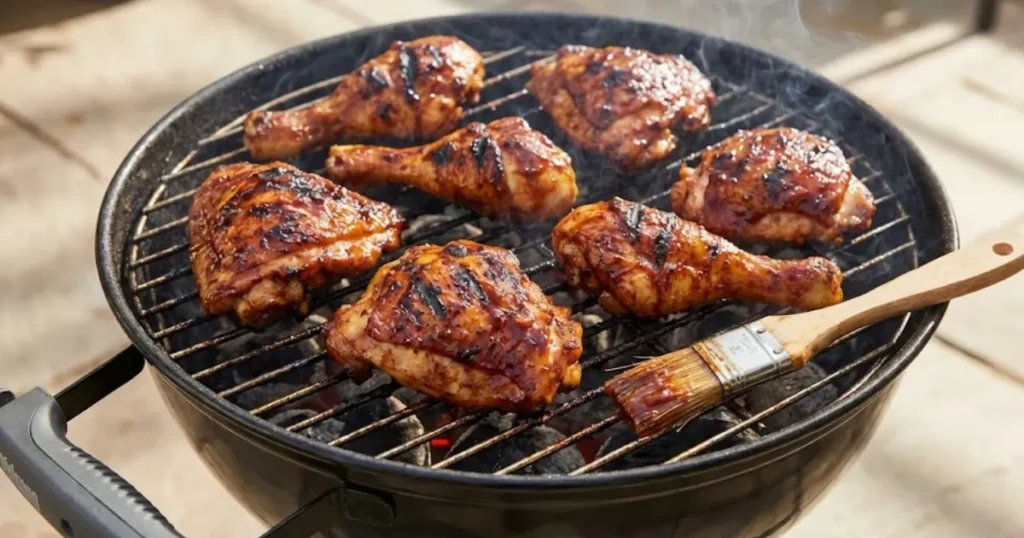
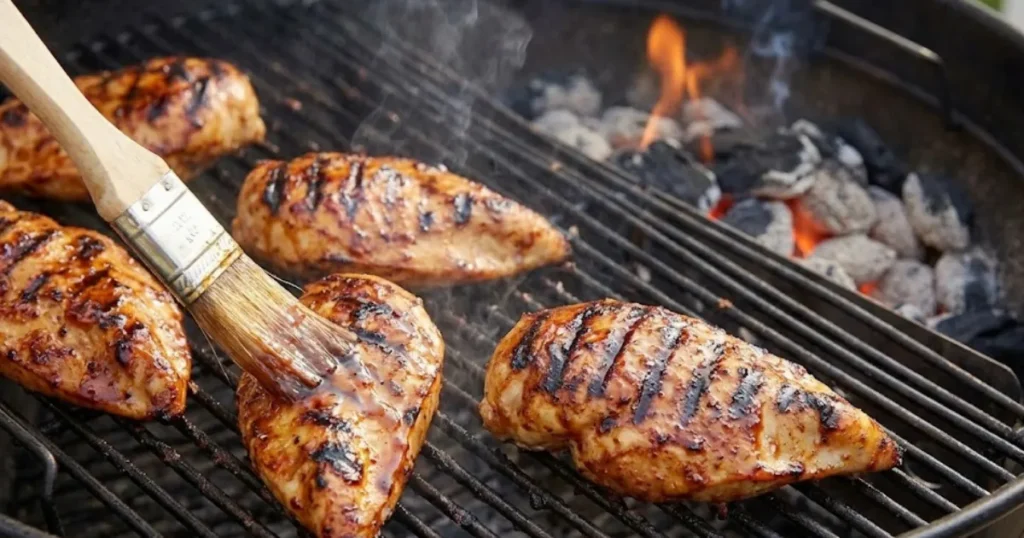
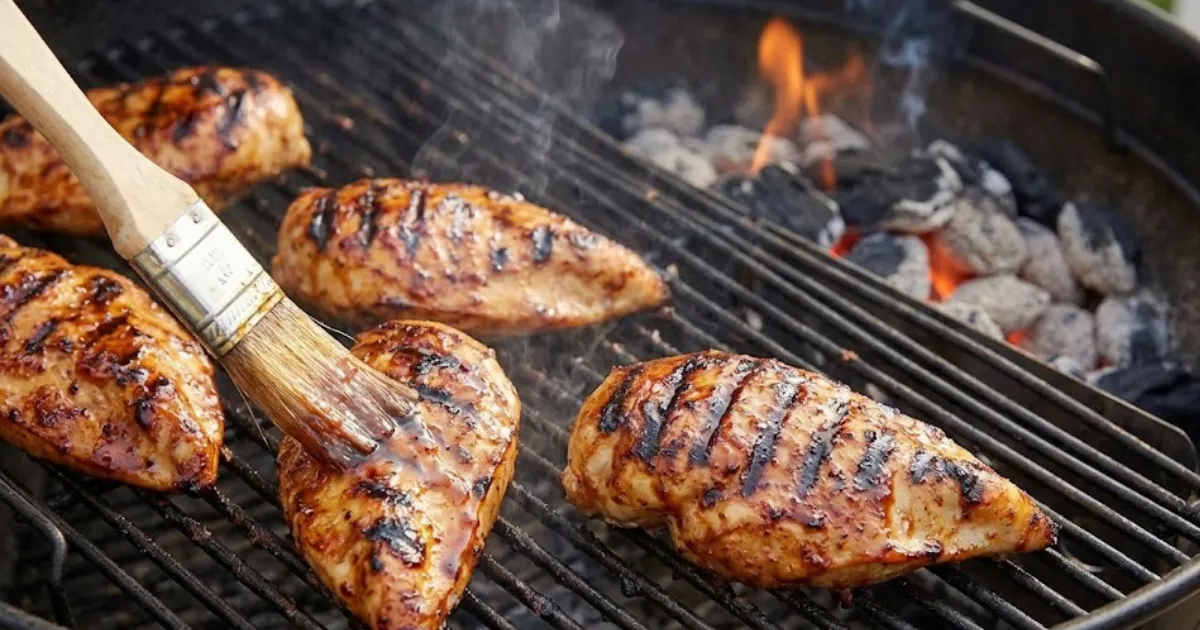
Brush a thin layer of BBQ sauce on both sides. Move chicken over direct heat for 2-3 minutes per side, watching closely. The sauce should caramelize and develop a glossy sheen—not burn black.
Apply a second coat of sauce, flip, and let it set for another minute over direct heat. You’re building layers of flavor, not drowning the chicken.
Doneness Check
Stop guessing. Use an instant-read meat thermometer. This is non-negotiable for chicken safety.
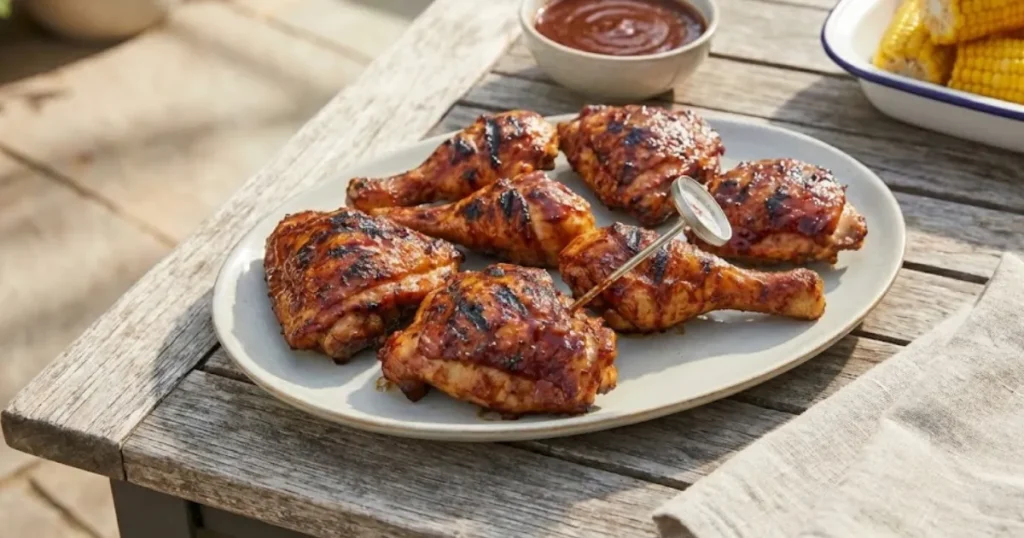
Insert the thermometer into the thickest part of the meat, avoiding the bone (bone conducts heat and gives false readings). Target temperature: 165°F for all chicken pieces.
Visual cues: Juices should run clear, not pink. The meat should pull away from the bone slightly. But don’t rely on looks alone—temperature is the only reliable indicator.
Pull chicken off at 160-162°F if you’re letting it rest tented with foil. Carryover cooking will bring it to 165°F.
3 Secrets for Pitmaster-Level Results
Tip 1: The Magic of Resting Let chicken rest for 10 minutes after pulling it off the grill, loosely tented with aluminum foil. This allows juices to redistribute throughout the meat instead of running all over your cutting board. Resting also lets carryover cooking finish the job, bringing internal temperature to safe levels.
Tip 2: The Two-Zone Method is Non-Negotiable Seriously—you cannot cook chicken properly over direct heat alone. High heat burns the exterior before the interior cooks through. The two-zone setup with indirect heat cooking followed by a quick direct heat sear is what separates backyard disasters from pitmaster-level grilled bbq chicken recipes. Set it up right every single time.
Tip 3: Sauce Goes On Last This cannot be emphasized enough. BBQ sauce contains sugar. Sugar burns at temperatures lower than your grill runs. Apply sauce early and you’ll serve bitter, charred chicken. Wait until the final 5-10 minutes, build thin layers, and watch closely. This one change will transform your grilling game.
Serving Suggestions & Sides
Classic BBQ Sides:
- Creamy coleslaw with vinegar-based dressing
- Mac and cheese loaded with sharp cheddar
- Grilled corn on the cob brushed with garlic butter
- Potato salad with herbs and Dijon mustard
- Baked beans with bacon and molasses
- Watermelon wedges
Drink Pairings: Cold beer works beautifully—lagers, wheat beers, or IPAs. For wine lovers, try Riesling or Pinot Noir that cuts through the richness. Sweet tea or lemonade are perfect non-alcoholic options.
For comprehensive grilling techniques beyond chicken, explore the ultimate bbq grilling guide.
Storage & Leftovers
Refrigerator: Store leftover chicken in airtight containers for up to 4 days. Keep sauce separate if possible to prevent sogginess.
Freezer: Wrap individual pieces in plastic wrap, then aluminum foil. Freeze up to 3 months. Thaw overnight in the refrigerator.
Reheating: Avoid the microwave—it turns chicken rubbery and dries it out. Instead, wrap chicken in foil with a splash of chicken broth or water. Warm in a 325°F oven for 20-25 minutes, or place on the grill’s indirect zone wrapped in foil for gentle reheating. The added moisture keeps it from drying out.
Leftover chicken shreds beautifully for tacos, salads, sandwiches, or pizza topping.
Frequently Asked Questions
Charcoal vs. Gas: Which is better for this recipe? Charcoal delivers superior smoky flavor and authentic BBQ taste. Gas offers convenience and easier temperature control. Both work perfectly for grilled bbq chicken recipes as long as you set up the two-zone fire properly. The cooking technique matters more than the fuel source.
How do I stop my chicken from sticking to the grates? Three critical steps: clean grates, hot grill, and oil. Brush grates clean with a wire brush, preheat to proper temperature, then oil them right before cooking. Also, don’t flip too early—chicken releases naturally when it’s ready. If it sticks, give it another minute.
Can I use boneless skinless chicken breasts? Yes, but they require more attention. Boneless skinless breasts dry out faster due to lack of protective skin and fat. Use a marinade with oil, cook over indirect heat to 160°F (they’ll reach 165°F while resting), and don’t overcook. Brining beforehand helps significantly.
What if I only have direct heat available? Use lower heat (medium instead of high) and flip more frequently—every 5 minutes. Place chicken over cooler spots on the grill and move it around to avoid hot spots. Watch constantly to prevent burning. It’s not ideal, but it works in a pinch.
Conclusion
This grilled bbq chicken recipes approach eliminates the guesswork and disaster. Set up your two-zone fire, cook low and slow over indirect heat, apply sauce only at the end, and use your thermometer religiously. Master these fundamentals and you’ll never serve burnt, raw, or dry chicken again.
The grill is calling. Your family is hungry. It’s time to stop fearing chicken and start serving restaurant-quality BBQ that makes you the backyard legend.
Rate this recipe and tag us in your backyard photos! We want to see that perfectly caramelized skin, those gorgeous grill marks, and the smiles when everyone realizes this is the best grilled chicken they’ve ever tasted.