Ground beef and potatoes 5 Easy Skillet Dinners
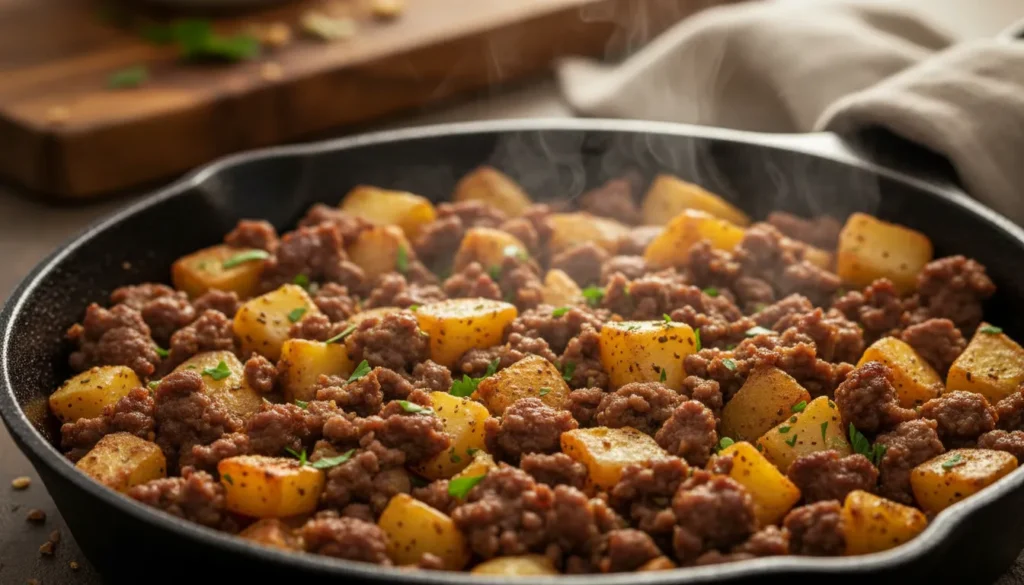
These ground beef and potatoes recipes combine browned seasoned beef with diced potatoes in one skillet for complete dinners. Brown 1 pound of ground beef, add cubed potatoes and seasonings, then cook covered until potatoes are tender—ready in 25-30 minutes with minimal cleanup for satisfying weeknight meals.
Scrambling for dinner ideas at 6 PM with ground beef and potatoes in your pantry? You need meals that come together quickly without complicated techniques or exotic ingredients that require special shopping trips.
These ground beef and potatoes recipes solve the weeknight dinner dilemma perfectly. Five distinct skillet variations transform basic ingredients into restaurant-quality meals that satisfy the whole family, each ready in under 30 minutes with just one pan to clean.
The secret lies in proper sequencing and heat management. Browning beef first develops the Maillard reaction’s savory depth, while strategic layering ensures potatoes cook through without burning the meat. Each variation uses pantry staples but delivers comfort food excellence that tastes like you spent hours cooking.
Here is everything you need to know to master these versatile, crowd-pleasing ground beef and potato dinners.
Why These Ground Beef and Potatoes Recipes Are Keepers
These skillet dinners deliver on every metric that matters for successful weeknight cooking and family satisfaction.
Ready in 25-30 minutes: Faster than most pizza delivery. Perfect for busy weeknights when time is your most precious resource.
Budget-friendly staples: Ground beef and potatoes rank among the most economical ingredients. Feed a family of four for under $10 per meal.
One-pan simplicity: Everything cooks in a single skillet. Minimal cleanup means maximum family time after dinner.
Kid-approved comfort food: Even picky eaters love seasoned beef and tender potatoes. These recipes get children to actually finish their plates.
Five flavor variations: Classic American, taco-style, Italian-inspired, breakfast hash, and loaded potato versions prevent menu fatigue.
Complete meal in one dish: Protein, vegetables, and starch combined. No need to cook separate side dishes.
Excellent leftovers: Tastes even better the next day as flavors meld. Perfect for meal prep and packed lunches.
Choosing the Best Ground Beef for Ground Beef and Potatoes
The Ideal Choice: 85/15 Ground Beef
Eighty-five percent lean, fifteen percent fat ground beef strikes the perfect balance for ground beef and potatoes recipes. This ratio provides enough fat for flavor and moisture without creating greasy, oil-slicked skillets.
The moderate fat content browns beautifully, developing rich Maillard reaction flavors without excessive rendered fat pooling around your potatoes. The fat also helps conduct heat, ensuring potatoes cook evenly.
Ground beef’s uniform texture distributes evenly among potato cubes. Every forkful contains the ideal meat-to-potato ratio rather than large clumps alternating with bare vegetables.
From a practical standpoint, 85/15 requires minimal draining after browning. This saves time and keeps enough fat in the pan to prevent potatoes from sticking.
Substitutions:
80/20 ground beef works well but requires draining excess fat after browning. Pour off all but 2 tablespoons to prevent greasy potatoes.
90/10 ground beef is too lean for one-pan cooking. The potatoes will stick and burn without adequate fat. Add 2 tablespoons of olive oil while browning to compensate.
Ground chuck (typically 80/20) offers excellent beefy flavor at competitive prices. Just remember to drain excess fat before adding potatoes.
Buying Tips:
Choose bright red ground beef with visible white fat marbling, not gray meat or yellowed fat. Color indicates freshness and proper storage.
Check the grind date if visible. Ground beef is best used within 1-2 days of grinding for optimal flavor and safety.
Buy from the butcher counter when possible. Freshly ground beef from specific cuts tastes superior to pre-packaged mystery blends.
Avoid “extra lean” ground beef for skillet dinners. The reduced fat content causes sticking and produces drier results during extended cooking.
Ingredients List
Base Recipe: Classic American Style
| Quantity | Ingredient |
|---|---|
| 1 lb | Ground beef (85/15) |
| 3 medium | Yukon Gold potatoes, diced (about 1 lb) |
| 1 medium | Onion, diced |
| 2 cloves | Garlic, minced |
| 1 tbsp | Vegetable oil or butter |
| 1 cup | Beef broth |
| 1 tsp | Paprika |
| 1 tsp | Dried thyme |
| 1 tsp | Salt |
| ½ tsp | Black pepper |
| ½ tsp | Garlic powder |
| 1 cup | Shredded cheddar cheese (optional) |
| 2 tbsp | Fresh parsley, chopped |
Ingredients Notes
The Beef Preparation:
Remove ground beef from refrigeration 15 minutes before cooking. Room-temperature meat browns more evenly than cold meat straight from the fridge.
Break beef into chunks as you add it to the skillet. Don’t plop in one solid mass—spreading it promotes faster, more thorough browning.
Season beef during browning, not after. Salt draws out moisture that aids in developing the golden-brown crust essential for flavor depth.
Potato Selection and Prep:
Yukon Gold potatoes are ideal for ground beef and potatoes recipes. Their creamy texture, moderate starch content, and natural buttery flavor complement beef perfectly.
Russet potatoes work but can turn gummy if overcooked. Their high starch content absorbs liquid aggressively—reduce added liquid by ¼ cup.
Dice potatoes into ½-inch cubes for optimal cooking. Larger pieces take too long, smaller ones turn mushy. Uniform size ensures even cooking.
Don’t skip rinsing—rinse diced potatoes under cold water to remove excess surface starch. This prevents gummy texture and helps them brown better.
Liquid and Seasonings:
Beef broth adds moisture and savory depth. The potatoes absorb this liquid as they cook, becoming infused with beefy flavor.
Paprika provides color and subtle sweetness without heat. It also contributes to the Maillard reaction for better browning.
Dried thyme adds earthy, aromatic notes that complement both beef and potatoes beautifully.
Fresh garlic beats jarred versions. The pungent, sharp flavor adds dimension that dried garlic powder cannot fully replicate.
Step-by-Step Instructions
Ground beef and Potatoes Recipe
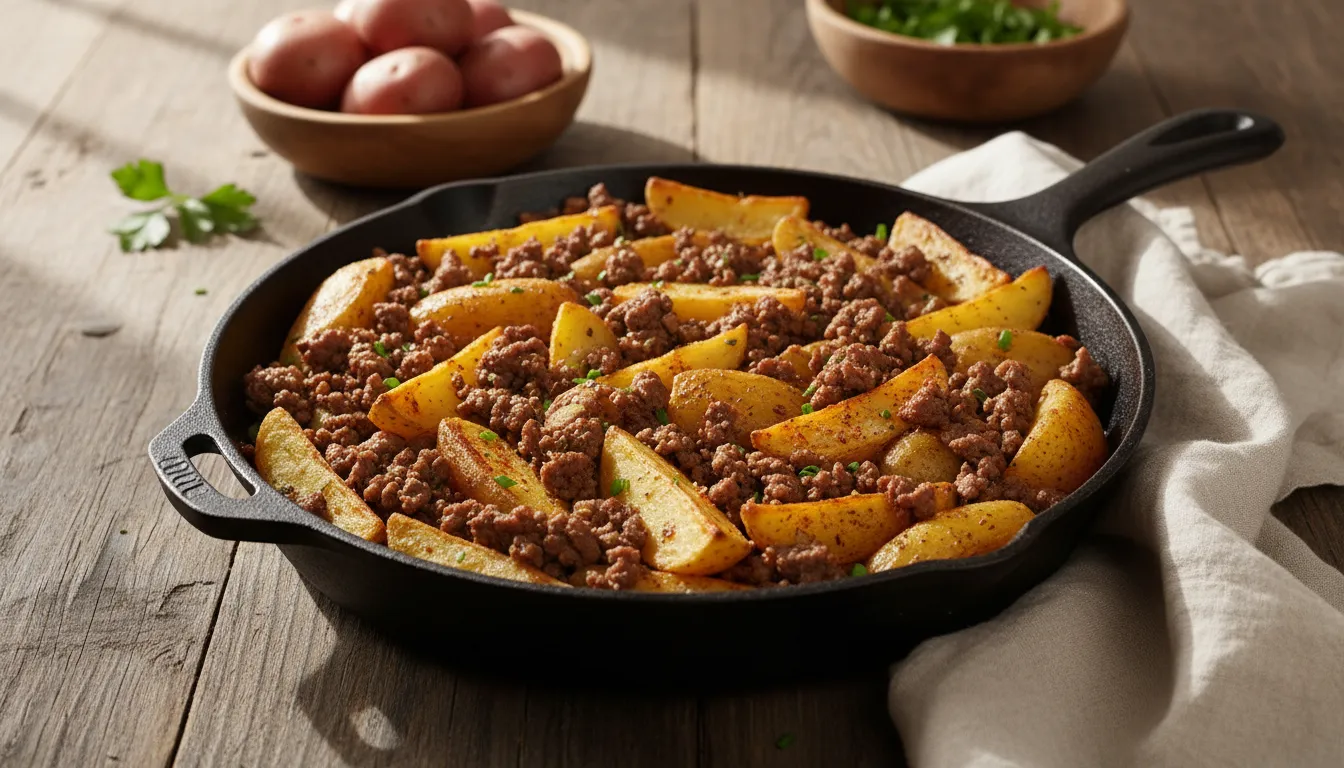
🛠 Equipment Needed
- Large skillet (12-inch) with lid
- Wooden spoon or spatula
- Sharp knife
- Cutting board
- Measuring cups and spoons
- Colander (for rinsing potatoes)
Prep Your Ingredients
Dice 3 medium Yukon Gold potatoes into ½-inch cubes. Rinse under cold water, drain, and pat dry with paper towels.
Dice 1 medium onion and mince 2 garlic cloves. Have all seasonings measured and ready—the cooking process moves quickly once started.
The Cooking Process: Classic American Style
Heat a large skillet (12-inch) over medium-high heat. Add 1 tablespoon of oil or butter and swirl to coat.
Add 1 pound of ground beef, breaking it into chunks. Season with ½ teaspoon salt and ¼ teaspoon black pepper.
Let beef sit undisturbed for 2 minutes to develop a golden crust. You’ll hear vigorous sizzling—that’s the Maillard reaction creating savory flavor compounds.
Break up beef with a wooden spoon and continue cooking for 5-6 minutes, stirring occasionally, until no pink remains and you see nice brown bits throughout.
If using 80/20 beef, drain excess fat, leaving about 2 tablespoons in the pan. For 85/15, no draining needed.
Add diced onion to the beef. Cook for 2-3 minutes until softened and translucent. Add minced garlic and cook 30 seconds until fragrant but not burned.
Add dried potato cubes to the skillet, along with 1 teaspoon paprika, 1 teaspoon dried thyme, ½ teaspoon garlic powder, and remaining salt and pepper. Stir to coat potatoes with seasonings.
Pour in 1 cup of beef broth. The liquid should come about halfway up the potato layer—add a bit more if needed.
Bring to a simmer, then reduce heat to medium-low. Cover the skillet with a lid and cook for 15-18 minutes, stirring every 5 minutes to prevent sticking.
Potatoes are done when a fork slides in with minimal resistance. They should be tender but not falling apart.
If adding cheese, sprinkle 1 cup of shredded cheddar over the top, cover for 2 minutes until melted.
Quick Overview: 4 Additional Variations
Taco-Style: Season with cumin, chili powder, and paprika. Add black beans and corn. Top with cheese, sour cream, and salsa.
Italian-Inspired: Use Italian seasoning, add diced tomatoes and bell peppers. Top with mozzarella and fresh basil.
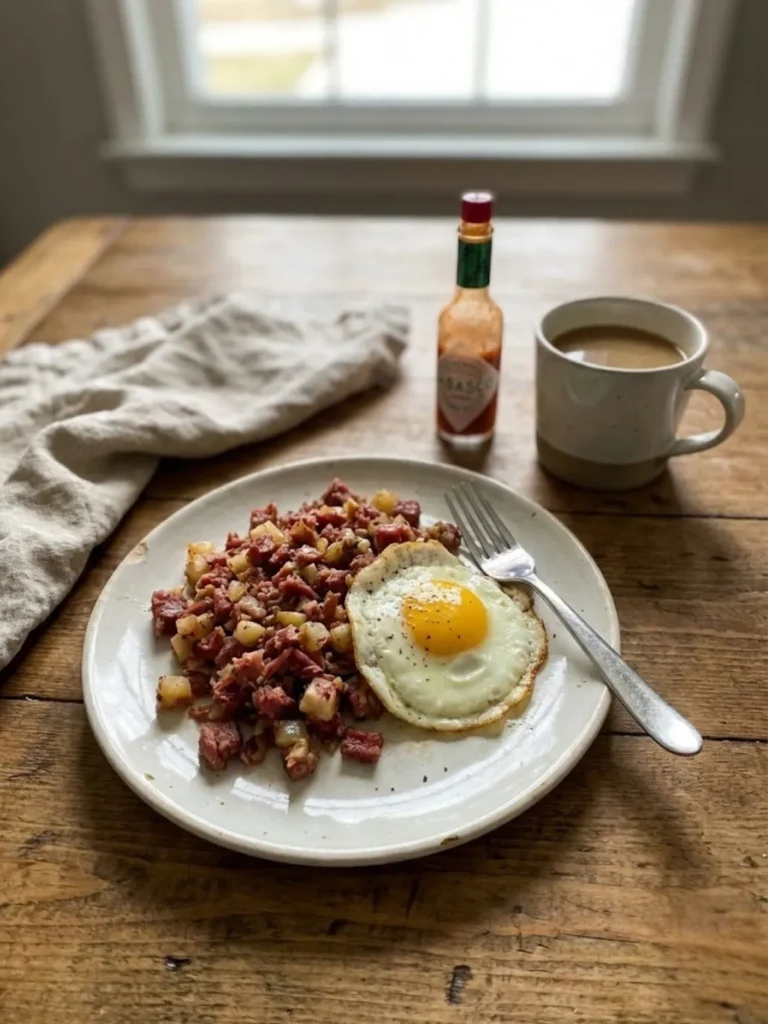
Breakfast Hash: Add diced bell peppers, crack eggs on top during last 5 minutes of cooking. Serve with hot sauce.
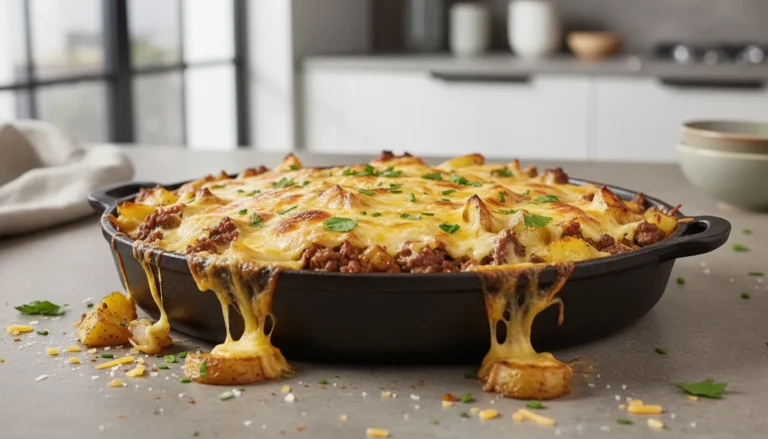
Loaded Potato Style: Cook as base recipe, then top with bacon bits, green onions, sour cream, and extra cheese.
Doneness Guide for Skillet Potatoes
| Doneness | Fork Test | Cooking Time |
|---|---|---|
| Undercooked | Hard resistance when pierced | Add 3-5 more minutes covered |
| Perfect | Fork slides in easily, holds shape | 15-18 minutes total |
| Overcooked | Falling apart, mushy | Cooked too long or heat too high |
Ground beef should show no pink and register 160°F internal temperature. Potatoes should be fork-tender but still hold their cube shape.
Why Resting Doesn’t Apply (But Sitting Does)
Unlike steaks, ground beef dishes don’t require resting to redistribute juices. The meat is already in small pieces with moisture distributed throughout.
However, letting the finished skillet sit for 3-5 minutes off heat allows flavors to meld and the sauce to thicken slightly. This brief pause improves overall taste and texture.
Keep the lid on during this sitting time to retain heat without continuing to cook.
Expert Tips for Perfect Results Every Time
Tip 1: Cut potatoes uniformly.
Inconsistent sizes mean some pieces turn mushy while others remain crunchy. Take the extra minute to dice carefully—it pays off in evenly cooked potatoes.
Tip 2: Don’t skip the rinse.
Rinsing diced potatoes removes surface starch that causes gummy texture and prevents proper browning. This 15-second step makes a noticeable difference in final quality.
Tip 3: Use enough liquid but don’t drown it.
Potatoes need moisture to steam and become tender, but too much creates soupy results. The liquid should come halfway up the potatoes, not cover them.
Tip 4: Stir regularly but not constantly.
Stir every 5 minutes to prevent sticking and ensure even cooking, but don’t stir constantly or potatoes will break apart and turn mushy.
Tip 5: Control your heat.
Medium-low heat after the initial browning is crucial. High heat burns the bottom before potatoes cook through. Patience yields perfectly tender results.
Serving Suggestions & Pairings
Complete Meal Additions:
A simple green salad with vinaigrette balances the richness and adds fresh vegetables.
Steamed broccoli or green beans contribute color and nutrition without competing flavors.
Crusty bread or dinner rolls for soaking up any remaining sauce.
Toppings and Garnishes:
Sour cream adds tangy richness and creamy contrast to the hearty skillet.
Fresh chopped parsley or green onions provide color and fresh flavor.
Shredded cheese (cheddar, pepper jack, or Mexican blend) melts beautifully over hot potatoes.
Hot sauce or salsa for those who want extra heat and brightness.
Storage, Freezing & Reheating
Fridge Life:
Store in airtight containers for up to 4 days. The flavors actually improve overnight as seasonings continue melding.
If the mixture seems dry after refrigeration, add a splash of broth when reheating.
Freezing:
Freeze for up to 3 months in portion-sized containers. Cool completely before freezing to prevent ice crystals.
Leave 1 inch of headspace for expansion. Label with recipe variation, date, and reheating instructions.
Note that potato texture changes slightly when frozen—they become slightly softer but still tasty.
Reheating:
Stovetop (best): Reheat in a skillet over medium-low heat for 5-7 minutes, stirring occasionally. Add 2-3 tablespoons of broth or water to prevent drying out.
Microwave: Heat in 90-second intervals at 70% power, stirring between sessions. Add a splash of liquid to maintain moisture.
Oven method: Transfer to a baking dish, cover with foil, and reheat at 350°F for 15-20 minutes. Add moisture before covering to prevent drying.
Frequently Asked Questions
Can I use different potatoes for ground beef and potatoes recipes?
- Yes, though Yukon Gold delivers best results with creamy texture and buttery flavor. Russets work but can become gummy—reduce liquid slightly. Avoid red potatoes—their waxy texture doesn’t soften properly in skillet cooking and they taste starchy rather than creamy.
How do I prevent my potatoes from sticking to the pan?
- Use adequate fat (don’t over-drain the beef), ensure potatoes are rinsed and dried before adding, stir every 5 minutes, and maintain medium-low heat after initial browning. Adding liquid and covering creates steam that helps prevent sticking.
Can I make these ground beef and potatoes recipes ahead of time?
- Absolutely. Cook completely, cool, and refrigerate for up to 2 days before serving. Reheat gently, adding liquid as needed. However, the texture is best when served fresh. For meal prep, consider browning beef and dicing potatoes ahead, then combining and cooking fresh when ready to eat.
Are these recipes gluten-free and dairy-free?
- The base recipes are naturally gluten-free (verify your broth contains no gluten). For dairy-free, simply omit the cheese or use dairy-free alternatives. The recipes work perfectly without cheese—it’s an optional topping rather than essential ingredient.
Conclusion
These ground beef and potatoes recipes prove that simple pantry staples can create extraordinary weeknight dinners. Five versatile variations ensure you’ll never run out of ideas for transforming basic ingredients into family favorites.
The combination of proper browning, strategic seasoning, and smart cooking techniques creates dishes that rival restaurant quality while respecting your time and budget constraints.
Try the classic version tonight, then explore the other ground beef and potatoes variations throughout the week. Rate this recipe and share your photos on Pinterest! Show me which skillet dinner became your family’s new weeknight staple.