Ground beef and potato recipes 5 Cheesy Casserole Ideas
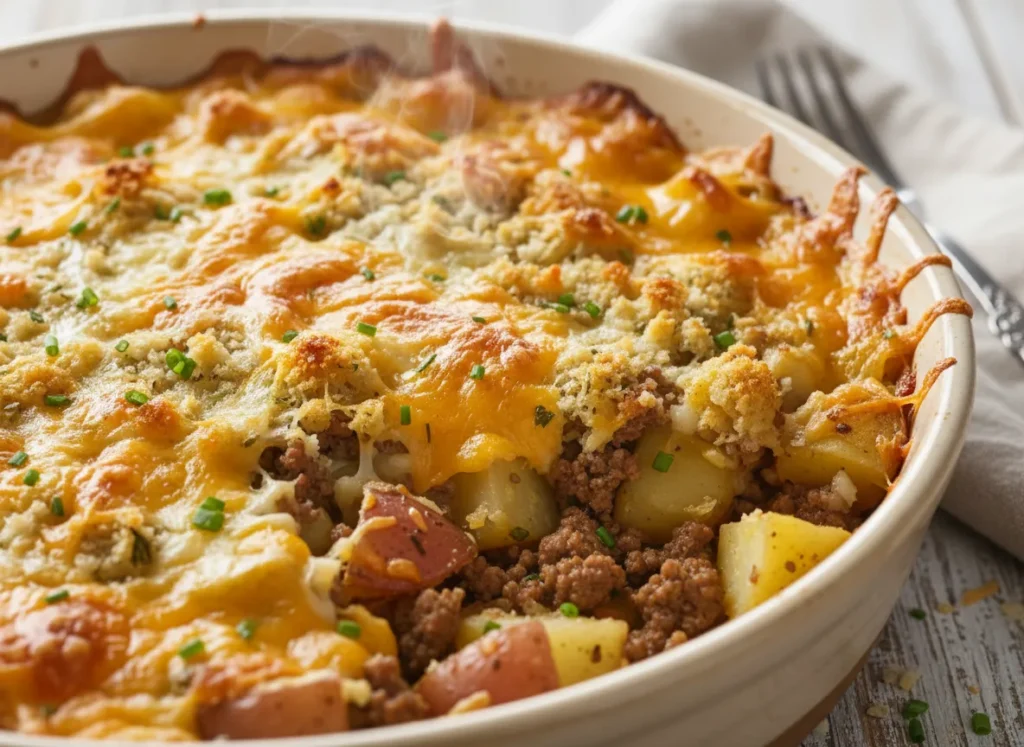
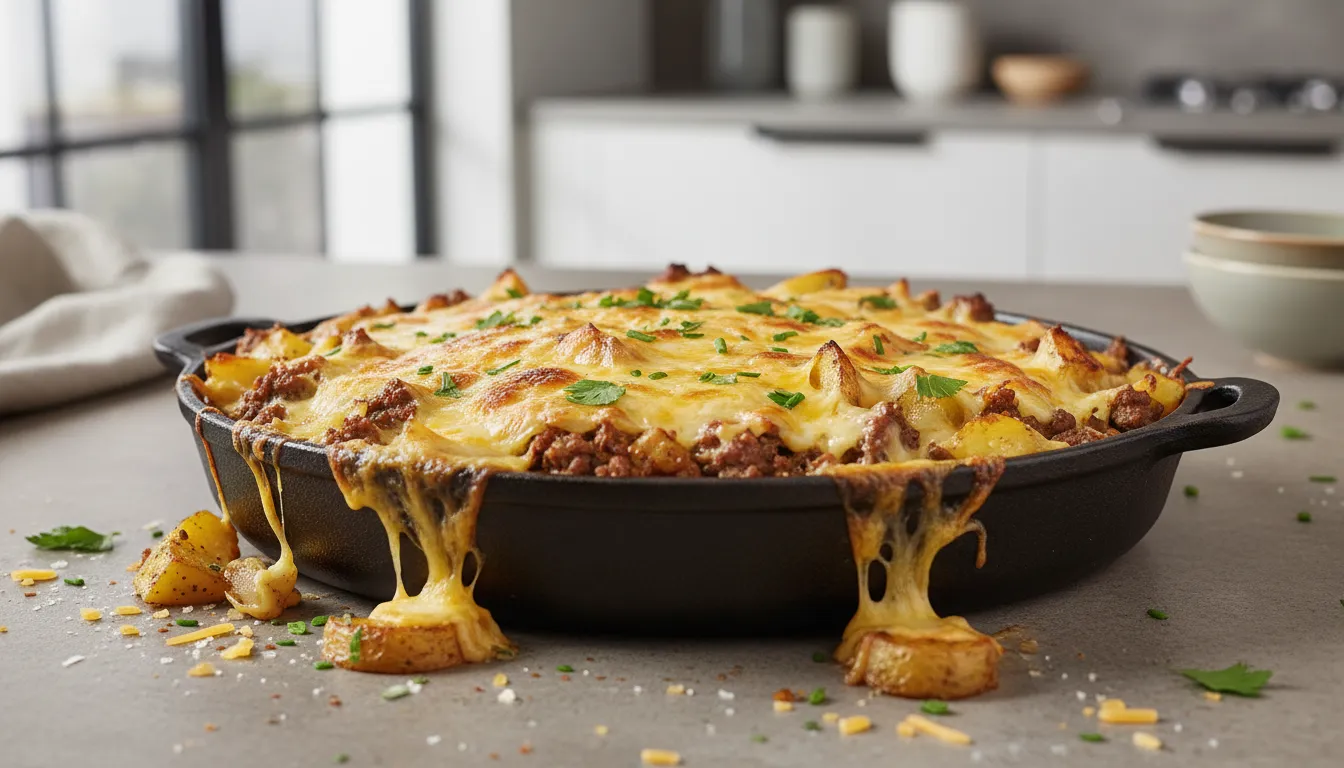
These ground beef and potato recipes layer seasoned ground beef with sliced potatoes and melted cheese, then bake until golden and bubbling. The casseroles combine budget-friendly ingredients into satisfying one-dish meals that feed a crowd. Prep in 20 minutes, bake for 45, and serve piping hot.
Ever plan dinner only to realize you’re down to ground beef, potatoes, and random pantry staples? Instead of ordering takeout, you can create restaurant-worthy casseroles that taste like you spent hours cooking.
These ground beef and potato recipes transform basic ingredients into five distinct cheesy casseroles that satisfy the pickiest eaters. Each variation delivers comfort food excellence while respecting your grocery budget and limited time.
The magic happens through proper layering and cheese selection. Thinly sliced potatoes cook evenly while absorbing savory beef drippings. The Maillard reaction creates golden-brown cheese crusts on top. Strategic seasoning at each layer builds flavor complexity that tastes far more sophisticated than the simple ingredient list suggests.
Here is everything you need to know to master these reliable ground beef and potato casserole recipes.
Why These Ground Beef and Potato Recipes Are Keepers
These casseroles check every box for successful weeknight and weekend cooking alike.
Budget-friendly staples: Ground beef and potatoes rank among the most economical ingredients. Feed six people for under $15 total.
Make-ahead perfection: Assemble completely the night before, refrigerate, then bake when ready. Perfect for busy schedules or entertaining guests.
One-dish convenience: Everything bakes in a single casserole dish. Minimal cleanup means maximum relaxation after dinner.
Crowd-pleasing formula: Even picky eaters love cheesy potatoes and seasoned beef. Great for family dinners, potlucks, and casual gatherings.
Freezer-friendly: Double the recipe and freeze one for emergency dinners. Thaw overnight and bake from cold—dinner solved.
Five flavor variations: Classic comfort, taco-inspired, Italian-style, bacon cheeseburger, and loaded potato versions prevent menu boredom.
Reheats beautifully: Leftovers actually improve as flavors meld. Better than most casseroles which turn soggy.
Choosing the Best Ground Beef for Casseroles
The Ideal Choice: 85/15 Ground Beef
Eighty-five percent lean, fifteen percent fat ground beef delivers optimal results for ground beef and potato recipes. This ratio provides enough fat for flavor and moisture without creating greasy casseroles that require draining mid-assembly.
The moderate fat content browns beautifully, developing rich Maillard reaction flavors without excessive rendered fat pooling in your baking dish. Leaner beef produces drier casseroles, while fattier options can separate and become oily during the long bake time.
Ground beef’s fine texture distributes evenly between potato layers, ensuring every bite contains meat. The uniform grind also holds seasonings well, creating consistent flavor throughout.
Substitutions:
80/20 ground beef works but requires draining after browning. Reserve 2 tablespoons of fat for the casserole, discarding the excess to prevent greasiness.
90/10 ground beef is too lean for most casseroles. Add 2 tablespoons of butter or olive oil while browning to compensate for reduced fat content.
Ground chuck (typically 80/20) offers excellent beefy flavor at competitive prices. Just remember to drain excess fat after browning.
Buying Tips:
Choose bright red ground beef with white fat. Gray meat or yellow fat indicates age or poor quality.
Check the sell-by date carefully. Use ground beef within 1-2 days of purchase for best flavor and safety.
Buy from the butcher counter when possible. Freshly ground beef from whole cuts tastes superior to pre-packaged tubes.
Avoid “extra-lean” ground beef for casseroles. The long baking time will turn it dry and crumbly regardless of added moisture.
Ingredients Notes & Preparation
Recipe Card
🛠 Equipment Needed
- 9x13-inch baking dish
- Mandoline slicer (or sharp knife)
- Large skillet
- Aluminum foil
- Cheese grater
- Cutting board
Beef Preparation:
Brown ground beef completely before assembling casseroles. Raw beef releases too much moisture during baking, creating watery, greasy results.
Season beef aggressively during browning. Salt, pepper, and aromatics like onion and garlic build the flavor foundation.
Drain excess fat but keep some moisture. Bone-dry beef creates tough, unpalatable casseroles. Leave about 2 tablespoons of fat with the cooked meat.
Potato Selection and Prep:
Yukon Gold potatoes are ideal. Their creamy texture, moderate starch content, and natural buttery flavor complement beef perfectly.
Russet potatoes work but can turn gummy if overcooked. Their high starch content absorbs liquid aggressively—reduce added liquid by ¼ cup.
Slice potatoes ⅛-inch thick using a mandoline for uniform cooking. Hand-cutting works but uneven pieces cook at different rates.
Don’t skip soaking: Soak sliced potatoes in cold water for 10 minutes, then pat completely dry. This removes excess starch and prevents gummy texture.
Cheese Strategy:
Sharp cheddar provides the most robust flavor. Mild cheddar works but tastes bland in comparison.
Mix two cheese types for complexity: cheddar for sharpness, mozzarella for melt and stretch, or Gruyère for nutty sophistication.
Shred cheese yourself from blocks. Pre-shredded cheese contains anti-caking agents that prevent proper melting and create grainy texture.
Equipment:
9×13-inch baking dish (glass or ceramic) for even heat distribution
Mandoline slicer for uniform potato slices
Large skillet for browning beef
Aluminum foil for covering during initial baking
Step-by-Step Instructions
Base Recipe: Classic Cheesy Beef and Potato Casserole
Prep the Components:
Preheat oven to 375°F. Grease a 9×13-inch baking dish with butter.
Brown 1.5 pounds of 85/15 ground beef in a skillet over medium-high heat for 8-10 minutes, breaking it into small crumbles. Add 1 diced onion and 3 minced garlic cloves during the last 3 minutes. Season generously with salt and pepper. Drain if excessively fatty.
Slice 3 pounds of Yukon Gold potatoes ⅛-inch thick. Soak in cold water for 10 minutes, then drain and pat bone-dry.
The Layering Process:
Spread one-third of the potato slices in an even layer on the bottom of your prepared dish. Season with salt and pepper.
Spread half the cooked beef mixture over the potatoes. Sprinkle with 1 cup of shredded sharp cheddar.
Add another layer of potatoes (half the remaining), season, then add remaining beef and 1 cup cheese.
Finish with final potato layer. Pour 1 cup of beef broth evenly over everything. The liquid ensures tender potatoes without drying out.
Top with remaining 1 cup of cheese. Cover tightly with aluminum foil.
Baking Process:
Bake covered for 45 minutes. The potatoes will steam and become tender while the cheese melts into the layers.
Remove foil and bake an additional 20-25 minutes until the top is golden brown and bubbling. You’ll smell the caramelized cheese and see crispy edges forming.
Let rest for 10 minutes before serving. This allows the casserole to set so slices hold their shape rather than falling apart.
Variation Ideas (Brief Overview)
Taco Casserole: Season beef with cumin, chili powder, and paprika. Layer with pepper jack cheese, diced green chiles, and top with crushed tortilla chips in the last 10 minutes of baking.
Italian Style: Add Italian sausage to the beef mixture, use mozzarella and Parmesan cheeses, layer with marinara sauce, and top with fresh basil after baking.
Bacon Cheeseburger: Mix crumbled cooked bacon into the beef, use cheddar and American cheese, add pickle relish, and drizzle with burger sauce before serving.
Loaded Potato: Layer potatoes with sour cream mixed into the beef, use cheddar cheese, and top with bacon, green onions, and additional sour cream after baking.
Why Resting Matters for Casseroles
Unlike steaks, casseroles don’t rest to redistribute juices—they rest to set structure. The 10-minute rest allows starches to firm up and cheese to solidify slightly.
Cutting into a casserole immediately after baking creates a sloppy, falling-apart mess. Patience delivers clean slices that look as good as they taste.
Cover loosely with foil during resting to retain heat without trapping steam that softens the crispy top.
Expert Tips for Perfect Casseroles Every Time
Tip 1: Slice potatoes uniformly.
Inconsistent thickness means some pieces turn mushy while others remain crunchy. Invest in an inexpensive mandoline—it pays for itself in evenly cooked casseroles.
Tip 2: Don’t overbake.
Casseroles continue cooking from residual heat after leaving the oven. Remove when the top just turns golden and the edges bubble vigorously. Overbaking creates dry, tough results.
Tip 3: Season every layer.
Don’t rely solely on seasoned beef. Salt and pepper each potato layer. This builds dimensional flavor rather than one-note seasoning.
Tip 4: Use enough liquid.
Dry casseroles taste terrible. The 1 cup of broth seems like a lot but potatoes absorb it during cooking. Too little liquid produces hard, undercooked potatoes.
Tip 5: Let beef cool slightly before assembling.
Hot beef placed directly on raw potatoes can cause uneven cooking. Let browned beef cool for 5 minutes while you slice potatoes, then assemble.
Serving Suggestions & Pairings
Complementary Sides:
A crisp green salad with vinaigrette balances the rich, heavy casserole. The acidity cuts through cheese and beef fat.
Steamed green beans or roasted broccoli add color and nutrition without competing flavors.
Garlic bread works for Italian variations, while cornbread pairs perfectly with taco-style casseroles.
Toppings and Garnishes:
Sour cream and fresh chives elevate the loaded potato version.
Sliced jalapeños and fresh cilantro brighten the taco variation.
Chopped fresh parsley adds color and freshness to the classic version.
Crumbled bacon bits work on virtually any variation.
Storage, Freezing & Reheating
Fridge Life:
Store covered casserole in the refrigerator for up to 4 days. The flavors actually improve as seasonings continue melding.
Cut individual portions and store in separate containers for easy lunch reheating.
Freezing:
Freeze unbaked casseroles for up to 3 months. Assemble completely, cover tightly with plastic wrap then foil, and freeze. Thaw overnight in refrigerator before baking as directed, adding 10 extra minutes to covered baking time.
Alternatively, freeze baked casserole portions for up to 2 months. Texture won’t be quite as perfect as fresh but still delicious.
Reheating:
Oven method (best): Reheat individual portions at 350°F for 15-20 minutes covered, then 5 minutes uncovered to crisp the top. For full casseroles, allow 30-40 minutes covered.
Microwave method: Heat individual portions for 2-3 minutes at 70% power. The top won’t crisp but it’s acceptable for quick lunches.
Add a splash of broth before reheating if the casserole seems dry.
Frequently Asked Questions
Can I make ground beef and potato recipes without pre-cooking the beef?
While technically possible, it’s not recommended. Raw beef releases excess moisture and fat during baking, creating greasy, watery casseroles. Pre-browning allows you to control moisture and develop superior flavor through the Maillard reaction.
What’s the best potato for these casseroles?
Yukon Gold potatoes deliver ideal results with creamy texture and buttery flavor. Russets work but can become gummy. Avoid red potatoes—their waxy texture doesn’t soften properly during baking and they taste starchy in casseroles.
Can I prep these ground beef and potato recipes ahead?
Absolutely. Assemble the entire casserole up to 24 hours before baking. Cover tightly and refrigerate. Add 10-15 minutes to the covered baking time since you’re starting from cold. This makes them perfect for entertaining or busy weeknights.
How do I prevent watery casseroles?
Drain browned beef thoroughly, pat potatoes completely dry after soaking, and don’t add excessive liquid. One cup of broth is sufficient. Also, let the casserole rest 10 minutes after baking—this allows excess moisture to be reabsorbed.
Conclusion
These ground beef and potato recipes prove that simple ingredients can create extraordinary comfort food. The five variations ensure you’ll never get bored, while the reliable base recipe provides a foolproof formula for casserole success.
Master the basic layering technique and you can customize these ground beef and potato recipes endlessly. Swap cheeses, adjust seasonings, and add favorite vegetables to create your signature family casserole.
Try one of these cheesy casserole ideas tonight. Rate this recipe and share your photos on Pinterest! Show me which variation became your family’s new favorite dinner.