Cooking a Steak with Cast Iron Skillet: Best Searing Guide
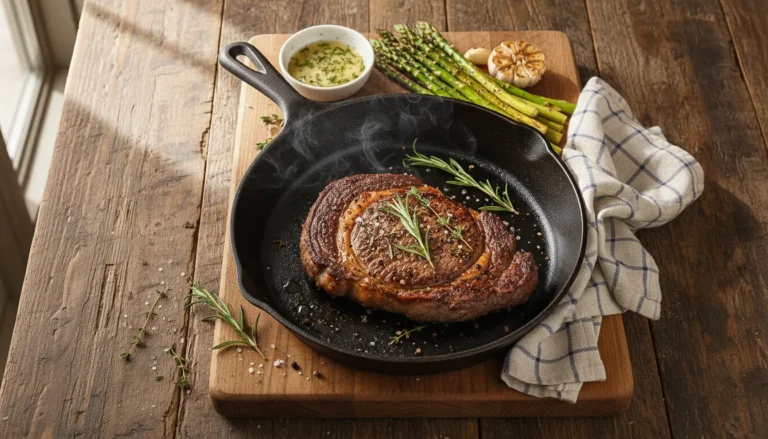
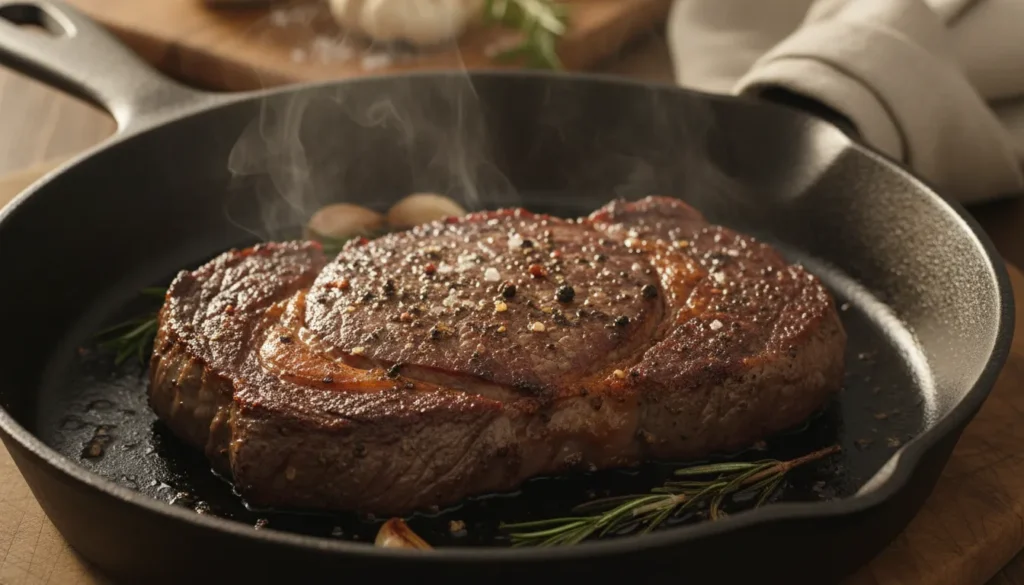
Heat cast iron over high heat for 6-7 minutes until smoke appears. Add oil, then sear room-temperature, well-seasoned steak 2-3 minutes per side without disturbing. The cast iron’s superior heat retention delivers professional-grade crust through consistent surface contact at 500°F+. Finish with butter basting for steakhouse results.
You own a beautiful cast iron skillet, but it sits in your cabinet collecting dust because you’re intimidated by the stories: smoke alarms, stuck meat, uneven cooking, and mysterious “seasoning” maintenance. Meanwhile, you’re pan-frying steaks in non-stick pans and wondering why they never develop that restaurant-quality crust with the satisfying crackle. The gap between cast iron’s reputation and your confidence feels unbridgeable.
The solution is understanding that cooking a steak with cast iron skillet is actually simpler than you think—once you grasp the fundamentals. Cast iron isn’t temperamental; it just requires different handling than modern pans. The payoff is enormous: sustained high heat, natural non-stick properties, and the ability to create Maillard reaction browning that thin pans simply cannot achieve.
Professional chefs choose cast iron for searing because physics favors it. The heavy iron’s thermal mass stores tremendous heat energy, maintaining surface temperature even when cold meat makes contact. This sustained heat is what triggers the complex flavor compounds in that addictive brown crust. With proper technique, your home kitchen rivals any steakhouse when cooking a steak with cast iron skillet. For comprehensive guidance on selecting cuts that maximize cast iron’s advantages, explore our ultimate guide to beef steak cuts.
Grab that neglected cast iron and prepare for revelation. We’re mastering professional searing.
Why Cooking a Steak with Cast Iron Skillet Beats Other Methods
- Gold standard heat retention maintains 500°F+ searing temperature
- Even heat distribution eliminates hot spots for consistent browning
- Natural non-stick surface when properly seasoned
- Oven-safe construction enables hybrid stovetop-to-oven techniques
- Creates authentic Maillard crust through sustained chemical reactions
- Multi-generational durability with minimal maintenance
- Improves with use as seasoning layers build over time
- No chemical coatings to worry about degrading
Choosing the Best Steak for Cast Iron Cooking
The Cut: Ribeye excels when cooking a steak with cast iron skillet—abundant marbling renders in sustained heat, self-basting the meat. New York strip offers excellent results with perfect meat-to-fat ratio. Filet mignon works but lacks fat that makes cast iron special. Sirloin is acceptable when properly marinated.
Thickness: Buy steaks 1 to 1.5 inches thick. According to the USDA’s safe cooking temperature guidelines, this thickness allows internal temperature development while maintaining crust integrity. Thinner steaks overcook; thicker ones (2+ inches) benefit from stovetop-to-oven finishing.
Marbling: Look for visible white fat threads throughout red meat. This intramuscular fat melts during cooking, keeping steak moist. Choice and Prime grades provide marbling necessary when cooking a steak with cast iron skillet.
Buying Tips: Choose bright cherry-red meat with white or cream fat. The meat should feel firm. Avoid excessive packaging liquid—moisture prevents proper searing when cooking a steak with cast iron skillet.
Ingredients List
| Quantity | Ingredient |
|---|---|
| 2 (12-14 oz) | Ribeye or NY strip steaks (1-1.5 inches thick) |
| 2 tbsp | Avocado oil or canola oil |
| 3 tbsp | Unsalted butter |
| 4 cloves | Fresh garlic, smashed |
| 4 sprigs | Fresh thyme or rosemary |
| 2 tsp | Kosher salt |
| 1 tsp | Coarse black pepper |
Ingredients Notes
The Oil: When cooking a steak with cast iron skillet, high smoke-point oil is essential. Avocado oil (520°F) handles extreme heat without breaking down. Canola (400°F) works budget-friendly. Never use olive oil (375°F)—it burns at cast iron temperatures.
The Salt: Kosher salt’s coarse crystals draw surface moisture through osmosis, creating dry exterior essential for browning. This is critical when cooking a steak with cast iron skillet. Diamond Crystal or Morton both work.
The Butter: Unsalted butter allows sodium control while adding richness. Add after initial sear, never before—milk solids burn at high temperatures required for cast iron searing.
The Aromatics: Fresh garlic and woody herbs infuse butter during basting. Dried herbs burn and taste acrid in cast iron’s intense heat.
Step-by-Step Instructions for Cooking a Steak with Cast Iron Skillet
Recipe Card
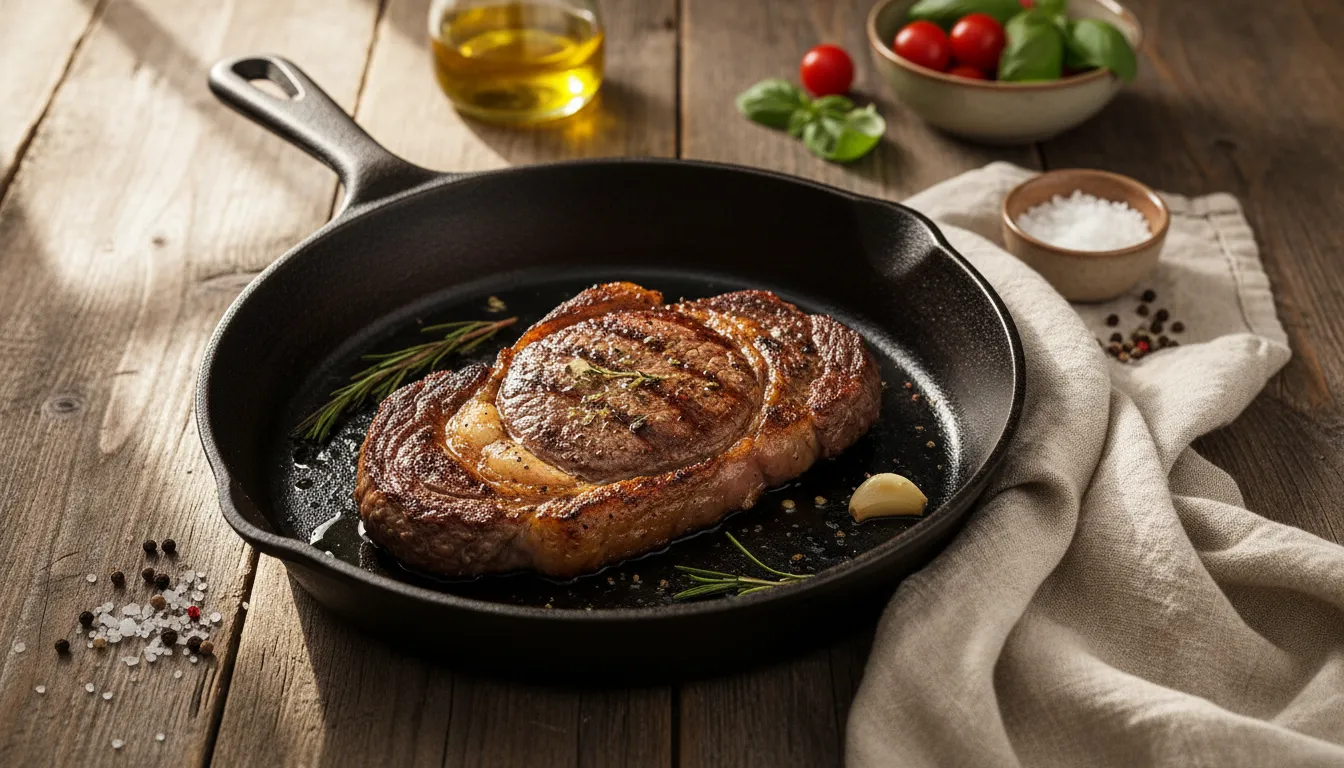
🛠 Equipment Needed
- 10-12 inch Cast Iron Skillet
- Instant-Read Thermometer
- Kitchen Tongs
- Basting Spoon
Prep & Salting
Remove steaks from refrigeration 30-45 minutes before cooking. When cooking a steak with cast iron skillet, room-temperature meat ensures even edge-to-center cooking. Cold steak creates temperature gradients.
Pat both sides completely dry with paper towels. Repeat even if they seem dry. Surface moisture steams rather than sears, preventing crust development.
Season both sides generously with kosher salt and black pepper, pressing seasonings into meat. Don’t be timid—much becomes crust rather than penetrating interior.
Preheating the Cast Iron
This is where most fail when cooking a steak with cast iron skillet. Place 10-12 inch cast iron over high heat for 6-7 minutes. Cast iron’s thermal mass requires longer heating than thin pans, but once hot, maintains temperature brilliantly.
Ready when you see smoke wisps or a water drop evaporates instantly (under one second, not dancing around). The pan should radiate intense heat 6 inches above surface.
Adding Oil
Add high-smoke-point oil, swirling to coat bottom evenly. Oil should shimmer and nearly smoke immediately. This thin layer prevents sticking while allowing heat transfer.
The Sear
Carefully lay steak away from you (avoiding oil splatter). It should sizzle aggressively on contact—if not, pan wasn’t hot enough.
Critical: Do not touch steak for 2-3 minutes when cooking a steak with cast iron skillet. Don’t move, press, or peek. Meat needs uninterrupted contact for crust development. Steak releases naturally when crust forms—if stuck, wait 30 seconds.
After 2-3 minutes, flip using tongs (never forks that pierce meat). First side should show rich mahogany-black caramelization. Sear second side 2-3 minutes.
For prominent fat caps (ribeye), hold steak upright with tongs and sear fat edge until crispy.
The Butter Baste
The secret professional technique when cooking a steak with cast iron skillet: Reduce heat to medium, add butter, garlic, and herbs.
As butter melts and foams, tilt skillet toward you. Use a large spoon to continuously baste steak with aromatic butter—scooping liquid gold over meat for 1-2 minutes.
This French technique (arroser) adds flavor, cooks top surface without flipping, and creates irresistible herb-garlic crust.
Doneness Guide
Insert instant-read thermometer horizontally into thickest part:
- Rare: 120-125°F (cool red center)
- Medium-Rare: 130-135°F (warm red center) – RECOMMENDED
- Medium: 140-145°F (warm pink center)
Remove 5 degrees below target when cooking a steak with cast iron skillet. Carryover cooking continues during rest.
Resting
Transfer to warm plate or cutting board (not back into hot skillet). Tent loosely with foil and rest 5-10 minutes. This allows protein relaxation and juice redistribution.
Cutting too soon releases flavorful juices onto board, leaving dry meat.
Expert Tips for Cooking a Steak with Cast Iron Skillet
Tip 1: Maximum Ventilation Cast iron reaches temperatures producing significant smoke. Turn exhaust fan maximum, open windows, consider disabling smoke alarms temporarily. This isn’t failure—it’s proof of success when cooking a steak with cast iron skillet.
Tip 2: Don’t Overcrowd Adding too much cold meat drops pan temperature, causing steaming instead of searing. Cook one large or two smaller steaks maximum in 12-inch skillet when cooking a steak with cast iron skillet.
Tip 3: Maintain Seasoning After cooking, scrub cast iron with coarse salt and stiff brush while warm (never soap). Rinse briefly, dry completely over low heat, rub with thin oil layer. This builds naturally non-stick patina.
Tip 4: Quality Cast Iron Lodge offers excellent value. Vintage Griswold or Wagner have smoother surfaces but cost more. Avoid cheap thin cast iron—proper thickness matters for heat retention when cooking a steak with cast iron skillet.
Serving Suggestions & Steakhouse Sides
Sides: When cooking a steak with cast iron skillet style, pair with classic steakhouse sides: creamed spinach, loaded baked potatoes, sautéed mushrooms, roasted asparagus with lemon.
Sauces: Compound butters (blue cheese, herb, roasted garlic) melt beautifully. Red wine reduction or chimichurri add sophistication. Many prefer just flaky sea salt when cooking a steak with cast iron skillet perfectly.
Wine Pairing: Intense crust pairs excellently with full-bodied reds. Try Cabernet Sauvignon, Malbec, or aged Bordeaux.
Storage & Reheating
Leftovers: Store airtight for up to 3 days. When cooking a steak with cast iron skillet properly, crust seals moisture, making leftovers particularly good.
Reheating: Never microwave. Bring to room temperature, warm gently in 250°F oven 10 minutes, or slice and flash-sear in hot butter 30 seconds per side.
Frequently Asked Questions
Why does my steak stick when cooking a steak with cast iron skillet?
- Insufficient preheating, moving steak too early, or inadequate pan seasoning. Well-seasoned cast iron at proper temperature shouldn’t stick.
Can I use stainless steel instead?
- Works but lacks heat retention. Temperature drops more when cold meat hits surface. Cast iron is specifically superior.
How do I know when cast iron is hot enough?
- Water test: single drop should evaporate under one second. You should see smoke wisps and feel intense heat 6 inches above.
Should I oil steak or pan?
- Oil the pan. When cooking a steak with cast iron skillet, thin pan layer prevents sticking while allowing better heat transfer.
My kitchen fills with smoke—am I wrong?
- No! High-heat searing produces smoke, especially with fatty cuts. This is normal when cooking a steak with cast iron skillet. Ensure ventilation but embrace it.
Conclusion
Mastering cooking a steak with cast iron skillet transforms home cooking from adequate to exceptional. Sustained high heat, proper preheating, and butter-basting deliver restaurant-quality results. Once you’ve mastered fundamentals, you’ll wonder why you struggled with inferior cookware.
Cast iron’s beauty lies in simplicity and longevity. No fancy technology, no coatings—just thermal mass, technique, and patience. Each steak builds more seasoning, improving performance.
Heat that cast iron to screaming hot and trust the process. Your best steak yet is waiting.
Rate this recipe and tell us your cast iron tips in the comments!