Cast Iron Skillet for Searing Steak: How to Build Crust
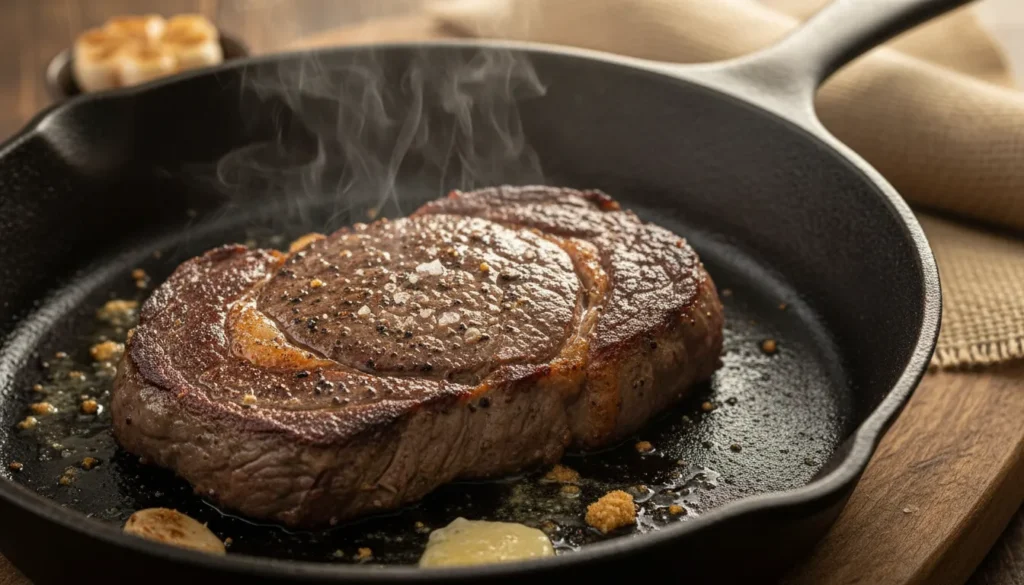
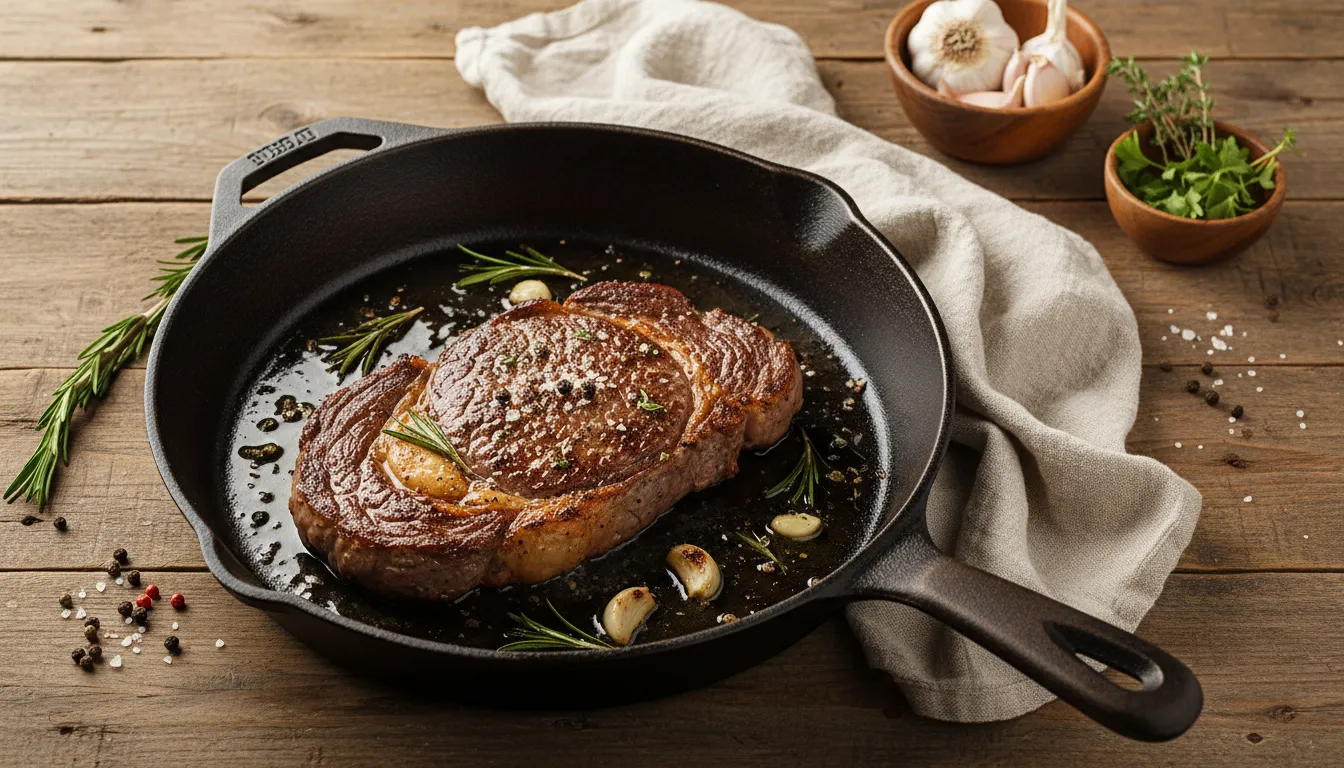
Preheat your cast iron skillet for searing steak over high heat for 5-7 minutes until smoking. Pat steaks completely dry, season generously, then sear undisturbed for 2-3 minutes per side. The heavy iron retains consistent heat, creating the perfect Maillard reaction for a deeply caramelized crust.
You’ve watched enough cooking shows to know the secret weapon behind every perfect steak: the cast iron skillet. Yet your first attempt left you with smoke alarms blaring and a steak that somehow stuck to the pan despite all that seasoning work. The frustration is real—spending $30 on a quality ribeye only to have it tear apart when you try to flip it.
The solution isn’t just owning a cast iron skillet for searing steak; it’s understanding how to properly heat, maintain, and use this centuries-old tool. Unlike flimsy non-stick pans that buckle under high heat, cast iron’s superior heat retention creates an environment where the Maillard reaction thrives—that’s the chemical magic responsible for the deep brown crust and complex flavors you crave.
Mastering your cast iron transforms every steak into a steakhouse-quality experience. The heavy iron distributes heat evenly and maintains temperature even when cold meat hits the surface, ensuring you get consistent searing rather than steaming. For more insights on selecting the right cuts to maximize your cast iron’s potential, explore our ultimate guide to beef steak cuts.
Grab your cast iron skillet and a good ventilation system. We’re building the perfect crust.
Why This Cast Iron Skillet Method is Better Than Other Pans
- Superior heat retention maintains consistent temperature when steak is added
- Naturally non-stick when properly seasoned—no chemical coatings needed
- Oven-safe construction allows for stovetop-to-oven finishing techniques
- Creates authentic steakhouse crust through even heat distribution
- Lasts generations with proper care, making it the most cost-effective pan
- Develops better seasoning with each use, improving performance over time
Choosing the Best Cast Iron Skillet for Searing Steak
The Skillet: A 10-12 inch cast iron skillet is ideal for searing steaks. Lodge and Le Creuset are trusted brands, but vintage skillets often have smoother surfaces that provide even better results. The weight matters—heavier skillets around 8-10 pounds retain heat better than lightweight alternatives.
Pre-Seasoned vs. Unseasoned: Pre-seasoned skillets from Lodge offer convenience, but building your own seasoning layers with flaxseed or grapeseed oil creates a harder, more durable surface. According to the USDA’s guide on cookware safety, cast iron is safe for high-heat cooking and adds trace amounts of iron to your diet.
Thickness: Look for skillets with thick bottoms (at least 1/4 inch) that won’t warp under extreme heat. Thin cast iron can develop hot spots that cause uneven searing.
Ingredients List
| Quantity | Ingredient |
|---|---|
| 2 (12-14 oz) | Ribeye or New York Strip Steaks (1.5 inches thick) |
| 2 tbsp | Avocado oil or canola oil |
| 3 tbsp | Unsalted butter |
| 4 cloves | Fresh garlic, smashed |
| 4 sprigs | Fresh thyme or rosemary |
| 2 tsp | Kosher salt |
| 1 tsp | Coarse black pepper |
Ingredients Notes
The Oil: Avocado oil has a smoke point of 520°F, making it ideal for the extreme heat required in cast iron skillet searing steak. Olive oil’s lower smoke point (375°F) will burn and create acrid flavors. Canola oil works as a budget-friendly alternative.
The Salt: Kosher salt’s coarse crystals draw moisture from the steak’s surface, creating a dry exterior that caramelizes beautifully. Table salt is too fine and can make the crust taste overly salty. Season liberally—much of it will form the crust rather than penetrating the meat.
The Butter: Unsalted butter allows you to control sodium levels while providing rich, nutty flavor during basting. Salted butter can burn more quickly due to milk solids and added salt.
Step-by-Step Instructions for Cast Iron Skillet Searing Steak
Recipe Card
🛠 Equipment Needed
- 10-12 inch Cast Iron Skillet
- Instant-Read Meat Thermometer
- Kitchen Tongs
- Paper Towels
Prep & Salting
Remove steaks from refrigeration 30-45 minutes before cooking to reach room temperature. This ensures even cooking from edge to center. Pat both sides completely dry with paper towels—this is critical. Any surface moisture will steam rather than sear, preventing proper crust formation.
Season both sides generously with kosher salt and black pepper. Press the seasoning into the meat. Some chefs salt steaks 40 minutes ahead and refrigerate uncovered to further dry the surface, but for weeknight cooking, immediate seasoning works well.
Heating the Cast Iron
Place your cast iron skillet over high heat for 5-7 minutes. This extended preheat is essential—cast iron takes longer to heat than other materials but maintains that heat brilliantly. You’ll know it’s ready when a drop of water immediately evaporates on contact or when you see the first wisps of smoke.
Add the high-smoke-point oil and swirl to coat the bottom. The oil should shimmer and almost smoke. This is the moment when fear turns to confidence—embrace the heat.
The Sear
Carefully lay the steak away from you to avoid oil splatter. Do not move it. Do not press it. Do not peek under it. Let physics work for 2-3 minutes. The steak will naturally release from the pan when a proper crust has formed. If it sticks, it’s not ready.
Flip using tongs (never a fork, which pierces the meat and releases juices). Sear the second side for another 2-3 minutes. For thick steaks over 1.5 inches, briefly sear the edges by holding the steak upright with tongs.
The Butter Baste
Reduce heat to medium. Add butter, smashed garlic, and fresh herbs to the pan. As the butter melts and foams, tilt the skillet slightly and use a spoon to continuously baste the steak with the aromatic butter. This technique, borrowed from French cuisine, adds incredible richness and helps cook the steak’s top surface without flipping repeatedly.
Baste for 1-2 minutes while monitoring internal temperature.
Doneness Guide
Insert an instant-read thermometer into the thickest part of the steak:
- Rare: 120-125°F (cool red center)
- Medium-Rare: 130-135°F (warm red center)
- Medium: 135-145°F (warm pink center)
- Medium-Well: 145-155°F (slightly pink center)
- Well-Done: 155°F+ (no pink, not recommended)
Remember: steaks continue cooking during rest, so pull them 5 degrees below your target temperature.
Resting
Transfer steaks to a warm plate or cutting board. Tent loosely with foil and rest for 5-10 minutes. This allows juices to redistribute throughout the meat rather than flooding onto your cutting board when you slice. Cutting too soon results in a dry steak swimming in a puddle of wasted flavor.
Expert Tips for the Perfect Crust with Cast Iron Skillet
Tip 1: Seasoning Maintenance After each use, scrub your cast iron with coarse salt and a stiff brush while it’s still warm. Rinse briefly, dry completely over low heat, then rub with a thin layer of oil. This builds seasoning that becomes naturally non-stick.
Tip 2: Ventilation is Essential Cast iron skillet searing steak produces significant smoke due to the high temperatures. Turn on your exhaust fan, open windows, and disable smoke alarms temporarily. This isn’t a sign of failure—it’s proof you’re doing it right.
Tip 3: Don’t Overcrowd Cook one large steak or two smaller ones maximum. Adding too much meat drops the pan temperature, causing steaming instead of searing. The cast iron’s thermal mass has limits.
Tip 4: Pre-Heat Thoroughly Patience during the preheat pays dividends. An insufficiently heated cast iron won’t release the steak cleanly, and you’ll fight sticking throughout the cook.
Serving Suggestions & Steakhouse Sides
Sides: Classic steakhouse accompaniments like creamed spinach, loaded baked potatoes, or roasted garlic mushrooms complement the rich, beefy flavor. Crispy Brussels sprouts with bacon provide a lighter counterpoint.
Sauces: Compound butters (herb, blue cheese, or garlic butter) melt beautifully over rested steak. Red wine reduction or chimichurri add brightness that cuts through the richness. Many prefer the steak’s natural flavor with just a sprinkle of flaky sea salt.
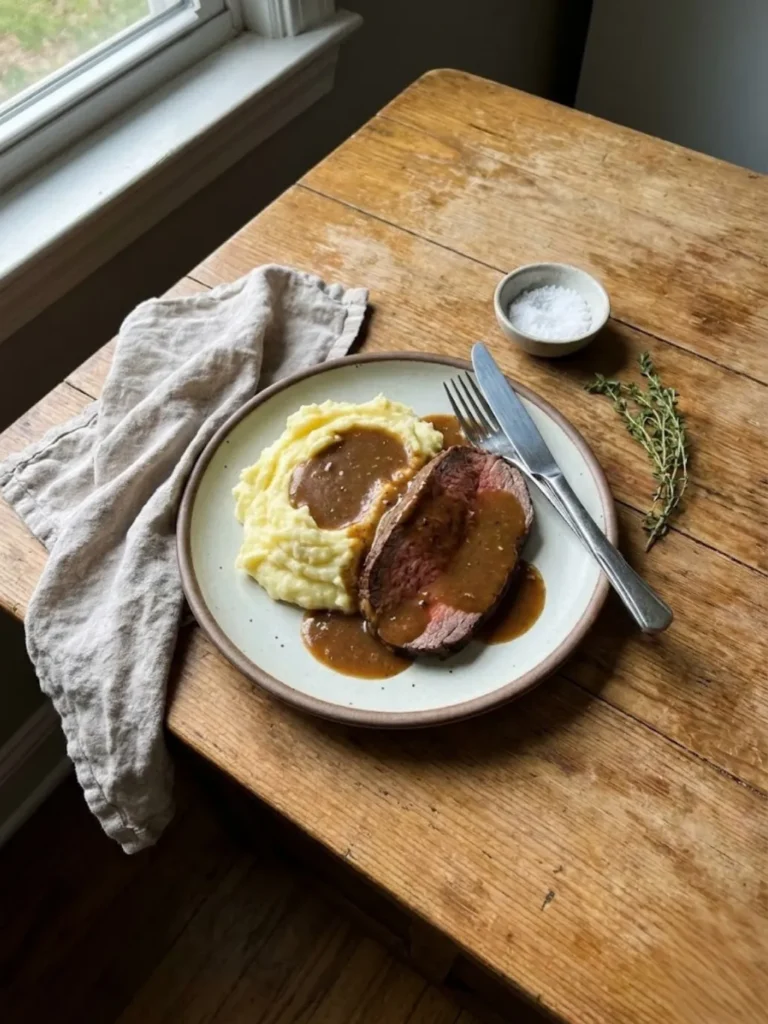
Presentation: Slice against the grain at a 45-degree angle for maximum tenderness. Fan the slices on the plate to showcase that perfect pink interior and caramelized crust.
Storage & Reheating
Leftovers: Refrigerate leftover steak in an airtight container for up to 3 days. Slice thinly for steak sandwiches, grain bowls, or salads. Cold steak slices are excellent in breakfast hash or eggs Benedict variations.
Reheating: Never microwave steak—it turns grey and rubbery. Instead, bring steak to room temperature, then reheat gently in a 250°F oven until warmed through (about 10 minutes). Alternatively, slice cold steak and sear briefly in hot butter for 30 seconds per side.
Frequently Asked Questions
How do I know when it’s medium-rare without a thermometer?
- The touch test compares firmness: touch your thumb to index finger and feel the muscle below your thumb—that’s rare. Thumb to middle finger is medium-rare. However, this method is unreliable for beginners. Invest in a $15 instant-read thermometer for consistent results.
Can I use a non-stick pan instead of cast iron?
- Non-stick pans cannot withstand the high heat required for proper searing (they’re unsafe above 400°F). Stainless steel works in a pinch but lacks cast iron’s heat retention. For authentic steakhouse crust, cast iron is essential.
When do I add the butter for basting?
- Add butter only after establishing the initial crust on both sides, typically in the last 2-3 minutes of cooking. Adding it too early causes the milk solids to burn before the steak is properly seared.
Do I need to re-season my cast iron after cooking steak?
- Not after every use. Simply clean with salt and water, dry completely, and apply a thin oil layer. Full seasoning (applying oil and heating in the oven) is only needed when the surface becomes dull or food starts sticking.
Conclusion
Mastering the cast iron skillet for searing steak transforms your home cooking from adequate to exceptional. The combination of extreme heat, proper technique, and that perfectly seasoned surface delivers restaurant-quality results that impress every time. Once you’ve nailed the fundamentals of temperature control and patience, you’ll wonder why you ever struggled with inferior cookware.
The beauty of cast iron lies in its simplicity—no fancy technology, just pure thermal mass and proper technique. Each steak you cook builds more seasoning, making your skillet perform better with age. That’s a kitchen tool worth investing in.
Fire up that skillet tonight. Your best steak yet is waiting.
Rate this recipe and tell us your favorite cut in the comments!