Hamburger steak recipe: Best Southern Smothered Dish
How to cook Southern Smothered Hamburger Steak: Sear seasoned beef patties in a screaming-hot cast iron skillet for 3–4 minutes per side, then smother in a rich onion gravy. Cook to an internal temperature of 160°F. Rest for 5 minutes before serving. Total time: under 25 minutes.
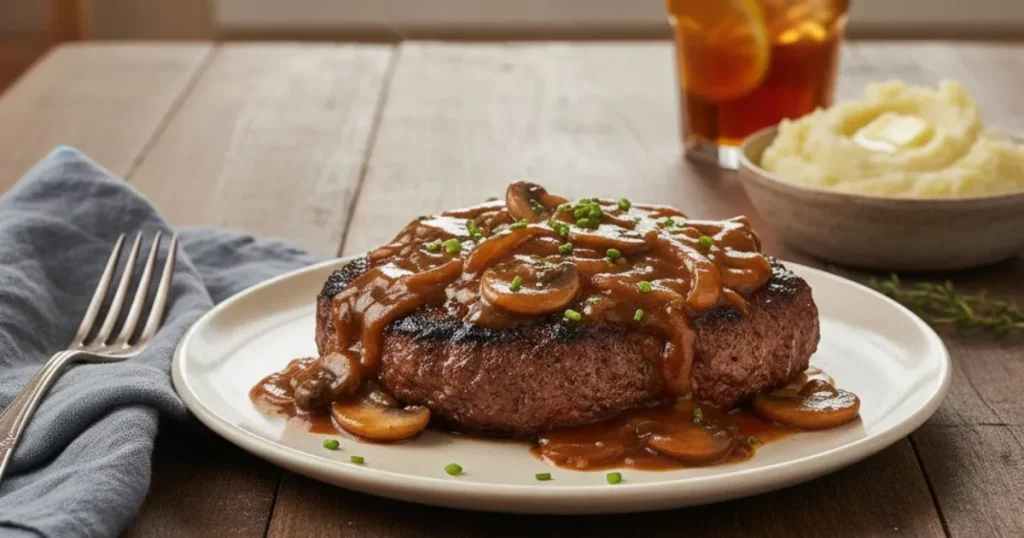
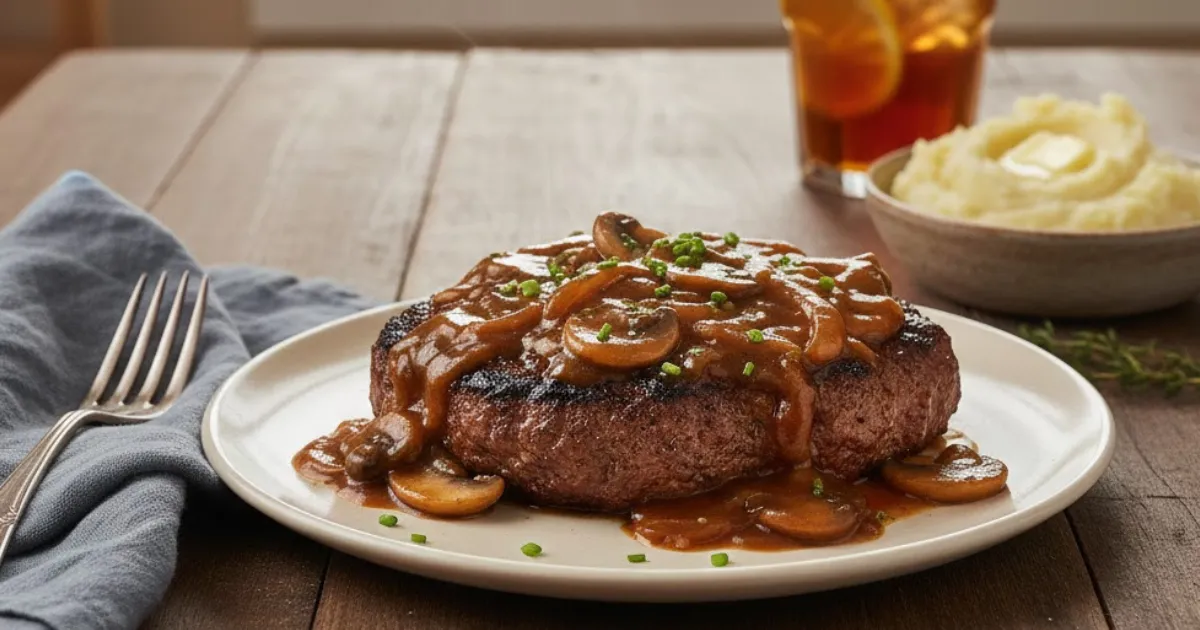
There is nothing more frustrating than paying $45 at a steakhouse for a dish you end up staring at in disappointment — grey on the outside, tough in the middle, swimming in a sauce that’s doing all the heavy lifting. Southern smothered hamburger steak is proof that you don’t need a Michelin star to nail a restaurant-quality plate. This recipe delivers a deeply seared, juicy patty blanketed in a silky, herb-kissed onion gravy, all for a fraction of the cost and the effort. The secret? Treating the hamburger steak like the premium cut it deserves to be: proper seasoning, a ripping-hot cast iron skillet, and the kind of patience that separates a good cook from a great one. If you want to understand the full world of beef cuts and how to select the best meat for any dish, our ultimate guide to steak cuts is your starting point. But for right now, grab your cast iron skillet. We’re making the perfect Southern smothered hamburger steak.
Why This Hamburger Steak Recipe Is Better Than a Steakhouse
- Ready in under 25 minutes. From seasoning to plating, this hamburger steak recipe moves fast — no reservations, no waiting.
- Costs a fraction of the price. A single serving runs roughly $4–6 in ingredients versus $30–50 at a steakhouse.
- Perfectly seasoned, every single time. You control the salt, the aromatics, and the gravy. No guessing.
- The Maillard reaction is guaranteed. A properly preheated cast iron skillet produces that deep, caramelized brown crust you can’t fake.
- One pan, minimal cleanup. The gravy builds right in the same skillet, absorbing every bit of fond (browned bits) from the sear.
Choosing the Best Steak for This Recipe
The Cut
A traditional hamburger steak is ground beef shaped into a thick, oval patty — but not all ground beef is created equal. For this recipe, aim for an 80/20 lean-to-fat ratio. That 20% fat is where all the flavor and juiciness live. Fat renders during cooking, basting the meat from the inside out and ensuring the patty stays moist rather than crumbling into a dry, mealy mess. If you have a butcher nearby, ask them to grind a mix of chuck and sirloin for you. The marbling in chuck adds richness; the sirloin contributes a clean, beefy flavor.
Thickness
Shape your patties to be at least 1 inch thick — ideally 1.25 inches. Anything thinner and you lose control of the internal temperature. A thin patty will overcook before you achieve a proper sear, leaving you with a rubbery disc instead of a juicy center.
Buying Tips
Look for ground beef that is bright red in color with visible white fat streaks. Avoid anything that looks grey, oxidized, or has a strong odor. For the best results, buy your beef the same day you plan to cook. The USDA grades beef based on marbling and maturity — aim for USDA Choice or Prime ground beef for the richest flavor. Learn more about how these grades work on the USDA’s official beef grading page.
Ingredients
| Quantity | Ingredient |
|---|---|
| 1.5 lbs | Ground beef (80/20) |
| 1 tbsp | Avocado oil |
| 2 tbsp | Unsalted butter |
| 1 large | Yellow onion, thinly sliced |
| 3 cloves | Garlic, minced |
| 1 cup | Beef broth |
| 2 tbsp | Worcestershire sauce |
| 1 tsp | Fresh thyme leaves |
| 1 tsp | Kosher salt |
| ½ tsp | Black pepper |
| ¼ tsp | Garlic powder |
| 1 tbsp | All-purpose flour |
Ingredient Notes
The Oil: We use avocado oil (smoke point: ~520°F) for the initial sear, not olive oil. Extra virgin olive oil breaks down and turns bitter at the high temperatures required to trigger the Maillard reaction — the chemical process that produces a dark, flavorful crust. Avocado or canola oil can take the heat without burning, giving you a clean, golden-brown sear every time.
The Salt: Kosher salt is non-negotiable here. Its coarse crystal structure draws moisture out of the meat’s surface, which paradoxically helps create a drier exterior for a better crust. It also seasons more evenly than table salt due to its larger grain size. Season generously — you’re not salting a single steak; you’re coating an entire patty.
The Butter: Butter goes into the gravy, not the sear. Adding butter too early will burn and turn acrid. Once the onions are softened and the broth is in, butter melts in to create a velvety, rich sauce with a nutty depth that ties everything together.
Step-by-Step Instructions
Recipe Card
🛠 Equipment Needed
- Cast Iron Skillet
- Meat Thermometer
- Tongs
Prep & Salting
Combine the ground beef, kosher salt, black pepper, and garlic powder in a bowl. Mix gently — overworking the meat develops tough myosin proteins and makes the patty dense and rubbery. Shape the mixture into four oval patties, each about 1–1.25 inches thick. Press a slight indent into the center of each patty with your thumb; this prevents them from puffing up and curling during cooking. Place the patties on a plate, cover, and refrigerate for at least 15 minutes. Cold patties hold their shape better on the hot pan. Before cooking, remove them from the fridge and pat each patty completely dry with a paper towel. This step is critical — any surface moisture will steam rather than sear, and you’ll never get that crust.
The Sear
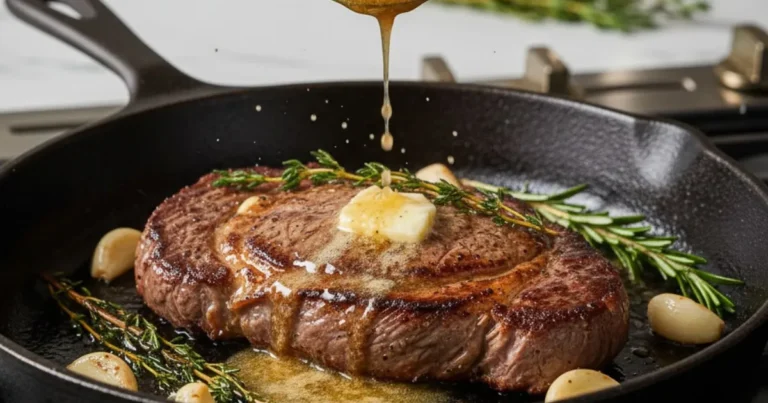
Place your cast iron skillet on the stovetop over high heat. Let it preheat for a full 3–4 minutes until it is smoking hot. Add the avocado oil and swirl to coat. Carefully lay the patties into the pan. Do not press them down. Do not move them. Do not touch them for a full 3 minutes. You will hear an aggressive sizzle — that is the Maillard reaction at work, creating flavor compounds that no other cooking method can replicate. After 3 minutes, flip once. Cook for another 2–3 minutes on the second side until the internal temperature reads 160°F on a meat thermometer. Remove the patties and set them aside on a warm plate. They will continue to carry over cook by 3–5°F, so pull them at 155°F if you prefer them slightly more centered.
The Butter Baste & Gravy
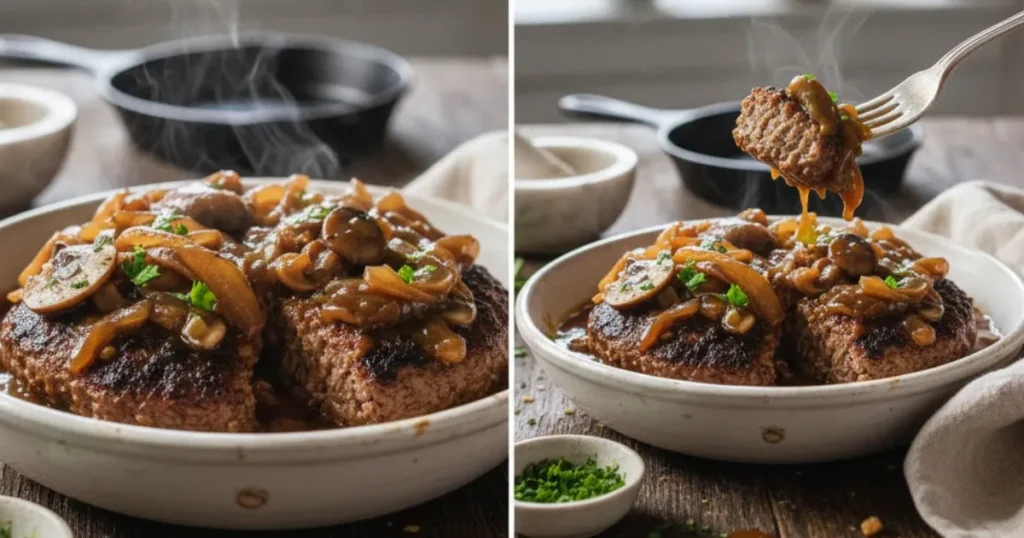
Reduce the heat to medium. Add the sliced onions to the same skillet — do not wipe it clean. The fond left behind is pure flavor. Cook the onions, stirring occasionally, for 4–5 minutes until they are golden and softened. Add the garlic and thyme, cooking for another 30 seconds until fragrant. Sprinkle in the flour and stir for about 20 seconds to cook out the raw taste. Pour in the beef broth and Worcestershire sauce, scraping up all the browned bits from the bottom of the pan. Bring to a simmer and let the gravy reduce for 2–3 minutes until it coats the back of a spoon. Remove from heat and stir in the butter until melted and glossy. Nestle the patties back into the gravy, spoon it generously over the top, and serve immediately.
Doneness Guide
| Doneness | Internal Temperature |
|---|---|
| Rare | 120–125°F |
| Medium-Rare | 130–135°F |
| Medium | 140–145°F |
| Medium-Well | 150–155°F |
| Well-Done | 160°F+ |
For hamburger steak, the USDA recommends cooking ground beef to a minimum internal temperature of 160°F to eliminate the risk of harmful bacteria like E. coli. Unlike a whole muscle steak, ground beef has been exposed to air on all surfaces during grinding, making this threshold non-negotiable for food safety.
Resting
Once the patties are off the heat, resist the urge to cut into them immediately. Rest for at least 5 minutes on a warm plate. During cooking, the muscle fibers contract and push moisture toward the center. Resting allows those fibers to relax and redistribute the juices evenly throughout the patty. Cut too soon, and you will watch all that hard-earned juiciness pool on the plate instead of staying where it belongs — inside the meat.
Expert Tips for the Perfect Crust
Cast iron is essential. Cast iron retains and distributes heat far more evenly than stainless steel or nonstick. It holds a consistent, scorching temperature across the entire cooking surface, which is exactly what you need for an even, deep sear. If you only own one skillet, make it cast iron.
Bring the meat to room temperature. Pull your patties out of the fridge 25–30 minutes before cooking. A cold patty dropped into a hot pan drops the pan’s surface temperature, which delays the sear and leads to uneven cooking. Room-temperature meat sears faster and more uniformly.
Never crowd the pan. If your skillet is small, cook two patties at a time, not four. Crowding traps steam between the patties, preventing the surface from browning. Steam is the enemy of a good crust. Patience here is everything.
Serving Suggestions & Steakhouse Sides
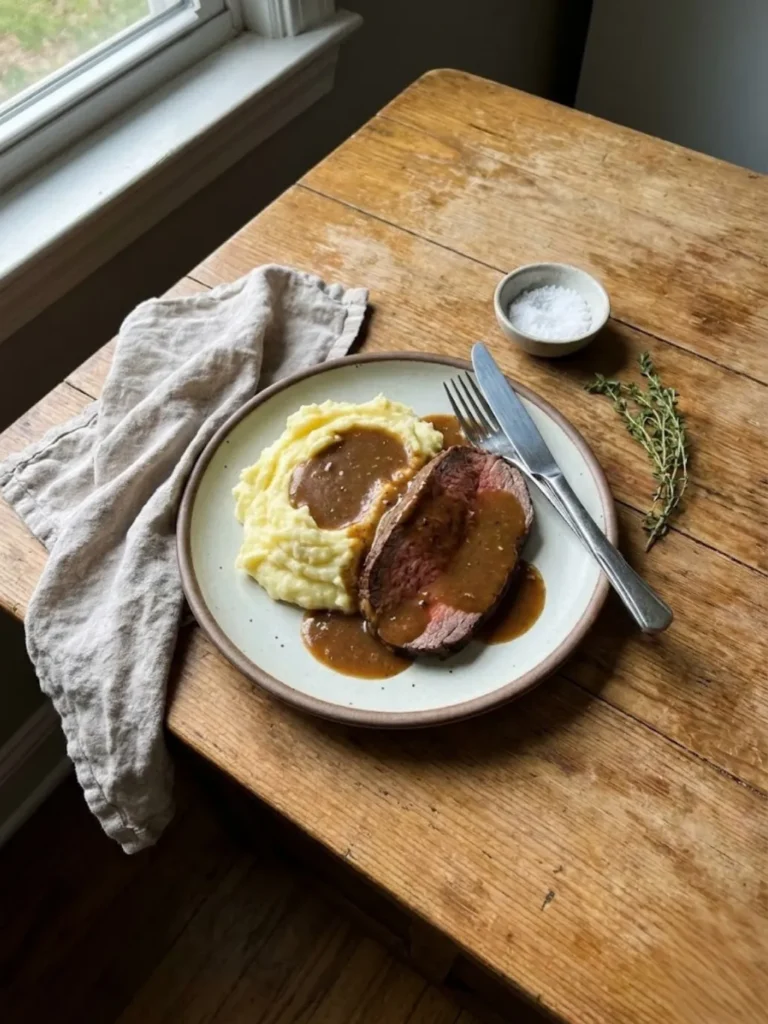
This dish pairs beautifully with classic steakhouse sides. Creamed spinach adds a rich, velvety contrast that stands up to the savory gravy. Garlic mashed potatoes are a natural companion — pile them on the plate and let the onion gravy cascade over both the patty and the potatoes. Roasted asparagus with a squeeze of lemon adds a bright, slightly bitter note that cuts through the richness of the dish.
For sauces beyond the gravy, a bright chimichurri drizzled on top adds an herby, acidic punch that wakes up every bite. If you prefer something richer, a classic peppercorn sauce — made with heavy cream, brandy, and crushed green peppercorns — elevates this dish into fine-dining territory with almost no extra effort.
Storage & Reheating
Leftover hamburger steak keeps well in an airtight container in the refrigerator for up to 3 days. Slice the patties thin and use them in steak sandwiches, over a simple salad, or alongside rice for a quick weeknight meal.
When reheating, do not use the microwave. Microwaves blast moisture unevenly and turn beef rubbery in seconds. Instead, preheat your oven to 275°F, place the patties and gravy in an oven-safe dish, cover tightly with foil, and warm for 15–20 minutes until heated through. This gentle, low-and-slow method preserves the texture and keeps the gravy silky.
Frequently Asked Questions
How do I know when it’s done without a thermometer? The most reliable method is always a meat thermometer — there is no substitute for an accurate internal temperature reading. However, if you don’t have one, use the touch test: press the center of the patty with your fingertip. If it feels soft and gives easily, it’s underdone. A slight firmness with a little give indicates medium. If it feels like pressing the base of your thumb when your hand is in a fist, it’s well-done. For ground beef, err on the side of firmer — food safety demands it.
Can I use a nonstick pan? You can, but you won’t get the same crust. Nonstick coatings are designed to prevent food from adhering, which also prevents the deep, high-heat sear that creates flavor. Cast iron or stainless steel will always outperform nonstick for searing. If nonstick is all you have, preheat it as high as your stovetop allows and accept a lighter crust.
When do I put the butter in? The butter goes into the gravy after the onions have softened and the broth has reduced — not during the sear. Butter burns at around 300°F, and your skillet during the sear is well above 400°F. Adding butter too early will scorch and turn bitter. Patience pays off: butter stirred into a warm, reduced gravy creates an emulsified, glossy sauce that clings to the patties beautifully.
Conclusion
Southern smothered hamburger steak is one of those dishes that looks and tastes far more impressive than the effort it actually requires. A hot pan, quality beef, and a gravy built from the fond left behind — that’s all it takes. The hamburger steak recipe above strips away the guesswork and gives you a repeatable, reliable method for achieving a restaurant-quality result at home. Once you master this technique, you’ll wonder why you ever spent $50 for the same thing across the table. Give it a try tonight, and let us know how it turned out. Rate this recipe and tell us your favorite cut in the comments!