Skirt steak recipes: How to Cut Against the Grain
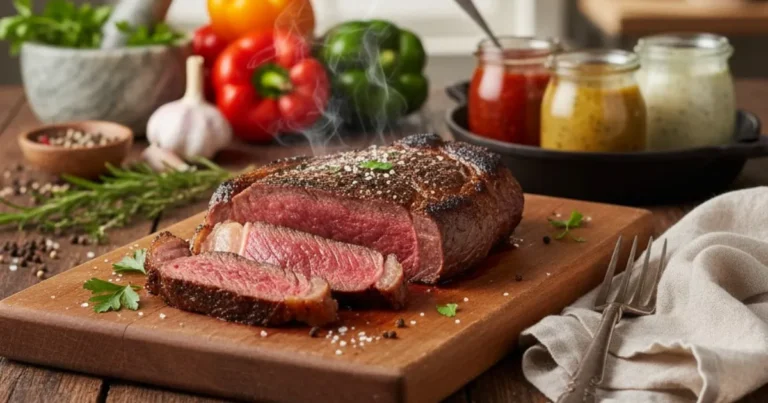
How to cook skirt steak: Season and pat dry, sear in a screaming-hot cast iron skillet at 450°F+ for 2–3 minutes per side until the internal temperature hits 130–135°F for medium-rare. Rest for 5–10 minutes, then slice against the grain. Total time: under 20 minutes.
You’ve done it before. You paid good money for a beautiful cut of steak, fired up the stove, and ended up with something grey, chewy, and disappointing enough to make you question why you didn’t just order takeout. Or maybe you’ve been shelling out $50 at a steakhouse every weekend for something that, deep down, you know you should be able to pull off yourself — for a fraction of the cost.
Here’s the truth: skirt steak recipes don’t need to be complicated. This undercut of beef is one of the most flavorful, affordable slabs on the butcher’s block, and with the right technique — a searing-hot pan, a generous butter baste, and the critical step of slicing against the grain — you’ll produce a crusty, caramelized exterior hiding a blush-pink, juice-bursting interior that rivals anything a steakhouse kitchen can deliver. If you want to expand your repertoire beyond skirt steak and master every cut in the case, start with our ultimate guide to steak cuts for a full breakdown of marbling, grades, and cooking methods. But right now? Grab your cast iron skillet. We’re making the perfect skirt steak.
Why This Skirt Steak Recipe Is Better Than a Steakhouse
- Done in under 20 minutes — from seasoning to plating, no reservations required.
- Costs a fraction of the price. Skirt steak runs $8–$14 per pound versus $30+ for a ribeye at a restaurant.
- Perfectly seasoned and butter-basted. The Maillard reaction does the heavy lifting on flavor; the butter baste adds a nutty, herb-infused richness no restaurant will tell you about.
- You control the doneness. A meat thermometer means no more guessing — medium-rare, every single time.
Choosing the Best Skirt Steak for This Recipe
The Cut: Skirt steak comes from the diaphragm muscles of the cow — a hard-working section that means the meat has long, pronounced muscle fibers. This is exactly why cutting against the grain is non-negotiable (more on that below). Despite the tough texture of its fibers, skirt steak is laced with exceptional marbling. That intramuscular fat is what makes it so intensely beefy and flavorful when cooked correctly.
Thickness: Look for skirt steak that is thick and uniform — ideally at least 1 to 1.5 inches at its thickest point. Thinner cuts cook too fast, leaving you no margin for error on temperature control.
Buying Tips: At the butcher or grocery counter, select meat that is bright cherry-red with white, firm fat. Avoid anything with a dull, grey-brown color or excessive liquid pooling in the tray — that’s a sign of age or improper storage.
Ingredients
| Quantity | Ingredient |
|---|---|
| 2 (12 oz each) | Skirt Steaks |
| 1.5 tbsp | Avocado Oil (or Canola Oil) |
| 3 tbsp | Unsalted Butter |
| 4 cloves | Garlic, smashed |
| 4 sprigs | Fresh Thyme |
| 1 sprig | Fresh Rosemary |
| To taste | Flaky Sea Salt |
| To taste | Freshly Ground Black Pepper |
Ingredient Notes
The Oil: We use avocado or canola oil — not olive oil — for the initial sear. Extra virgin olive oil has a relatively low smoke point and will burn and turn bitter at the extreme temperatures needed to develop a proper crust. Avocado oil handles heat up to 520°F without breaking down.
The Salt: Kosher salt is the gold standard here. Its coarse crystal structure draws moisture out of the meat’s surface, which is the first step toward achieving that deep, dark sear. Fine table salt will over-season before it can do its job.
Step-by-Step Instructions
Recipe Card
🛠 Equipment Needed
- Cast Iron Skillet
- Meat Thermometer
- Tongs
1. Prep & Salting
Remove your skirt steaks from the refrigerator at least 30 minutes before cooking — this brings them closer to room temperature and promotes even cooking. Pat both sides of each steak thoroughly dry with paper towels. This step is critical: any residual moisture on the surface will steam instead of sear, and you will never get that golden-brown crust. Season generously on all sides with kosher salt and black pepper.
2. The Sear
Place your cast iron skillet on the burner and crank the heat to high. Let it preheat for at least 3–4 minutes until the pan is smoking. Add your avocado oil and swirl to coat. Carefully lay the steaks into the pan — you should hear an aggressive, loud sizzle. Do not touch them for a full 2 minutes. This uninterrupted contact is what triggers the Maillard reaction — the chemical process that creates that gorgeous, caramelized crust and complex flavor. Flip once. Sear the second side for another 1.5–2 minutes.
3. The Butter Baste
Reduce heat to medium. Add the butter, smashed garlic, thyme, and rosemary to the pan. As the butter melts and foams, use a large spoon to continuously scoop the liquid — now infused with herbs and garlic — and pour it over the top of the steaks. This butter basting step adds richness, rounds out the flavor, and gently finishes cooking the meat without drying it out. Baste for about 60 seconds.
4. Doneness Guide
Pull your steaks when the internal temperature reads as follows. Always measure at the thickest point, away from any bone:
| Doneness | Internal Temperature |
|---|---|
| Rare | 120–125°F |
| Medium-Rare | 130–135°F |
| Medium | 135–140°F |
| Medium-Well | 145–150°F |
| Well-Done | 155°F+ |
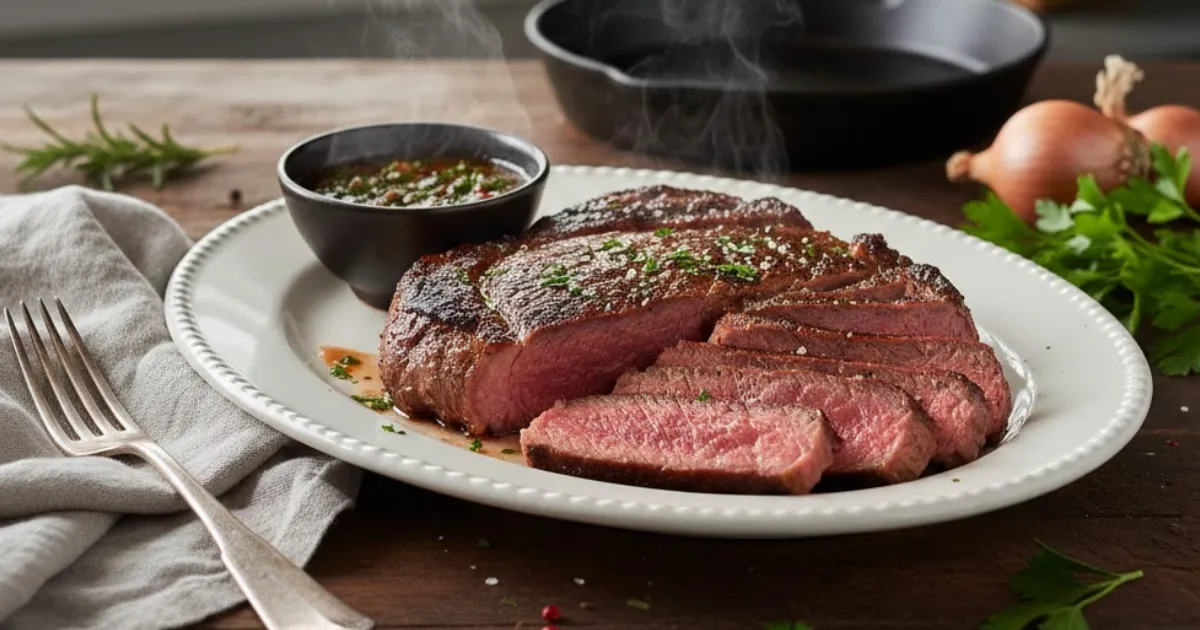
For skirt steak, medium-rare is the sweet spot. The fat renders beautifully at this temperature, and the texture stays tender and juicy.
5. Resting
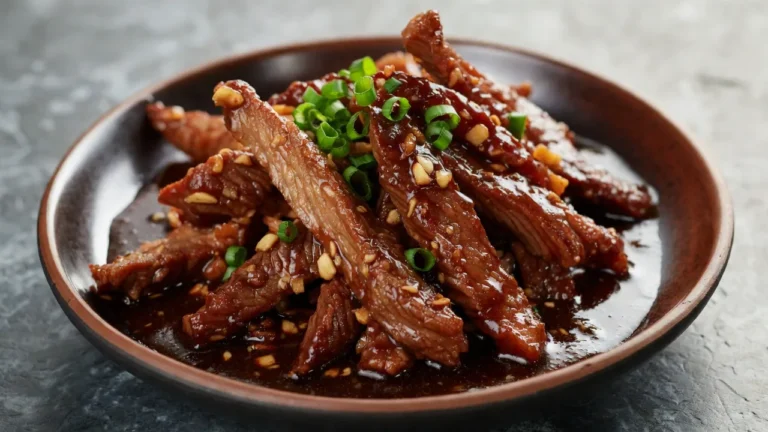
Transfer the steaks to a warm plate — not a cold cutting board — and tent loosely with foil. Rest for 5 to 10 minutes. This is not optional. During cooking, the muscle fibers contract and push moisture toward the center. Cutting immediately releases all of that juice onto your board and into oblivion. Resting allows it to redistribute back throughout the meat. Finally, slice across the grain — cutting perpendicular to those long muscle fibers — into strips about a quarter-inch thick. This shortens the fibers and transforms the texture from tough to impossibly tender.
Expert Tips for the Perfect Crust
Cast iron is essential. No other pan retains and distributes heat as evenly. When you drop a cold steak into a thin pan, the temperature plummets; cast iron holds its heat and keeps that sear scorching.
Bring it to room temperature. Taking steaks out of the fridge 30 minutes before cooking prevents thermal shock and ensures the center cooks at the same rate as the exterior.
Cook one at a time. If your skillet is small, crowding two steaks in lowers the pan temperature and causes the meat to steam rather than sear. Patience here pays off in crust quality.
Serving Suggestions & Steakhouse Sides
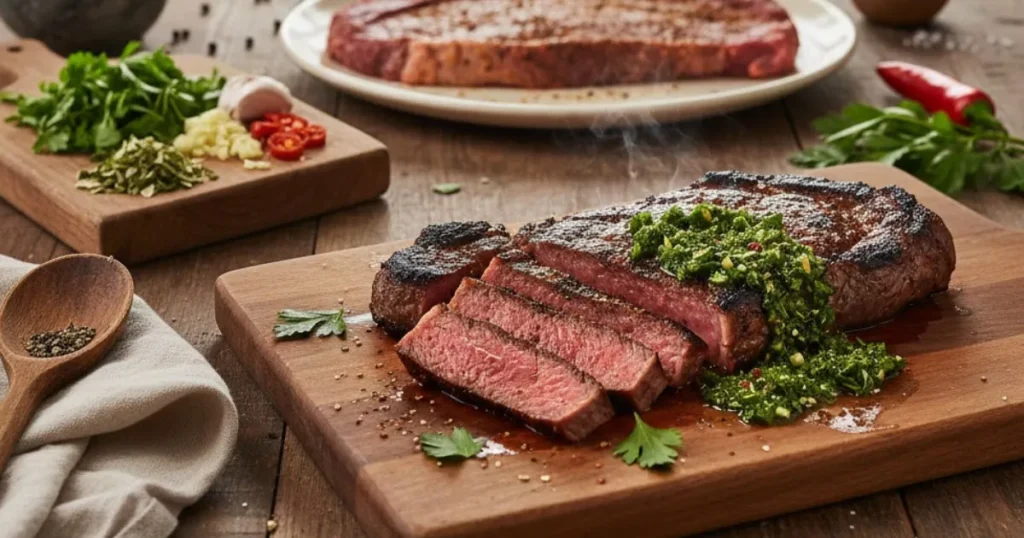
Pair your skirt steak with classic steakhouse sides: creamed spinach rich with parmesan, buttery mashed potatoes, or roasted asparagus finished with a squeeze of lemon. For sauces, a bright chimichurri cuts through the richness beautifully, while a classic peppercorn sauce leans into the bold, beefy flavor. For detailed guidance on pairing cuts with the right cooking technique, the team at Serious Eats has an excellent breakdown of the science behind searing steak.
Storage & Reheating
Leftover skirt steak keeps well in an airtight container in the refrigerator for up to 3 days. Slice it thin for steak sandwiches, toss it over arugula for a quick salad, or fold it into tacos the next night.
Do not microwave. The uneven heating will toughen the meat instantly. Instead, reheat gently in a low oven — around 275°F — until the internal temperature reaches 125°F. A quick 30-second sear in a hot pan afterward will bring back the crust.
Frequently Asked Questions
How do I know when it’s medium-rare without a thermometer? The firmest method is the touch test: press the steak with your finger. Medium-rare feels like the flesh between your thumb and index finger when you press them together — soft with just a little give. That said, a meat thermometer is always the most reliable method, especially with thinner cuts like skirt steak where a few degrees makes a massive difference.
Can I use a non-stick pan? You can, but you won’t get the same crust. Non-stick coatings aren’t designed for the extreme heat required to trigger the Maillard reaction. Cast iron or stainless steel are your best options for a true sear.
When do I put the butter in? After the initial sear on both sides. Adding butter too early causes it to burn at high searing temperatures. Dropping the heat to medium before adding the butter allows it to foam and baste without burning.
Conclusion
Skirt steak recipes don’t need to be intimidating. With a screaming-hot cast iron skillet, a proper salt-and-dry prep, and the discipline to let the meat rest before you slice, you now have every tool you need to cook restaurant-quality steak at home — tonight. If you’re ready to keep building your skills and explore more cuts, grades, and techniques, revisit our ultimate guide to steak cuts as your go-to reference. Now get cooking. Rate this recipe below and tell us in the comments — what’s your favorite cut?