Duck and sauce recipe: Best Cherry Port Glaze
This duck and sauce recipe sears duck breasts skin-side down for 6-8 minutes until crispy, flips for 3-4 minutes, then rests while you make cherry port glaze. Cook duck breast to 135-140°F for medium-rare (or 165°F for well-done). The sweet-tart sauce balances rich duck perfectly.
Duck breast has an intimidating reputation—home cooks worry it’ll turn out tough, greasy, or gamey. You’ve probably avoided it entirely, sticking to chicken because at least you know how to cook that without ruining it. But the truth is, duck cooked wrong is disappointing: rubbery skin, overcooked meat, and no sauce to tie it together.
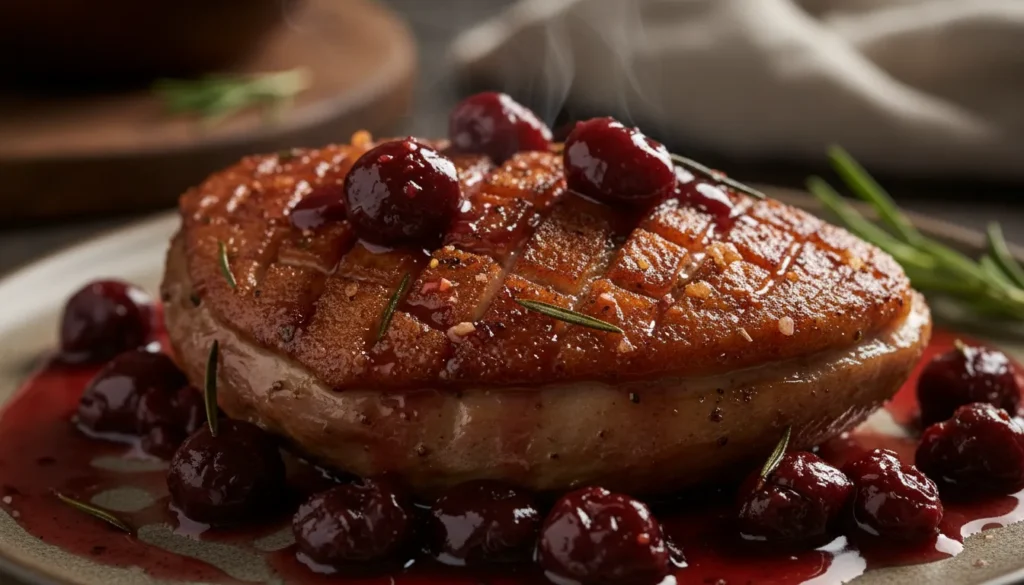
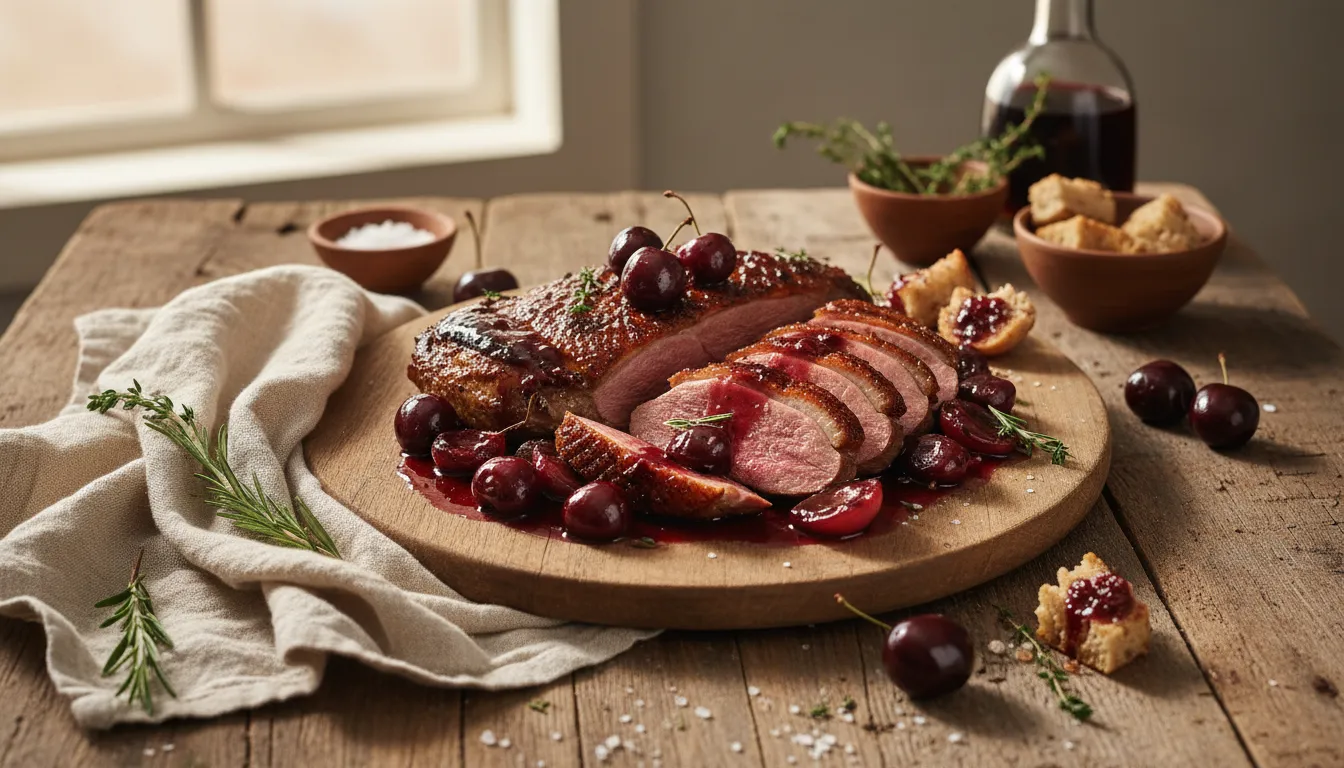
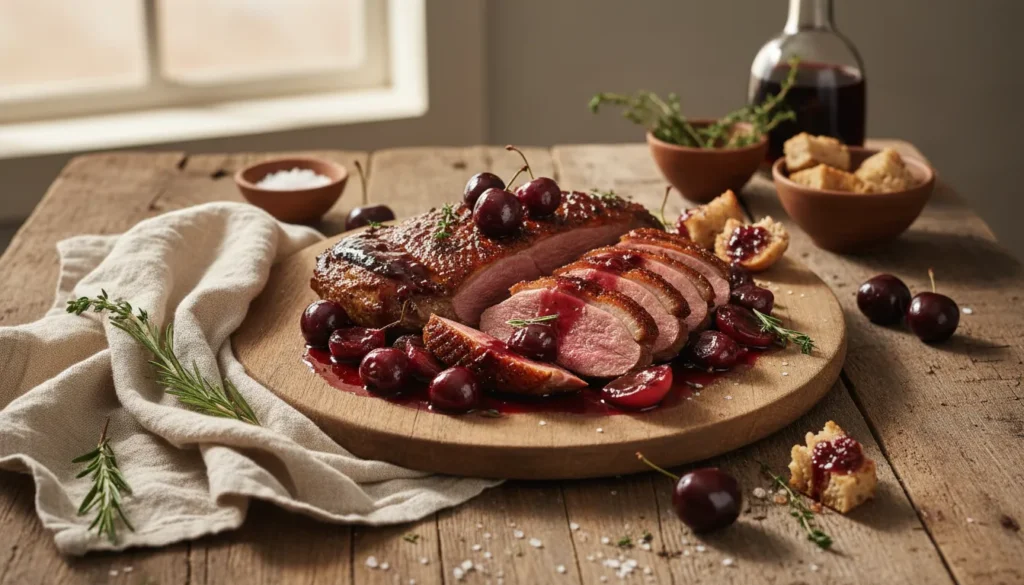
The solution? This duck and sauce recipe transforms duck breast into a succulent, restaurant-quality dish with shatteringly crispy skin and tender, rosy meat draped in a glossy cherry port glaze. The sweet-tart sauce cuts through duck’s richness while amplifying its naturally bold flavor.
Why it works: Duck breast has a thick fat cap that must be scored and rendered slowly—this creates crispy skin while keeping the meat beneath juicy. Unlike chicken, duck breast is best served medium-rare (like a steak), which prevents the dry, livery texture that happens when you overcook it. The cherry port glaze adds sophisticated sweetness and acidity that complements duck’s rich, iron-forward flavor profile perfectly.
Preview: Get ready to make this duck and sauce recipe your impressive dinner party centerpiece. Once you master the simple technique, duck breast becomes easier than chicken—and far more elegant.
Why This Duck and Sauce Recipe Works
- Restaurant elegance at home – Looks and tastes like fine dining
- Ready in 25 minutes – Faster than roasting a whole chicken
- Foolproof pan sauce – Uses the flavorful drippings from the duck
- Impressive presentation – Sliced duck breast with glossy glaze wows guests
- Healthier than expected – Most fat renders out during cooking
- Budget-conscious luxury – Duck breast costs less than premium steak
- Make-ahead friendly – Sauce can be prepared in advance and reheated
Choosing the Best Duck Breast
Cut Selection: For this duck and sauce recipe, use boneless duck breasts (called magrets if from Moulard or Muscovy ducks). Each breast weighs 8-12 ounces and serves 1-2 people. Choose breasts with thick, intact fat caps—this fat is essential for flavor and crispiness. Avoid pre-trimmed “skinless” duck breast—the skin is half the experience.
Quality Tips: Moulard duck breasts (from ducks raised for foie gras) are larger, fattier, and more flavorful—they’re the premium choice. Pekin duck breasts are smaller and leaner but more affordable and widely available. Air-chilled duck has drier skin that crisps more easily than water-chilled. Look for breasts with deep red meat—pale pink indicates the duck was too young or improperly raised.
Fresh vs. Frozen: Both work excellently. Frozen duck breast is often flash-frozen at peak freshness and can be higher quality than “fresh” duck that’s been sitting for days. Thaw completely in the refrigerator for 24 hours—never at room temperature. Pat completely dry before cooking.
Size Matters: Choose duck breasts of similar size and thickness so they cook at the same rate. If one breast is significantly thicker, adjust cooking time accordingly or serve it to someone who prefers more well-done meat.
Prep Safety—Crucial Tip: Do not wash raw duck breast. Rinsing poultry under running water creates bacteria-laden droplets that spray Salmonella and Campylobacter across your sink, countertops, and faucet handles. Cooking to the proper temperature kills all pathogens—water cannot. Simply pat duck dry with paper towels, then immediately wash your hands with soap and hot water for 20 seconds. Use separate cutting boards for raw poultry and ready-to-eat ingredients like fresh herbs for the sauce.
Ingredients List
For the Duck:
| Quantity | Ingredient |
|---|---|
| 2 (10-12 oz) | Duck Breasts (boneless, skin-on) |
| 1 tsp | Kosher Salt |
| ½ tsp | Black Pepper (freshly ground) |
| 1 tsp | Fresh Thyme Leaves (optional) |
For the Cherry Port Glaze:
| Quantity | Ingredient |
|---|---|
| 1 cup | Fresh or Frozen Cherries (pitted, halved) |
| ½ cup | Port Wine (ruby or tawny) |
| ¼ cup | Chicken or Duck Stock |
| 2 tbsp | Balsamic Vinegar |
| 2 tbsp | Honey or Brown Sugar |
| 1 | Shallot (minced) |
| 2 cloves | Garlic (minced) |
| 1 sprig | Fresh Thyme |
| 1 tbsp | Unsalted Butter (cold) |
| ¼ tsp | Kosher Salt |
| Pinch | Black Pepper |
Ingredient Notes
The Duck Breast (The Star): Duck breast has significantly more fat than chicken breast—this isn’t a flaw, it’s the feature. That thick fat cap renders during cooking, creating crispy skin while basting the meat from above. The meat itself is dark, lean, and iron-rich—closer to beef than chicken in flavor and texture.
The Scoring Technique: You’ll score the fat cap in a crosshatch pattern before cooking—this allows fat to render efficiently and creates attractive diamond patterns on the crispy skin. Score deeply through the fat but not into the meat itself.
The Port Wine (Sauce Foundation): Port’s sweetness and complexity are perfect for duck. Ruby port is fruitier and lighter; tawny port is nuttier and richer. Both work beautifully. If you don’t have port, substitute with red wine plus 1 tablespoon honey, though the flavor will be less complex.
The Cherries (Sweet-Tart Balance): Fresh sweet cherries (Bing, Rainier) work best in summer; frozen cherries are perfect year-round and already pitted. Dried cherries (rehydrated in hot water for 10 minutes) work in a pinch. Cherries’ natural acidity and sweetness cut through duck’s richness while complementing its iron notes.
The Finishing Butter (Gloss and Body): Cold butter whisked into the sauce at the end creates a glossy, velvety texture and rich mouthfeel. This technique is called monter au beurre in French cooking—it transforms thin pan sauce into restaurant-quality glaze.
Step-by-Step Instructions
Recipe Card
🛠 Equipment Needed
- Heavy-bottomed skillet (cast iron or stainless steel)
- sharp knife
- instant-read thermometer
- tongs
- small saucepan or use same skillet for sauce
Prep: Scoring and Seasoning the Duck
Remove duck breasts from refrigeration 20 minutes before cooking—room temperature duck cooks more evenly.
Pat duck breasts completely dry with paper towels on both sides—moisture is the enemy of crispy skin.
Place duck skin-side up on a cutting board. Using a sharp knife, score the fat cap in a crosshatch pattern with cuts about ½ inch apart. Slice through the fat layer but stop before reaching the meat—you’ll see the color change from white fat to dark red meat.
Season both sides generously with salt and pepper. If using thyme, press the leaves into the scored fat.
The Cook: Rendering the Fat and Searing
Place duck breasts skin-side down in a cold, dry skillet (no oil needed—the duck provides its own fat). This cold-start method allows fat to render slowly without burning.
Turn heat to medium-low and cook for 6-8 minutes without moving them. You’ll see fat rendering and pooling in the pan—pour it off periodically into a heatproof container (save for roasting potatoes). The skin should be deeply golden brown and crispy.
Flip duck breasts and increase heat to medium-high. Cook for 3-4 minutes for medium-rare, 5-6 minutes for medium, or 7-8 minutes for well-done.
The Doneness Test
Duck breast is traditionally served medium-rare like steak. Insert an instant-read thermometer into the thickest part:
- 125-130°F = Rare (very red center)
- 135-140°F = Medium-rare (rosy pink center) ← RECOMMENDED
- 145-150°F = Medium (light pink center)
- 165°F = Well-done (fully cooked, no pink)
Important note: Unlike chicken, duck breast is safe to eat at lower temperatures. However, if you prefer fully cooked poultry, cook to 165°F (74°C)—the meat will be firmer but still flavorful, especially with the sauce.
Resting the Duck
Transfer duck breasts to a cutting board and tent loosely with foil. Let them rest for 5-10 minutes—this allows juices to redistribute. If you slice immediately, those juices spill onto the board instead of staying in the meat, leaving it drier.
Don’t wipe out the skillet—those browned bits and remaining fat are the foundation of your cherry port glaze.
Making the Cherry Port Glaze
While duck rests, make the sauce in the same skillet. Pour off all but 1 tablespoon of rendered duck fat.
Return skillet to medium heat. Add minced shallot and cook for 2 minutes until softened. Add garlic and cook 30 seconds until fragrant.
Pour in port wine and balsamic vinegar, scraping the bottom of the pan to release all those flavorful browned bits (fond). Let it simmer for 3-4 minutes until reduced by half.
Add cherries, stock, honey, thyme sprig, salt, and pepper. Simmer for 5-7 minutes until cherries soften and sauce thickens slightly, becoming syrupy.
Remove from heat, discard thyme sprig, and whisk in cold butter until it melts into a glossy glaze. Taste and adjust seasoning—the sauce should be sweet, tart, and rich all at once.
Slice the duck: Place duck breasts skin-side up and slice against the grain into ½-inch thick slices, fanning them on plates. Spoon cherry port glaze over and around the sliced duck.
3 Secrets for Perfect Duck Breast
Tip 1: Start Cold, Render Slowly: The biggest mistake is starting duck in a hot pan—the outside burns before the fat renders, leaving you with rubbery skin. Place duck in a cold pan, then turn on the heat. This slow rendering (6-8 minutes) transforms the thick fat cap into shatteringly crispy skin while keeping the meat beneath tender. Be patient and pour off fat as it accumulates.
Tip 2: Score Deeply But Not Too Deep: Proper scoring is critical. Cut through 90% of the fat layer but stop before reaching meat—if you cut into meat, juices leak out during cooking, leading to dryness. The crosshatch pattern should be about ½ inch apart in both directions, creating a diamond pattern that crisps beautifully.
Tip 3: Don’t Overcook—Embrace Medium-Rare: Duck breast is not chicken—it’s closer to steak in texture and flavor. Cooked to 165°F, duck breast becomes dry, livery, and tough. The sweet spot is 135-140°F, where the meat is rosy pink, tender, and juicy. Use a thermometer and remove it promptly when it hits your target temperature. Carryover cooking will add another 5 degrees during resting.
Serving Suggestions
Starchy Sides: This duck and sauce recipe pairs beautifully with creamy mashed potatoes (they soak up the cherry glaze), roasted fingerling potatoes, wild rice pilaf, polenta, or buttery egg noodles.
Vegetable Pairings: Serve with roasted Brussels sprouts, sautéed green beans with almonds, roasted root vegetables, braised red cabbage, or sautéed spinach with garlic. The vegetables should be simple to let the duck and sauce shine.
Wine Pairing: The cherry port glaze calls for Pinot Noir, Merlot, or Côtes du Rhône. For white wine lovers, try Chardonnay. The sauce already contains port, so your wine pairing should complement those flavors.
Sauce Variations: Swap cherries for blackberries, blueberries, or dried cranberries. Replace port with red wine and pomegranate juice or balsamic reduction. Add orange zest for citrus brightness.
For comprehensive poultry cooking techniques, explore The Ultimate Guide to Cooking Chicken: Techniques & Tips.
Storage & Reheating
Refrigerator: Store cooked duck breast and sauce separately in airtight containers for 3-4 days maximum. The skin loses crispiness during storage but the meat stays flavorful.
Freezing: Duck breast freezes well for up to 3 months. Slice before freezing for easier portioning. The cherry port glaze also freezes beautifully—portion into ice cube trays for single servings.
Reheating Duck: The challenge is reheating without overcooking. Best method: Let duck come to room temperature, then warm in a 300°F oven for 8-10 minutes. For crispy skin, sear skin-side down in a dry skillet for 2-3 minutes. Avoid microwaving—it creates rubbery texture.
Reheating Sauce: Warm gently in a small saucepan over low heat, adding a splash of stock or port if it’s too thick. Whisk in a small knob of cold butter at the end to refresh the gloss.
Frequently Asked Questions
Is it safe to eat duck breast medium-rare?
Yes. Duck breast is safe at lower temperatures than chicken because whole muscle cuts (like breast) are less likely to contain bacteria throughout. However, ground duck must reach 165°F. If you’re uncomfortable with pink meat, cook duck breast to 165°F—it will be firmer but still delicious with the sauce.
Can I use frozen duck breast for this duck and sauce recipe?
Absolutely. Thaw completely in the refrigerator for 24 hours before cooking. Never thaw at room temperature. Frozen duck breast that’s been properly thawed cooks identically to fresh.
What do I do with all the rendered duck fat?
Save it! Strain the rendered fat into a jar and refrigerate for up to 3 months. Use it for roasting potatoes (the best you’ve ever tasted), sautéing vegetables, making confit, or frying eggs. It’s liquid gold for home cooks.
How do I get the skin extra crispy?
Three techniques: (1) Score deeply and evenly, (2) Start in a cold pan for slow rendering, and (3) Press down gently with a spatula during the first few minutes of cooking to ensure full contact with the hot pan. Some cooks finish skin-side down for 1 minute at high heat right before removing from the pan.
Conclusion
This duck and sauce recipe proves that impressive, restaurant-quality dinners don’t require culinary school training. By understanding duck breast’s unique characteristics—rich fat cap that needs rendering, lean meat best served medium-rare—and pairing it with a sophisticated cherry port glaze, you create a meal that looks and tastes like it came from a fine dining kitchen.
Remember the key principles: score the fat deeply, start in a cold pan for slow rendering, cook to 135-140°F for optimal tenderness, rest before slicing, and make the pan sauce while duck rests. Master this elegant technique, and you’ll have a signature dish for every special occasion.
Did this duck and sauce recipe elevate your home cooking? Leave a comment sharing your favorite sauce variation—I love hearing how readers make it their own!