Beef liver recipes: How to Mask the Strong Taste
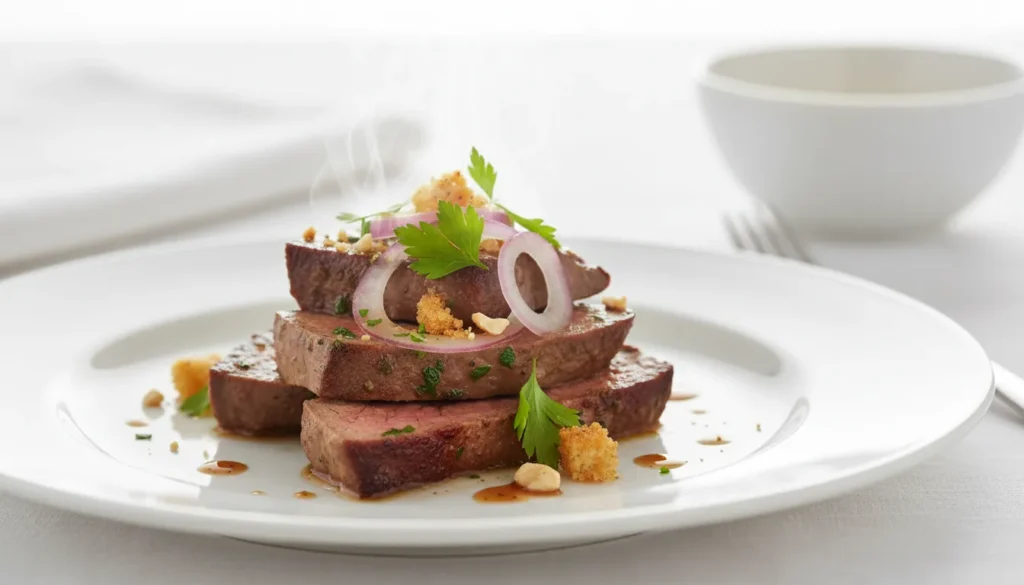
These beef liver recipes use milk-soaking, strategic seasoning, and quick high-heat cooking to neutralize the strong metallic taste. Soak sliced liver in milk for 2 hours, pat dry, dust with seasoned flour, then sear in butter for 2-3 minutes per side until just pink inside for tender, mild-flavored results.
Ever avoided beef liver because of memories of that overpowering, metallic taste and grainy texture? You’re not alone—liver’s intense flavor and potential toughness keep even adventurous cooks away from this nutrient powerhouse.
These beef liver recipes completely transform liver from intimidating to delicious using proven techniques that neutralize strong flavors while maximizing tenderness. The result is mild, buttery liver that even skeptics enjoy.
The secret lies in a three-step approach: milk-soaking to draw out metallic compounds, proper slicing to ensure quick cooking, and high-heat searing that creates flavorful crust while keeping the interior just pink. The Maillard reaction from proper browning adds savory depth that masks any remaining mineral notes.
Here is everything you need to know to master approachable, delicious beef liver.
Why These Beef Liver Recipes Are Keepers
These techniques make liver accessible while delivering impressive nutritional and practical benefits.
Nutrient powerhouse: Liver provides more iron, vitamin A, and B vitamins per ounce than any other food. One serving covers your weekly vitamin A needs.
Budget-friendly protein: Costs $2-4 per pound—significantly less than premium steaks while offering comparable protein with superior micronutrients.
Ready in 15 minutes: From refrigerator to plate faster than ordering takeout. Perfect for quick, nutritious weeknight meals.
Mild flavor when prepared correctly: Proper soaking and cooking eliminates that strong “livery” taste that puts people off. Tastes surprisingly similar to tender steak.
Versatile flavor profiles: Adapt to Italian, French, or Middle Eastern seasonings. Works in everything from classic liver and onions to elegant pâté.
Impressive for guests: Properly cooked liver demonstrates culinary skill. It’s restaurant-quality cooking that looks far more difficult than it actually is.
Sustainable choice: Nose-to-tail eating reduces food waste and honors the whole animal. Organ meats deserve the same respect as muscle cuts.
Selecting Quality Beef Liver
The Ideal Choice: Calf’s Liver (Young Beef Liver)
Calf’s liver from young cattle delivers the mildest flavor and most tender texture for beef liver recipes. The younger the animal, the less pronounced the mineral taste and the more delicate the texture.
This liver has pale reddish-brown color compared to the darker, almost purple hue of mature beef liver. The milder flavor makes it ideal for liver beginners or those sensitive to strong tastes.
Calf’s liver contains finer grain structure with less connective tissue. This translates to tender results even with brief cooking—overcooking remains the primary cause of tough, unpleasant liver.
Substitutions:
Regular beef liver from mature cattle works but has more pronounced flavor. Extend milk-soaking to 3-4 hours and use stronger seasonings like garlic and herbs to compensate.
Chicken liver offers even milder flavor but completely different texture—soft and creamy rather than meaty. Use for pâtés rather than pan-searing.
Buying Tips:
Look for liver with glossy, moist appearance and deep reddish-brown color. Avoid dry, dull, or grayish liver—these indicate age and poor handling.
Fresh liver should smell clean and slightly sweet, never sour or ammoniated. Trust your nose—off-smelling liver tastes terrible regardless of preparation.
Choose liver sliced ½-inch thick at the butcher counter. Pre-sliced packaged liver is often inconsistently cut, leading to uneven cooking.
Ask about the source. Grass-fed beef liver contains higher nutrient levels and often milder flavor than grain-fed.
Ingredients Notes & Preparation
Recipe Card
🛠 Equipment Needed
- Cast iron skillet (10-12 inch)
- Sharp knife
- Shallow dish for soaking
- Paper towels
- Instant-read thermometer (optional)
- Spatula
- Tongs
Liver Preparation:
Milk-soaking is non-negotiable. Place liver slices in a bowl and cover completely with whole milk. Refrigerate for 2 hours minimum, up to overnight. Milk’s lactic acid neutralizes the metallic compounds responsible for strong taste.
Remove any visible membrane or tough connective tissue. These white, silvery sections turn rubbery when cooked and taste unpleasant.
Slice liver into ½-inch thick pieces if not pre-sliced. Uniform thickness ensures even cooking—crucial since overcooking by even 30 seconds ruins texture.
Pat liver completely dry with paper towels after soaking. Surface moisture prevents proper browning and creates steam instead of sear.
Seasoning Strategy:
Flour coating adds two benefits: creates barrier that seals in moisture and develops crispy golden crust through the Maillard reaction.
Onions are traditional for good reason—their sweetness balances liver’s mineral notes. Caramelize slowly until golden brown for maximum effect.
Bacon contributes smoky, salty flavor that complements liver beautifully. The rendered fat also provides ideal cooking medium.
Vinegar or lemon in pan sauces adds brightness that cuts through richness and further masks any lingering strong taste.
Equipment:
Cast iron skillet for superior heat retention and even browning
Sharp knife for trimming membrane
Shallow dish for milk-soaking
Paper towels for thorough drying
Meat thermometer (optional but helpful for beginners)
Step-by-Step Instructions
Classic Liver and Onions
Prep & Soak the Liver:
Place 1.5 pounds of ½-inch thick liver slices in a shallow dish. Cover completely with 2 cups of whole milk. Refrigerate for 2-4 hours.
While liver soaks, slice 2 large onions into ¼-inch rings. The slow caramelization while liver soaks means they’ll be ready simultaneously.
Remove liver from milk and pat bone-dry with paper towels. Season both sides with salt and black pepper. Dust lightly with seasoned flour (flour mixed with salt, pepper, and paprika).
The Cooking Process:
Heat 2 tablespoons of bacon fat or butter in your cast iron skillet over medium-high heat until shimmering. You want it hot enough that liver sizzles immediately on contact.
Working in batches to avoid crowding, add liver slices in a single layer. Don’t move them—let them sear undisturbed for 2 minutes. You’ll hear aggressive sizzling and see edges turning golden brown.
Flip gently with a spatula. Cook the second side for 2 minutes for medium (slightly pink inside) or 3 minutes for medium-well. The internal temperature should reach 145-150°F for optimal texture.
Remove liver immediately to a warm plate. Don’t leave it in the hot pan—residual heat continues cooking and quickly leads to toughness.
In the same skillet, reduce heat to medium. Add sliced onions and cook for 12-15 minutes, stirring occasionally, until deeply golden and caramelized. Their sweetness will have developed completely.
Doneness Guide for Liver:
Rare (130°F): Very soft texture, quite pink inside. Too rare for most people but safe if liver is fresh and from reputable source.
Medium-rare (140°F): Slightly pink center, tender and juicy. This is the sweet spot—maximum tenderness with mild flavor.
Medium (145-150°F): Just barely pink, still tender. Best target for liver beginners nervous about undercooking.
Well-done (160°F+): No pink, firm texture that borders on tough. Avoid cooking this far—liver becomes grainy and unpleasant.
Why Resting Matters for Liver
Unlike steaks, liver benefits from minimal resting—just 2-3 minutes. Longer resting causes overcooking from residual heat.
The brief rest allows the proteins to relax slightly, making slicing easier and texture more tender. It also lets the surface moisture evaporate, maintaining that crispy crust.
Tent loosely with foil during resting. Tight covering traps steam that softens the crust you worked to develop.
Expert Tips for Tender, Mild Liver Every Time
Tip 1: Never skip the milk soak.
This step makes the difference between “I hate liver” and “This is actually good.” Milk draws out blood and metallic compounds through osmosis. Water doesn’t work—you need milk’s proteins and fat.
Tip 2: Cook hot and fast.
High heat for short time keeps liver tender. Low, slow cooking (the opposite of tough cuts like brisket) turns liver grainy and dry. Think of it like cooking a thin steak, not a pot roast.
Tip 3: Stop cooking when it’s still slightly pink.
Liver continues cooking from residual heat. Remove it when the center is still rosy. By the time it reaches the table, it will be perfect medium. Overcooked liver is irredeemably tough.
Tip 4: Use a thermometer until you develop intuition.
Instant-read thermometer eliminates guesswork. Stick it in the thickest part—145°F is your target. After making liver a few times, you’ll recognize doneness by feel.
Tip 5: Season aggressively.
Liver’s strong flavor stands up to bold seasonings. Don’t be timid with garlic, herbs, and spices. They mask any residual mineral taste while adding delicious complexity.
Serving Suggestions & Pairings
Classic Pairings:
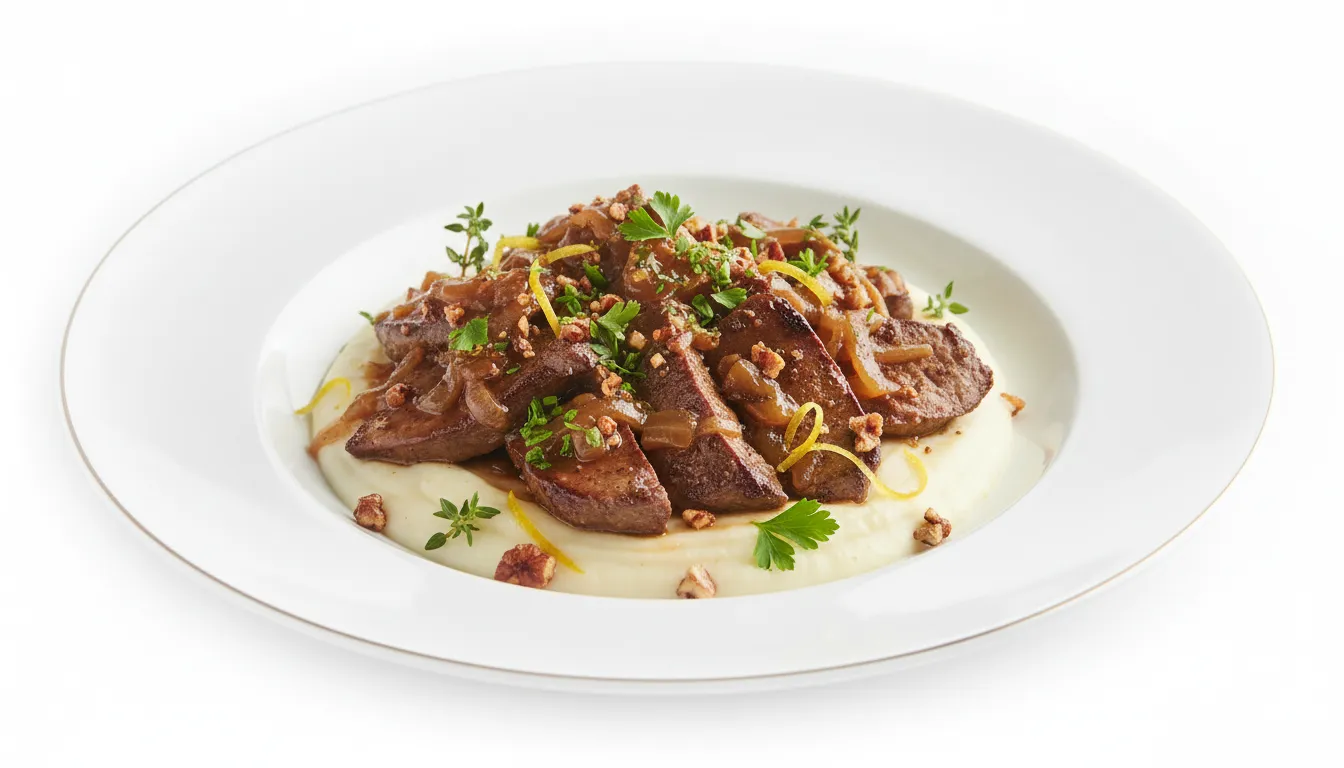
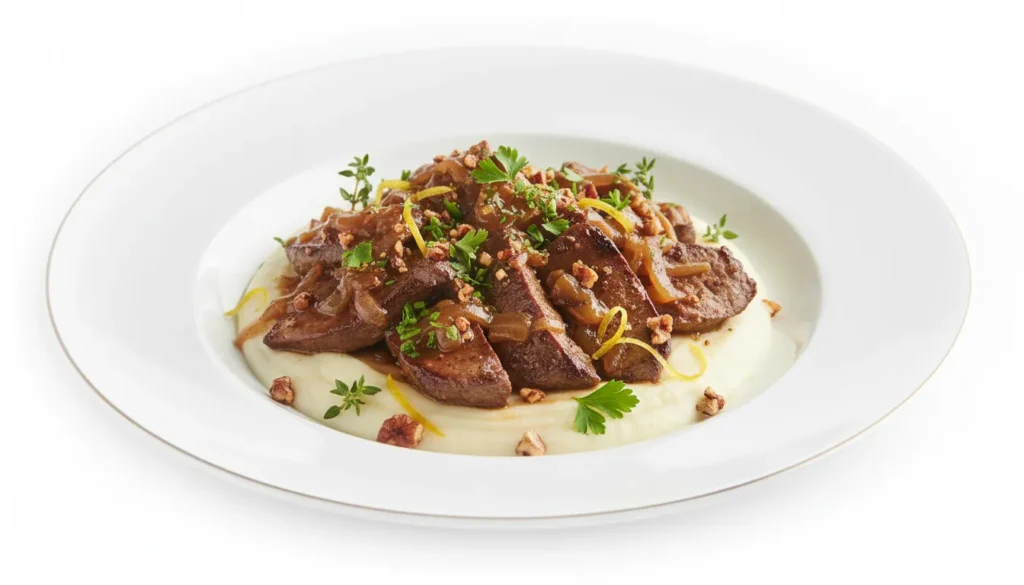
Serve with creamy mashed potatoes that soak up the pan juices and balance liver’s richness.
Caramelized onions are traditional for good reason—their sweetness perfectly counteracts liver’s mineral notes.
Crispy bacon alongside adds smoky, salty contrast and textural variety.
Pan Sauce Ideas:
Balsamic reduction: Simmer balsamic vinegar with a touch of honey until syrupy. The acidity brightens and sweetness balances.
Mustard cream sauce: Deglaze the pan with white wine, reduce, then whisk in cream and Dijon mustard. Tangy and luxurious.
Red wine sauce: Classic French preparation using red wine, shallots, and butter. Elegant and restaurant-worthy.
Vegetable Sides:
Sautéed spinach or Swiss chard adds iron-rich greens that complement liver’s nutritional profile.
Roasted Brussels sprouts or asparagus contribute bitter notes that balance richness.
Simple green salad with lemon vinaigrette provides fresh, bright contrast.
Storage, Freezing & Reheating
Fridge Life:
Store cooked liver in an airtight container for up to 2 days maximum. Liver’s delicate structure deteriorates quickly even under refrigeration.
Keep raw liver for only 1 day after purchase. It’s highly perishable—plan to cook it the day you buy it or the next day at latest.
Freezing:
Freeze raw liver for up to 3 months. Wrap individual portions tightly in plastic wrap, then place in freezer bags. Thaw overnight in refrigerator before milk-soaking.
Cooked liver freezes poorly—texture becomes grainy and unpleasant upon reheating. Only freeze if absolutely necessary.
Reheating:
Gentle oven method (best): Reheat at 275°F for 8-10 minutes just until warmed through. High heat toughens already-cooked liver irreversibly.
Avoid microwave: Creates hot spots that overcook sections while leaving others cold. The texture suffers dramatically.
Honestly, liver is best enjoyed fresh. Leftovers work better repurposed—dice and add to scrambled eggs or pasta rather than reheating whole slices.
Frequently Asked Questions
Why does beef liver taste so strong and how do these recipes help?
- Liver’s strong taste comes from high concentrations of iron and other minerals used in blood filtration. Milk-soaking draws these compounds out through osmosis, while proper seasoning and caramelized onions mask remaining mineral notes. Quick, high-heat cooking also prevents the strong taste from intensifying as it does with slow cooking.
How long should I cook beef liver?
- Cook liver 2-3 minutes per side maximum for ½-inch thick slices. Total cooking time should be 4-6 minutes. Internal temperature should reach 145-150°F. Cooking longer than 6 minutes total guarantees tough, grainy texture regardless of other techniques.
Can I make beef liver recipes if I’m pregnant?
- Consult your doctor first. While liver provides excellent nutrition, it’s extremely high in vitamin A. One serving provides 700% of daily requirements. Excessive vitamin A during pregnancy can cause birth defects. Most doctors recommend limiting liver to once monthly during pregnancy, if at all.
Is soaking liver in milk really necessary for these beef liver recipes?
- For most people, yes. Milk-soaking is the single most effective technique for neutralizing strong flavor. If you genuinely enjoy traditional liver taste, you can skip it. But for those trying to make liver palatable, it’s non-negotiable. Even liver lovers notice milk-soaked liver tastes cleaner and milder.
Conclusion
These beef liver recipes prove that proper technique transforms even intimidating ingredients into delicious, approachable meals. The combination of milk-soaking, quick cooking, and strategic seasoning creates liver that surprises skeptics.
Beyond taste, liver’s exceptional nutritional profile makes it worth mastering. Once you experience properly prepared liver—tender, mild, and flavorful—you’ll understand why it’s a staple in cuisines worldwide.
Give beef liver recipes an honest try using these techniques. Rate this recipe and share your photos on Pinterest! I’d love to hear from liver converts who discovered this nutrient-dense ingredient isn’t scary after all.