Ground beef pasta recipes 5 Easy Weeknight Dinners
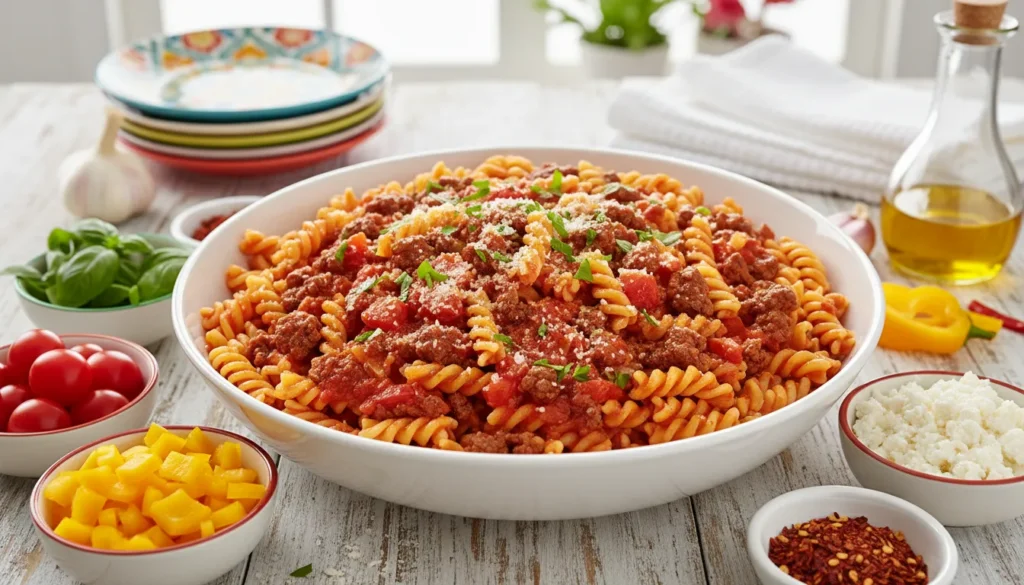
These ground beef pasta recipes combine browned seasoned beef with your favorite pasta shapes in savory sauces. Brown 1 pound of ground beef with aromatics, add sauce ingredients and cooked pasta, then simmer briefly until flavors meld. Ready in 25-30 minutes for satisfying weeknight dinners.
Staring at the clock at 6 PM with hungry family members and zero dinner inspiration? You need meals that come together quickly without sacrificing flavor or requiring specialty ingredients.
These ground beef pasta recipes solve the weeknight dinner dilemma perfectly. Five distinct variations transform basic ground beef and pasta into restaurant-quality dishes that everyone loves, each ready in under 30 minutes.
The secret lies in proper beef browning to develop the Maillard reaction’s savory depth, then building layers of flavor through strategic seasoning and sauce components. Each recipe uses pantry staples but delivers results that taste like you spent hours cooking.
Here is everything you need to know to master these versatile, crowd-pleasing ground beef pasta dinners.
Why These Ground Beef Pasta Recipes Are Keepers
These recipes deliver on every metric that matters for busy home cooks seeking quality meals.
Ready in 25-30 minutes: Faster than most takeout delivery. Perfect for hectic weeknights when time is your most precious resource.
Budget-friendly staples: Ground beef and pasta rank among the most economical ingredients. Feed a family of four for under $10 per meal.
One-pot or one-pan cooking: Minimal dishes mean maximum efficiency. Less cleanup time equals more family time.
Kid-approved flavors: Even picky eaters love pasta with seasoned beef. These recipes get children to actually finish their dinner.
Five distinct variations: Italian, Tex-Mex, Asian-inspired, creamy, and Greek styles prevent menu fatigue. You could eat these weekly without repetition.
Excellent leftovers: Tastes even better the next day as flavors continue developing. Perfect for meal prep and packed lunches.
Pantry-friendly: Uses shelf-stable ingredients you likely own. No emergency grocery runs for obscure items.
Choosing the Best Ground Beef for Pasta Recipes
The Ideal Choice: 85/15 Ground Beef
Eighty-five percent lean, fifteen percent fat ground beef strikes the perfect balance for ground beef pasta recipes. This ratio provides enough fat for flavor and moisture without creating greasy, oil-slicked pasta.
The moderate fat content browns beautifully, developing rich Maillard reaction flavors that form the savory foundation of your sauce. The rendered fat also helps sauce adhere to pasta better than completely lean beef.
Ground beef’s uniform texture ensures even distribution throughout the pasta. Every forkful contains the ideal pasta-to-beef ratio rather than large clumps alternating with bare noodles.
Substitutions:
80/20 ground beef works well but requires draining excess fat after browning. Pour off all but 2 tablespoons to prevent greasy sauce.
90/10 ground beef is too lean for most pasta applications. The beef stays dry even in sauce. Add 2 tablespoons of olive oil while browning to compensate.
Ground chuck (typically 80/20) delivers excellent beefy flavor at competitive prices. Just remember to drain excess fat.
Buying Tips:
Choose bright red ground beef with white fat, not gray meat or yellowed fat. Color indicates freshness and proper handling.
Check the grind date if visible. Ground beef is best used within 1-2 days of grinding for optimal flavor and safety.
Buy from the butcher counter when possible. Freshly ground beef from specific cuts tastes superior to pre-packaged mystery blends.
Avoid “extra lean” ground beef for pasta dishes. The extended simmering time will turn it dry and crumbly regardless of sauce.
Ingredients Notes & Preparation
Recipe Card
🛠 Equipment Needed
- Large skillet or sauté pan (12-inch)
- Large pot for boiling pasta
- Wooden spoon or spatula
- Colander
- Measuring cups and spoons
- Cheese grater
Beef Preparation:
Remove ground beef from refrigeration 15 minutes before cooking. Room-temperature meat browns more evenly than cold meat.
Break beef into chunks as you add it to the pan. Don’t plop in one solid mass—spreading it promotes faster, more thorough browning.
Season beef during browning, not after. Salt draws out moisture that aids in developing the golden-brown crust essential for flavor.
Pasta Selection:
Short pasta shapes work best—penne, rigatoni, rotini, shells, or bowties trap sauce in their crevices and hold up to stirring.
Long pasta like spaghetti or linguine works but requires more careful mixing to avoid breaking strands.
Cook pasta 1-2 minutes less than package directions indicate. It finishes cooking in the sauce, absorbing flavors while reaching perfect al dente texture.
Reserve 1 cup of pasta cooking water before draining. The starchy liquid helps sauce achieve ideal consistency and cling to pasta.
Sauce Building:
Tomato-based: Crushed tomatoes provide thick body, tomato paste adds concentrated umami, and Italian herbs contribute aromatic depth.
Cream-based: Heavy cream creates luxurious richness, Parmesan adds salty nuttiness, and a splash of pasta water prevents graininess.
Aromatics: Onions and garlic form the flavor foundation. Sauté until fragrant to develop sweetness and complexity.
Equipment:
Large skillet or sauté pan (12-inch minimum) with lid
Large pot for boiling pasta
Wooden spoon or spatula
Colander
Measuring cups and spoons
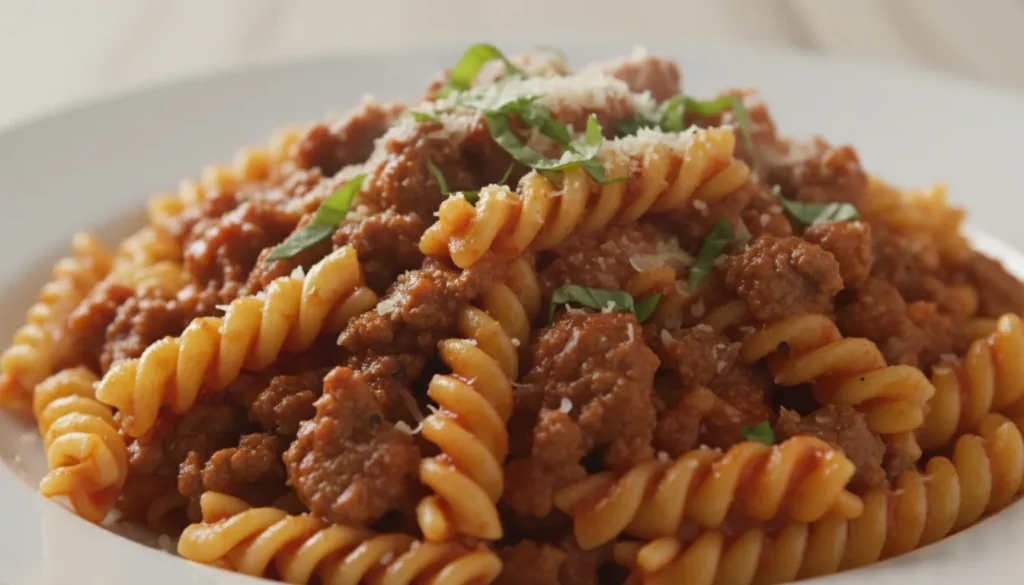
Step-by-Step Instructions
Base Recipe: Italian Ground Beef Pasta
Prep Your Ingredients:
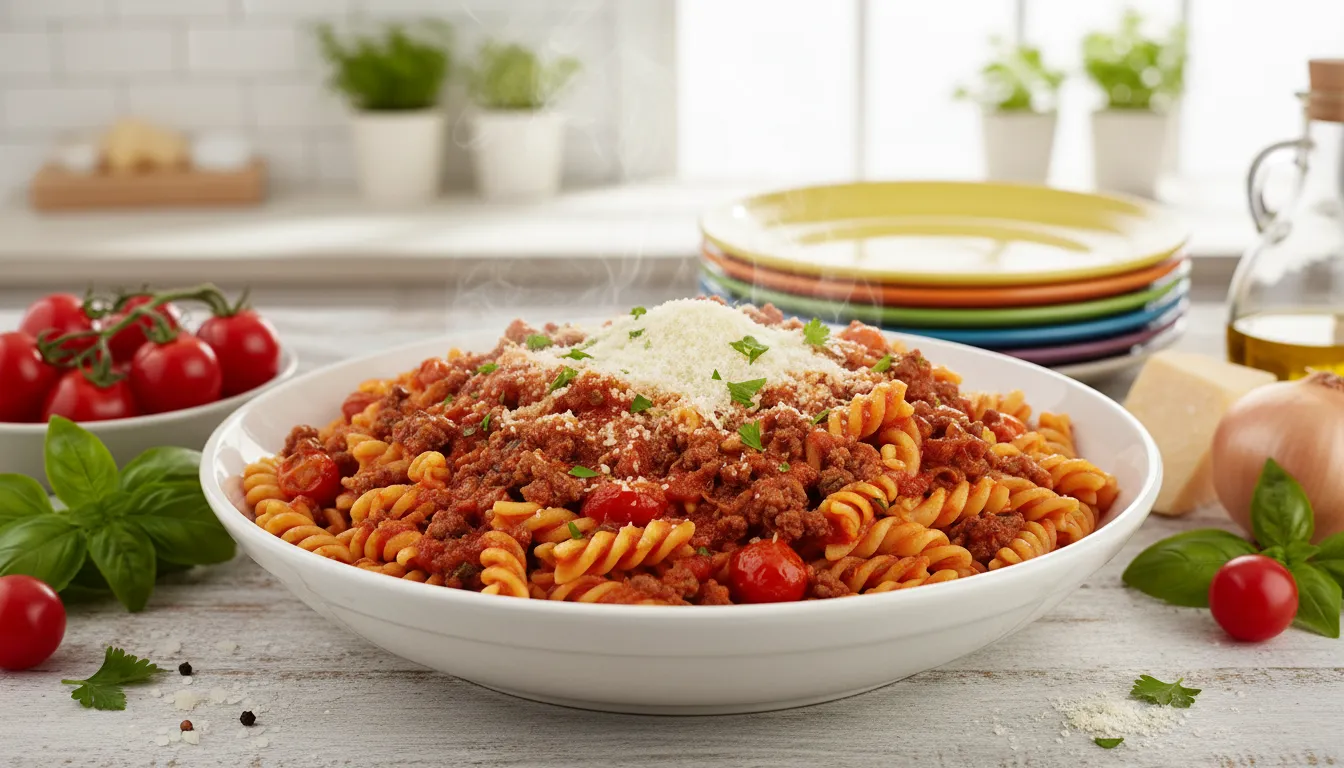
Bring a large pot of heavily salted water to boil. Add 1 pound of penne or rigatoni and cook 1-2 minutes less than package directions. Reserve 1 cup pasta water, then drain.
While pasta cooks, dice 1 onion and mince 4 garlic cloves. Gather remaining sauce ingredients so everything is ready when needed.
The Cooking Process:
Heat a large skillet over medium-high heat. Add 1 pound of 85/15 ground beef, breaking it into chunks. Season with salt and pepper.
Let beef sit undisturbed for 2 minutes to develop a golden crust. You’ll hear vigorous sizzling—that’s the Maillard reaction creating savory flavor compounds.
Break up beef and continue cooking for 5-6 minutes, stirring occasionally, until no pink remains and the beef has developed nice brown bits throughout.
Add diced onion to the beef. Cook for 3 minutes until softened and translucent. Add garlic and cook 30 seconds until fragrant but not burned.
Pour in 1 can (28 oz) crushed tomatoes, 2 tablespoons tomato paste, 1 teaspoon dried oregano, 1 teaspoon dried basil, and ½ teaspoon red pepper flakes. Stir to combine.
Bring sauce to a simmer, reduce heat to medium-low, and cook for 8-10 minutes until slightly thickened.
Add drained pasta directly to the skillet. Toss everything together, adding reserved pasta water 2 tablespoons at a time until sauce coats pasta beautifully.
Variation Overviews:
Tex-Mex Pasta: Season beef with cumin, chili powder, and paprika. Use salsa instead of tomatoes, add black beans and corn, finish with cheddar cheese and cilantro.
Asian-Inspired: Brown beef with ginger and garlic. Add soy sauce, sesame oil, and hoisin sauce. Toss with lo mein noodles and top with green onions and sesame seeds.
Creamy Stroganoff Pasta: Brown beef with mushrooms and onions. Add beef broth and simmer, then stir in sour cream and Dijon mustard. Serve over egg noodles.
Greek-Style: Season beef with oregano and cinnamon. Add diced tomatoes, spinach, and feta cheese. Use orzo or penne pasta.
Why Ground Beef Doesn’t Need Resting
Unlike steaks, ground beef dishes don’t require resting time since the meat is already in small pieces. Juices are distributed throughout the sauce rather than concentrated in whole muscle fibers.
However, letting the finished pasta sit for 3-5 minutes before serving allows the sauce to thicken slightly and flavors to meld. The pasta also absorbs sauce during this time, improving overall texture.
Expert Tips for Perfect Pasta Every Time
Tip 1: Brown the beef properly.
Resist the urge to constantly stir. Let beef sit undisturbed initially to develop that golden-brown crust. Gray, steamed beef tastes bland compared to properly browned beef with caramelized bits.
Tip 2: Don’t skip pasta water.
That starchy cooking liquid is liquid gold. It helps sauce achieve perfect consistency and binds everything together. Never dump it all down the drain—always reserve at least 1 cup.
Tip 3: Finish pasta in the sauce.
Don’t just pour sauce over drained pasta. Add the pasta to the sauce in the skillet and toss together over heat for 1-2 minutes. This allows pasta to absorb flavor and sauce to coat every piece.
Tip 4: Season in layers.
Salt the beef while browning, season the sauce as it simmers, then taste and adjust before serving. Layered seasoning creates complex flavor that single-note salting can’t match.
Tip 5: Use the right pasta shape.
Chunky sauces need short, textured pasta that catches meat and sauce. Smooth, thin sauces work with long noodles. Match pasta shape to sauce consistency for best results.
Serving Suggestions & Pairings
Classic Accompaniments:
Garlic bread or crusty Italian bread for soaking up extra sauce. Toast it with butter and Parmesan for extra indulgence.
Simple green salad with Italian vinaigrette cuts through the richness and adds fresh vegetables.
Roasted vegetables—zucchini, bell peppers, or broccoli—can be stirred into the pasta or served alongside.
Toppings and Garnishes:
Freshly grated Parmesan cheese—always grate from a block, never use the pre-grated stuff in a can.
Fresh basil or parsley adds color and bright, herbaceous notes.
Red pepper flakes for those who want extra heat.
A drizzle of good olive oil adds richness and professional finish.
Storage, Freezing & Reheating
Fridge Life:
Store in airtight containers for up to 4 days. The flavors actually improve overnight as seasonings continue melding with the pasta.
If pasta absorbed too much sauce during storage, add a splash of broth or water when reheating.
Freezing:
Freeze for up to 3 months in portion-sized containers. Slightly undercook pasta if planning to freeze—it continues softening during reheating.
Cool completely before freezing. Leave 1 inch of headspace for expansion. Label with recipe name and date.
Cream-based versions freeze less successfully—the dairy can separate. Stick to tomato-based recipes for freezing.
Reheating:
Stovetop (best): Reheat in a skillet over medium-low heat with 2-3 tablespoons of water or broth. Stir gently until heated through, about 5-7 minutes.
Microwave: Heat in 90-second intervals at 70% power, stirring between sessions. Add a splash of water to prevent drying out.
Oven method: Transfer to a baking dish, cover with foil, and reheat at 350°F for 20-25 minutes. Add moisture before covering to prevent drying.
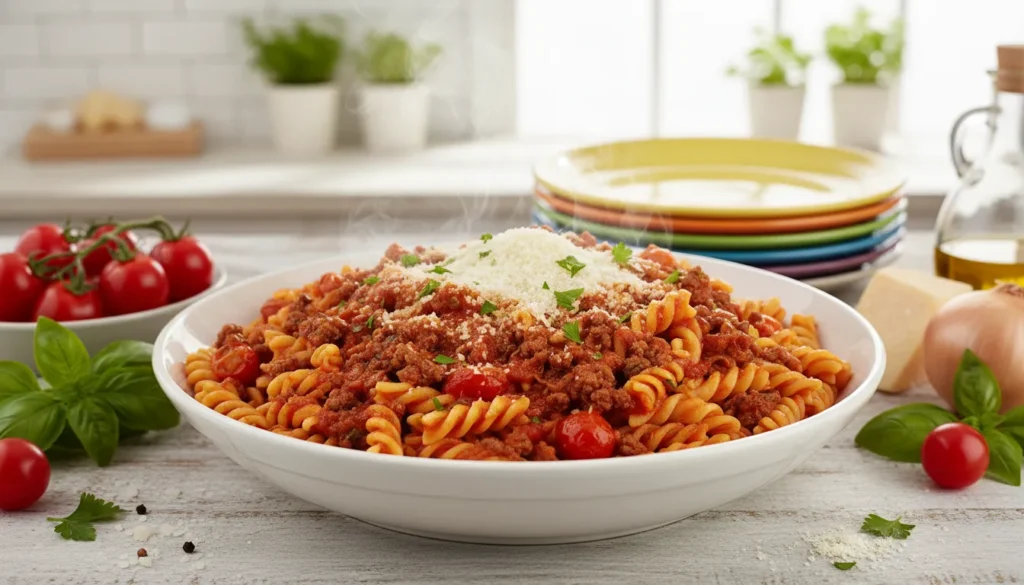
Frequently Asked Questions
Can I use different pasta shapes for ground beef pasta recipes?
Absolutely. Short, textured shapes like penne, rigatoni, shells, or rotini work best as they catch the meat and sauce. Long pasta like spaghetti works but requires gentler mixing. Avoid delicate shapes like angel hair—they break apart when stirred with ground beef.
How do I prevent ground beef from becoming tough in pasta dishes?
Don’t overcook it. Once no pink remains, the beef is done—continued cooking toughens the proteins. Also, avoid pressing down on beef with your spatula while browning. This squeezes out moisture and creates dry, tough meat.
Can I make these ground beef pasta recipes ahead of time?
Yes. Cook completely, cool, and refrigerate for up to 2 days before serving. Reheat gently, adding liquid as needed. However, the texture is best when served fresh. If meal-prepping, consider cooking beef and sauce ahead, then cooking pasta fresh and combining just before serving.
Are ground beef pasta recipes freezer-friendly?
Tomato-based versions freeze excellently for up to 3 months. Cream-based recipes can separate during freezing but are still edible if stirred vigorously upon reheating. Cool completely, portion into containers, and label clearly. Thaw overnight in the refrigerator before reheating.
Conclusion
These ground beef pasta recipes prove that weeknight dinners don’t require complicated techniques or expensive ingredients. Five versatile variations ensure you’ll never run out of ideas for transforming basic pantry staples into family favorites.
The combination of proper beef browning, strategic seasoning, and smart pasta handling creates dishes that rival restaurant quality while respecting your time and budget constraints.
Start with the classic Italian version tonight, then explore the other ground beef pasta recipes throughout the week. Rate this recipe and share your photos on Pinterest! I’d love to see which variation became your family’s new weeknight staple.