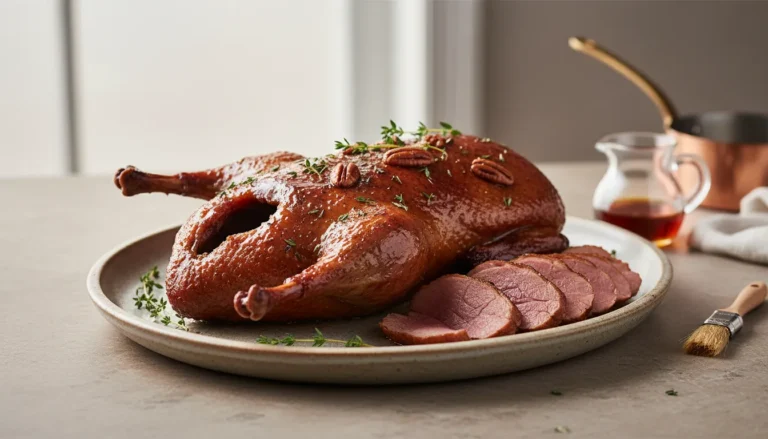
Turkey stock recipe: How to Use the Carcass
This turkey stock recipe simmers a roasted turkey carcass with aromatics in water for 3-4 hours, extracting rich, golden broth. Strain and cool to create flavorful stock that’s the foundation for soups, gravies, and sauces. The original turkey was cooked to 165°F (74°C) for safety.
Every year, millions of home cooks throw away the most valuable part of their Thanksgiving turkey—the carcass. What’s left after carving seems like garbage, but it’s actually a goldmine of flavor and nutrition just waiting to be transformed into liquid gold.
The solution? This turkey stock recipe turns that picked-over carcass into rich, deeply flavored stock that’s worlds better than anything you can buy. No more watery store-bought broth that tastes like cardboard. No more bland soups or thin gravies that need cornstarch to have any body.
Why it works: Turkey bones contain collagen, minerals, and gelatin that dissolve slowly during long simmering, creating a thick, richly flavored stock with natural body. The roasted bones add deep, caramelized flavor that raw bones can’t match. Combined with aromatic vegetables, herbs, and patient simmering, you extract every bit of flavor from what would otherwise be trash.
Preview: Get ready to make this turkey stock recipe your new post-holiday ritual. Once you taste homemade stock in your soups and gravies, the store-bought stuff becomes unthinkable.
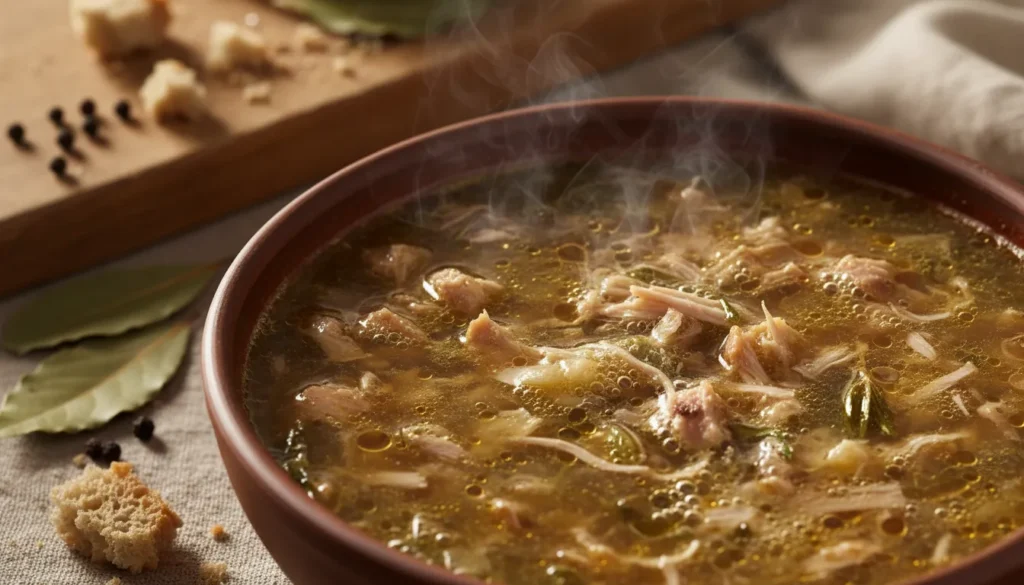
Why This Turkey Stock Recipe Works
- Zero waste cooking – Uses every scrap of your expensive turkey purchase
- Deeply nourishing – Rich in collagen, minerals, and gelatin for gut and joint health
- Flavor foundation – Creates the base for superior soups, risottos, gravies, and braises
- Budget hero – One carcass yields 8-12 cups of stock worth $15-20 if purchased
- Freezer-friendly – Stores for 6 months in portions ready when you need them
- Hands-off cooking – Mostly unattended simmering while you do other things
- Restaurant-quality results – Professional chefs always make their own stock for a reason
Choosing the Best Turkey Carcass
Carcass Selection: This turkey stock recipe works with any roasted turkey carcass—breast bones, rib cage, wings, neck, and backbone. The more bones, the better. Include bones with some meat still clinging—those flavorful bits add richness. Dark meat bones (thighs, drumsticks) create deeper-flavored stock than breast bones alone.
Quality of Original Turkey: The carcass should come from turkey that was properly roasted to 165°F (74°C) and stored safely. If the original turkey sat at room temperature for more than 2 hours before refrigeration, discard the carcass—bacterial growth makes it unsafe for stock-making. Check the date: use refrigerated carcasses within 3-4 days or frozen within 4 months.
Fresh vs. Frozen Carcass: Frozen turkey carcasses work perfectly—no need to thaw before making stock. The freezing process actually breaks down cell walls slightly, releasing more flavor during simmering. Just add 30 minutes to the cooking time if starting with a frozen carcass.
Additional Bones (Power Move): If you have extra raw turkey wings, necks, or backs from butchering, roast them at 400°F for 40 minutes until golden brown, then add to your stock. These raw bones boost gelatin content, creating stock so rich it jiggles when chilled.
Prep Safety—Crucial Tip: When handling the turkey carcass, never leave it at room temperature for more than 30 minutes during prep. Warm bones are a breeding ground for bacteria. Work quickly, then refrigerate or freeze the carcass if not using immediately. Do not wash the carcass—it splashes bacteria across your sink. The long simmering process kills any pathogens, reaching temperatures well above the 165°F safety threshold.
Ingredients List
| Quantity | Ingredient |
|---|---|
| 1 | Turkey Carcass (from 12-14 lb roasted turkey) |
| 4 quarts | Cold Water (plus more to cover) |
| 2 medium | Yellow Onions (quartered, skin on) |
| 3 large | Carrots (roughly chopped, unpeeled) |
| 3 stalks | Celery (roughly chopped, with leaves) |
| 6 cloves | Garlic (smashed, unpeeled) |
| 2 | Bay Leaves |
| 8 sprigs | Fresh Thyme (or 1 tsp dried) |
| 6 sprigs | Fresh Parsley (stems included) |
| 1 tsp | Black Peppercorns (whole) |
| 2 tsp | Kosher Salt (adjust to taste) |
| 1 tbsp | Apple Cider Vinegar (optional, for mineral extraction) |
Ingredient Notes
The Carcass (The Foundation): Break the carcass into manageable pieces that fit in your stockpot—don’t worry about being neat. The more surface area exposed, the more flavor and gelatin extract. Include the wing tips, backbone, and any bits of crispy skin still clinging to bones—that roasted skin adds incredible depth.
The Aromatics (Flavor Builders): Keep onion skins on—they add beautiful golden color to the finished stock. Unpeeled carrots and garlic also contribute color and don’t require the prep work of peeling. This is rustic cooking at its finest—you’re straining everything out anyway. The celery leaves contain concentrated flavor, so include them.
The Herbs (Aromatics): Fresh herbs create brighter, cleaner-tasting stock than dried, but dried works if that’s what you have. Thyme and parsley are classic for poultry stock. Bay leaves add subtle earthiness. Avoid strong herbs like rosemary or sage—they can overpower delicate turkey flavor. Tie herbs into a bundle with kitchen twine for easy removal if desired.
The Vinegar (Secret Weapon): Apple cider vinegar’s acidity helps extract minerals and collagen from the bones, creating more nutritious, gelatinous stock. The amount used won’t make the stock taste acidic—it’s purely functional. This is optional but recommended for maximum nutrition and body.
The Water (Critical Ratio): Start with cold water—it extracts more flavor as it slowly heats. Use just enough to cover the bones by 2 inches. Too much water creates weak, diluted stock. You can always add water during cooking if the level drops, but you can’t fix watery stock once it’s done.
Step-by-Step Instructions
Recipe Card
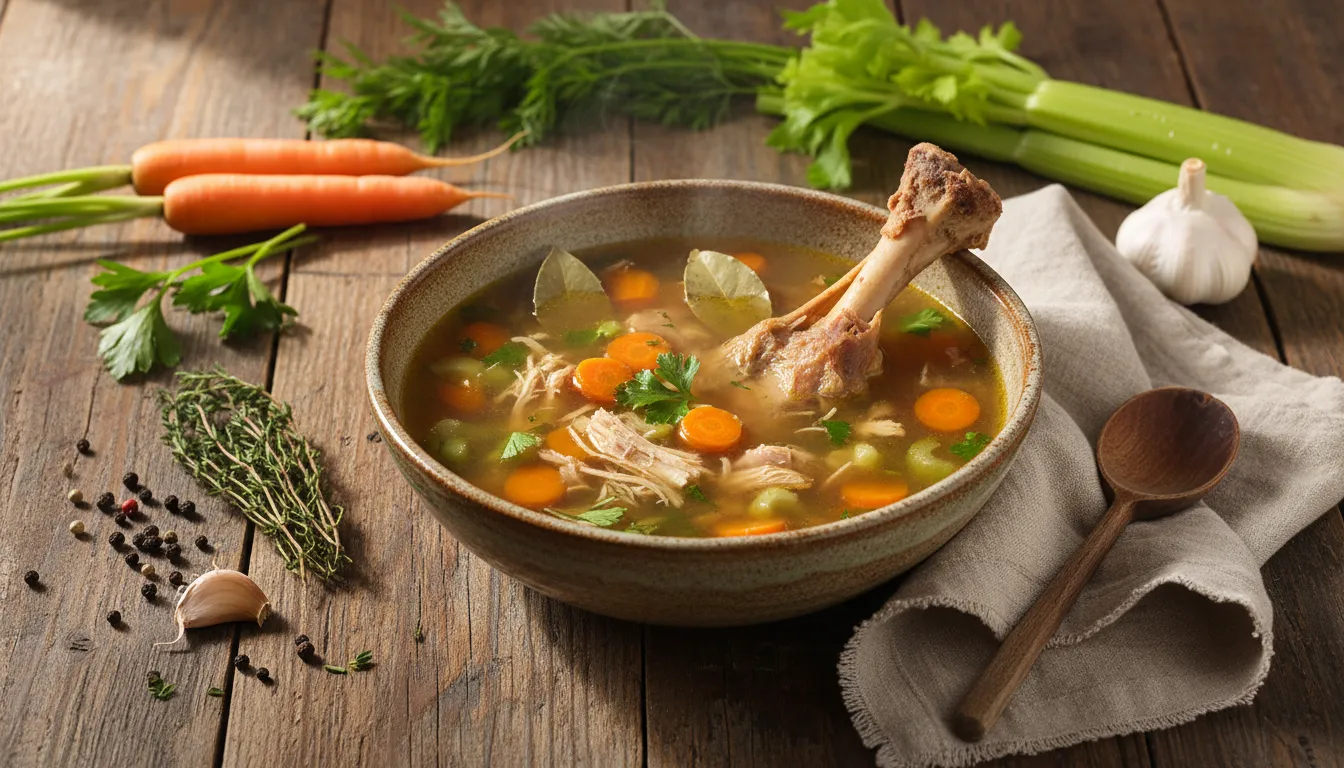
🛠 Equipment Needed
- Large stockpot (8+ quarts)
- fine-mesh strainer
- cheesecloth (optional)
- tongs
- large bowl or second pot
- storage containers
- ladle
Prep: Breaking Down the Carcass
Remove the turkey carcass from refrigeration. Using your hands or kitchen shears, break it into 4-6 large pieces so it fits easily in your stockpot. Don’t be gentle—snap the rib cage, crack the backbone. This isn’t delicate work.
Place all bones in your largest stockpot or Dutch oven. Add the onions (quartered, skin on), carrots, celery, garlic, bay leaves, thyme, parsley, peppercorns, and vinegar if using.
The Cook: Low and Slow Simmering
Pour in cold water until bones are covered by 2 inches—typically 4-5 quarts. Don’t oversalt at this stage—you’ll reduce the stock later, concentrating flavors. Add just 2 teaspoons to start.
Place pot over high heat and bring to a boil, about 15-20 minutes. Watch carefully—as soon as you see rapid bubbles, reduce heat immediately to low. You want a bare simmer—just a few lazy bubbles breaking the surface every few seconds.
Skim off any foam or scum that rises to the surface during the first 30 minutes. This gray foam is coagulated proteins—removing it creates clearer, cleaner-tasting stock.
Simmer uncovered for 3-4 hours minimum, up to 6 hours for maximum extraction. Check periodically and add hot water if the level drops below the bones. The longer it simmers, the richer and more gelatinous the stock becomes. You’ll know it’s working when your kitchen smells incredible and the stock takes on a deep golden color.
Straining: Capturing the Gold
Remove the pot from heat. Using tongs, carefully remove and discard the large bones and vegetable chunks—they’ve given all they have.
Set a large fine-mesh strainer over another pot or large bowl. Line it with cheesecloth (optional, for crystal-clear stock) and pour the stock through slowly. Don’t press on the solids—let gravity do the work for the clearest result.
Discard all solids. The stock will be cloudy at first but will clarify as it cools.
Cooling and Defattting: Food Safety Critical
Critical food safety step: Cool the stock rapidly to prevent bacterial growth. The safest method is an ice bath—set your stock container in a larger bowl or sink filled with ice water. Stir occasionally. The stock must cool from cooking temperature to 40°F within 2 hours.
Once cooled, refrigerate overnight. A layer of solid fat will form on the surface—don’t skim it yet. This fat cap protects the stock from oxidation and contamination. Remove and discard (or save for cooking) just before using the stock.
Properly made stock will gel when chilled—this is the sign of high-quality, collagen-rich stock. If it’s liquid when cold, it simply means less gelatin extracted, but it’s still flavorful and useful.
3 Secrets for Restaurant-Quality Turkey Stock
Tip 1: Roast Bones for Deeper Flavor: If making stock from a raw carcass (or if your roasted carcass had pale, undercooked spots), roast at 400°F for 45 minutes until deeply browned before simmering. This caramelization creates exponentially richer, more complex stock through the Maillard reaction. Professional chefs always roast bones first.
Tip 2: Never Let It Boil Hard: Aggressive boiling emulsifies fat into the stock, creating cloudy, greasy results with an off flavor. The gentle simmer (180-190°F) extracts gelatin and flavor while keeping the stock clear and clean-tasting. If you see rapid bubbling at any point, immediately reduce heat. Patience creates clarity.
Tip 3: Double-Strain for Clarity: After the initial straining, let the stock settle for 10 minutes, then ladle (don’t pour) through a cheesecloth-lined strainer again. This removes the finest particles, creating restaurant-clear stock. For everyday cooking, a single strain is fine, but double-straining elevates presentation in soups where the stock is showcased.
Serving Suggestions (Uses for Your Stock)
Soup Foundation: Use this turkey stock recipe as the base for turkey noodle soup, wild rice turkey soup, turkey tortilla soup, or classic turkey vegetable soup. The homemade stock provides depth that transforms simple soups into crave-worthy meals.
Gravy Game-Changer: Next time you roast poultry, use this stock instead of store-bought for your gravy. The difference is night and day—rich, full-bodied gravy with natural gelatin that coats the back of a spoon without flour or cornstarch.
Cooking Liquid: Use for risotto, braising greens (collards, kale), cooking grains (quinoa, farro, rice), making stuffing, or deglazing pans after searing meat. Anywhere a recipe calls for water or broth, substitute this stock for exponentially better results.
Sipping Broth: Season a mug of hot stock with salt, pepper, and fresh herbs for a nourishing, warming drink. Add a splash of lemon juice and minced garlic for immune-supporting comfort during cold season.
For more poultry techniques and recipes, explore The Ultimate Guide to Cooking Chicken: Techniques & Tips.
Storage & Reheating
Refrigerator: Store strained, cooled stock in airtight containers with the fat cap intact for up to 5 days. The fat layer protects against spoilage—remove it only when ready to use. Always smell stock before using—if it smells sour or off, discard immediately.
Freezing (Best Method): Freeze in portions sized for your typical use. Ice cube trays create 2-tablespoon portions perfect for deglazing. 2-cup containers work for most soup recipes. Quart bags (freeze flat for space efficiency) are ideal for larger batches. Label with date and contents. Frozen stock keeps for 6 months at 0°F.
Thawing: Transfer frozen stock to the refrigerator 24 hours before needed. For faster thawing, place the sealed container in a bowl of cold water, changing the water every 30 minutes. Never thaw at room temperature—this creates ideal conditions for bacterial growth.
Reheating: Heat only the amount you need to a full boil (212°F), then reduce to a simmer for use. Boiling kills any bacteria that may have developed during storage. Taste and adjust seasoning—stock is typically undersalted intentionally so you can control seasoning in the final dish.
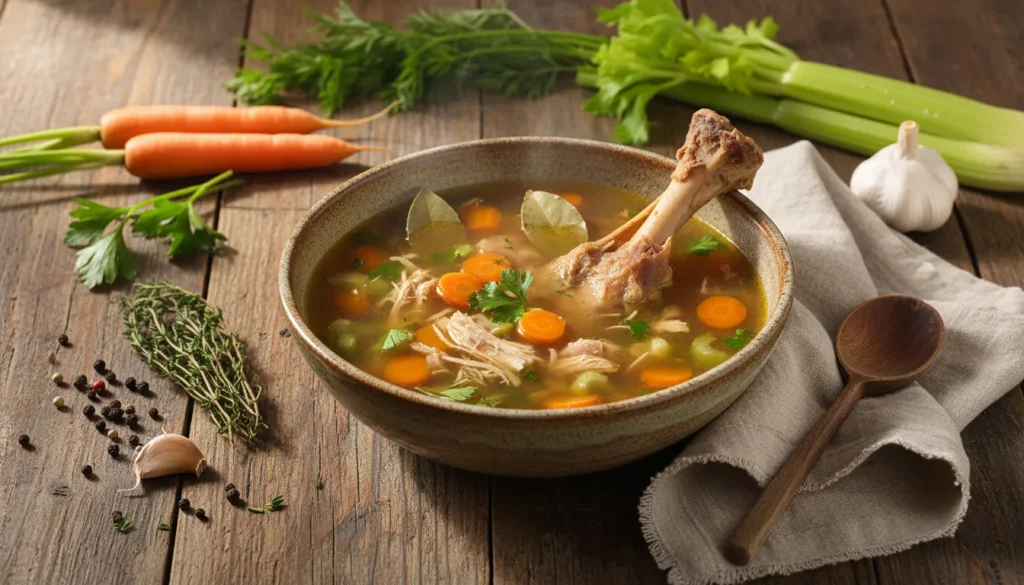
Frequently Asked Questions
- How long can I simmer turkey stock?
Poultry stock develops optimal flavor in 3-4 hours. Longer simmering (up to 6 hours) extracts more gelatin but won’t improve flavor much. Beyond 6 hours risks creating bitter, over-extracted stock. Beef or pork bones benefit from 12+ hour simmering, but delicate poultry bones give their best in less time. - Can I use a slow cooker or Instant Pot?
Absolutely. Slow cooker: Cook on low for 8-10 hours. Instant Pot: Pressure cook on high for 90 minutes, then natural release. Both methods work beautifully. The Instant Pot creates incredibly gelatinous stock in a fraction of the time, though some argue traditional simmering develops more complex flavor. - Why is my stock cloudy?
Cloudiness comes from boiling too hard (emulsifies fat and proteins) or not skimming the initial foam. Cloudy stock tastes fine—it just lacks visual appeal. For clear stock, maintain gentle simmer and skim diligently in the first 30 minutes. Double-straining also helps. - Can I add vegetables scraps I’ve been saving?
Yes, but with caveats. Carrot peels, celery ends, onion skins, parsley stems, and mushroom stems are excellent. Avoid: broccoli, cabbage, Brussels sprouts, bell peppers (create bitter, off-flavors), and starchy vegetables like potatoes (cloud the stock). Also avoid adding salt-heavy scraps—you’re controlling seasoning at the end.
Conclusion
This turkey stock recipe proves that the most valuable part of your holiday bird isn’t the breast meat—it’s the bones you almost threw away. By investing just 15 minutes of active work and a few hours of patient simmering, you create liquid gold that elevates every dish it touches.
Remember the key principles: break the carcass into pieces for maximum extraction, simmer gently (never boil hard), skim diligently for clarity, cool rapidly for safety, and freeze in usable portions. Master this fundamental technique, and you’ll never waste another turkey carcass or buy inferior store-bought stock again.
Did this turkey stock recipe change how you think about food waste? Leave a comment sharing what you made with your homemade stock—I love hearing success stories!