Sirloin tip steak: 5 Ways to Tenderize Tough Cuts
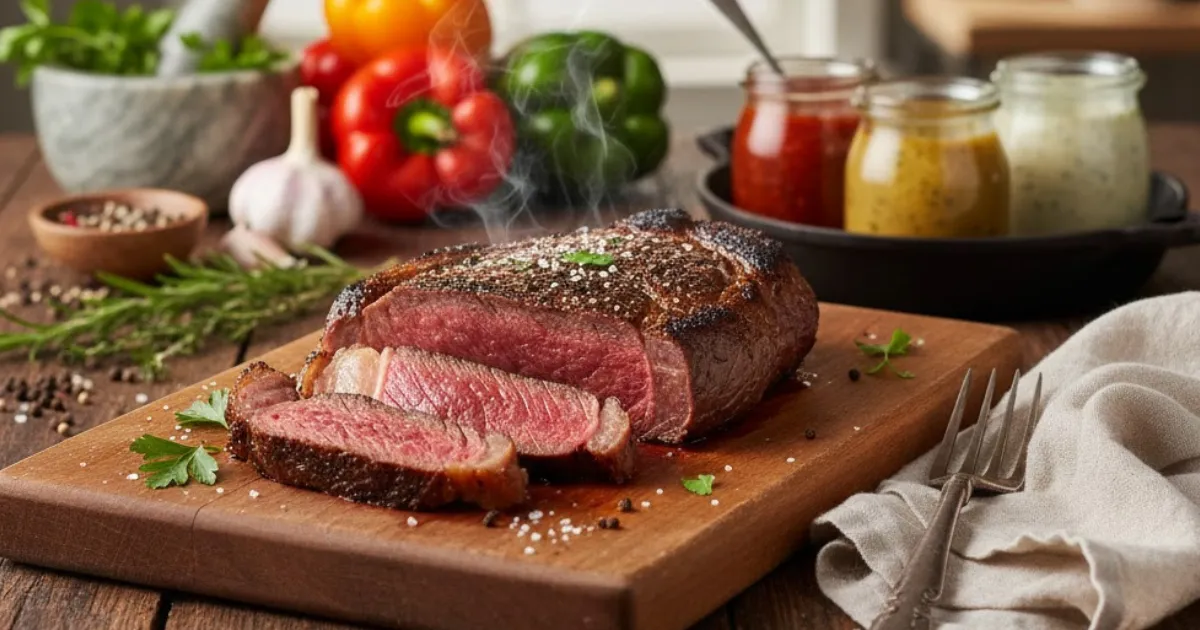
How to cook sirloin tip steak: Marinate for at least 2 hours to break down tough fibers. Sear in a screaming-hot cast iron skillet for 3–4 minutes per side. Cook to an internal temperature of 130–135°F for medium-rare. Rest for 8–10 minutes, then slice thin against the grain.
Sirloin tip steak is one of the most underrated cuts in the entire butcher shop — and also one of the most misunderstood. It is lean, beefy, and remarkably affordable, but in the wrong hands, it turns into a tough, chewy disappointment that no amount of sauce can save. The problem is not the cut itself. The problem is that most people cook it like a ribeye, when it actually needs an entirely different approach. Sirloin tip steak comes from the round, a heavily worked muscle group near the cow’s hindquarter. That means less marbling, more connective tissue, and a texture that demands respect. If you want to understand exactly where this cut sits on the animal and how it compares to every other steak in the shop, start with our ultimate guide to steak cuts. But if you are ready to turn this budget-friendly cut into something genuinely restaurant-worthy, keep reading. These five tenderizing methods will transform sirloin tip steak into a meal that rivals cuts costing three times the price. Grab your cast iron skillet. We are making the perfect sirloin tip steak.
Why This Sirloin Tip Steak Recipe Is Better Than a Steakhouse
- Costs a fraction of premium cuts. Sirloin tip steak runs $6–10 per pound at most grocery stores — compared to $18–30 for ribeye or $25–40 for filet mignon. When you master the tenderizing technique, you get comparable results at a fraction of the cost.
- Five proven methods to choose from. Whether you have two hours or two days, there is a tenderizing method in this guide that fits your schedule and delivers results.
- Deep, beefy flavor. Sirloin tip steak has an intense, clean beef taste that more marbled cuts sometimes mask with their own rendered fat. Done right, it is one of the most satisfying steaks on the plate.
- The sear is spectacular. A dry, well-seasoned sirloin tip steak sears beautifully in a cast iron skillet, producing a Maillard reaction crust that is dark, flavorful, and deeply aromatic.
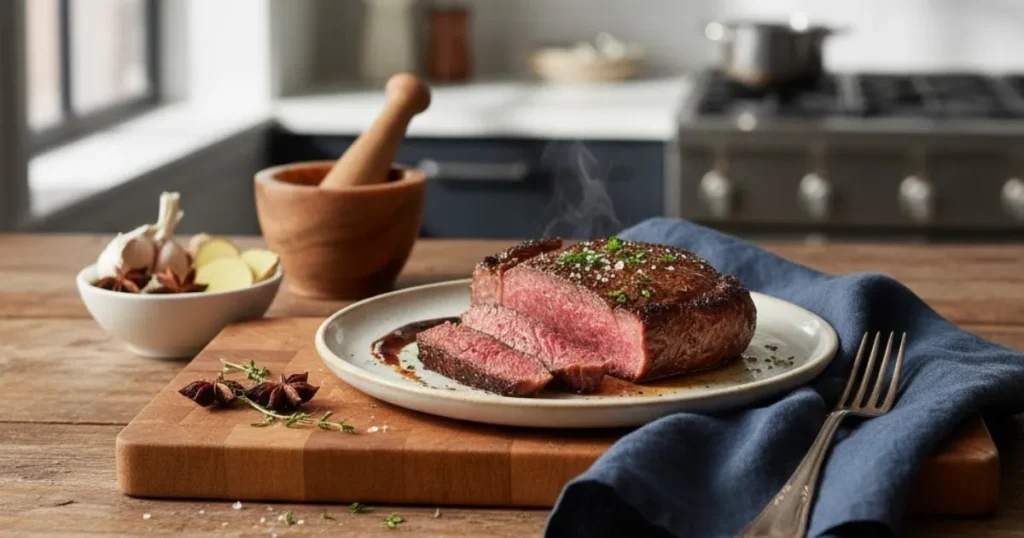
- Slices beautifully. Cut against the grain and this steak fans out into tender, elegant bites that look stunning on the plate.
Choosing the Best Sirloin Tip Steak for This Recipe
The Cut
Sirloin tip steak — also called knuckle steak or round tip steak — comes from the front end of the rear leg, right next to the sirloin. Despite its name suggesting it belongs to the sirloin primal, it is actually part of the round. The muscles here work constantly as the animal moves, which means less intramuscular fat and more connective tissue than you will find in cuts from the loin or rib. That is not a flaw — it is a characteristic that simply requires a different cooking strategy. The key is breaking down those tough fibers before the steak hits the heat, and that is exactly what the five tenderizing methods below accomplish. For the best results, look for sirloin tip center steaks rather than side steaks — the center cuts are more uniform in thickness and slightly more tender. To learn more about where this cut sits in the overall breakdown of beef, the Beef It’s What For Dinner sirloin tip steak guide is an excellent educational resource backed by the beef industry.
Thickness
Aim for steaks that are at least 1 inch thick, ideally 1 to 1.25 inches. A thinner cut will overcook during the sear before the interior has a chance to stay tender. Thickness gives you time — time for the heat to penetrate evenly, and time for you to pull the steak at the right internal temperature without it turning tough and grey on the outside.
Buying Tips
Look for bright red meat with a clean, fresh smell. The fat on sirloin tip will be minimal — this is a lean cut — but any visible fat should be firm and white, not yellowed or soft. Avoid steaks that look grey or dull. At the grocery store, USDA Choice is the minimum grade you want for this recipe. The slight edge in marbling that Choice provides over Select makes a noticeable difference in juiciness once the steak is cooked.
Ingredients
| Quantity | Ingredient |
|---|---|
| 2 (10–12 oz) | Sirloin tip center steaks (1–1.25 inches thick) |
| 1 tbsp | Avocado oil |
| 2 tbsp | Unsalted butter |
| 3 cloves | Garlic, smashed |
| 3 sprigs | Fresh thyme |
| 1 tsp | Kosher salt (per steak) |
| ½ tsp | Freshly ground black pepper (per steak) |
| 2 tbsp | Soy sauce (for marinade) |
| 1 tbsp | Olive oil (for marinade) |
| 1 tbsp | Red wine vinegar (for marinade) |
| 1 tsp | Brown sugar (for marinade) |
Ingredient Notes
The Oil: Two oils appear in this recipe for two completely different reasons. The olive oil in the marinade is fine at low temperatures — it is simply a carrier for the other flavors and never sees high heat. The avocado oil, however, goes into the cast iron skillet for the sear. Its smoke point of approximately 520°F means it will not burn or turn bitter at the temperatures required to trigger the Maillard reaction. Never use extra virgin olive oil for searing — it breaks down and contaminates the crust with acrid bitterness. The Salt: Kosher salt does two things here. First, it seasons. Second, it draws moisture out of the steak’s surface through osmosis — and if you salt early enough, that moisture reabsorbs back into the meat, seasoning it from within. For sirloin tip steak, early salting is especially important. The cut is lean, which means it has less fat to protect it from drying out. Getting salt into the meat ahead of time helps retain juiciness during the high-heat sear.
Step-by-Step Instructions
Recipe Card
🛠 Equipment Needed
- Cast Iron Skillet
- Meat Thermometer
- Tongs
Prep & Salting
The night before you plan to cook, combine the soy sauce, olive oil, red wine vinegar, and brown sugar in a shallow dish or zip-lock bag. The soy sauce contributes umami depth and a touch of acidity. The vinegar is the critical tenderizing agent — its acidity begins breaking down the tough collagen fibers in the sirloin tip over time. The brown sugar balances the saltiness and encourages caramelization during the sear. Place the steaks in the marinade, ensuring they are fully coated, and refrigerate for at least 2 hours. Overnight — up to 12 hours — produces the best results. When you are ready to cook, remove the steaks from the marinade and pat them completely dry on all sides with paper towels. This step is non-negotiable. Any moisture left on the surface will steam rather than sear, and you will end up with a grey, flavorless exterior instead of a deep, caramelized crust. Season generously with kosher salt and black pepper on all sides.
The Sear
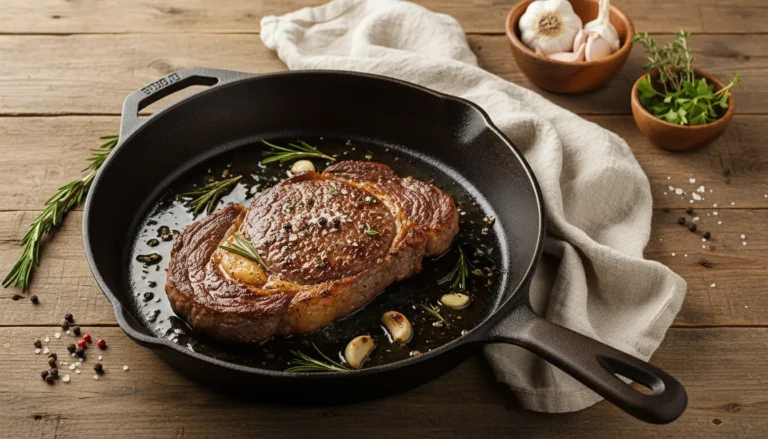
Place your cast iron skillet on the stovetop over high heat. Let it preheat for 3–5 full minutes until it is smoking. Add the avocado oil and swirl to coat. Lay the steaks into the pan carefully, placing them away from you to avoid splatter. The moment they make contact, you should hear an aggressive, loud sizzle — that is the Maillard reaction beginning, the chemical process that creates the deep brown crust and hundreds of complex flavor compounds. Do not move the steaks. Do not press them down. Do not touch them for a full 3 minutes. The steak will release naturally from the pan when the crust has fully formed. If it resists and sticks, it is not ready. Flip once and cook the second side for another 2–3 minutes.
The Butter Baste
With about 30 seconds of cooking time remaining, reduce the heat to medium and add the butter, smashed garlic, and thyme to the pan. The butter will foam immediately as the milk solids toast against the hot surface — that foam is where the nutty, golden flavor comes from. Using a spoon, continuously scoop the melted butter and pour it over the top of the steak. Keep basting in a steady rhythm for the final 30 seconds. The garlic and thyme infuse into the butter as it heats, and that aromatic liquid seeps into the crust and into the meat itself. Butter basting is not decoration — it is the final layer of flavor that elevates this dish.
Doneness Guide
| Doneness | Internal Temperature |
|---|---|
| Rare | 120–125°F |
| Medium-Rare | 130–135°F |
| Medium | 140–145°F |
| Medium-Well | 150–155°F |
| Well-Done | 160°F+ |
For sirloin tip steak, medium-rare is the sweet spot. Pull the steak at 125°F and let carryover cooking bring it to 130–135°F during the rest. Cooking this cut beyond medium will push the already-lean meat into tough, dry territory. A meat thermometer is your best friend here — do not guess.
Resting
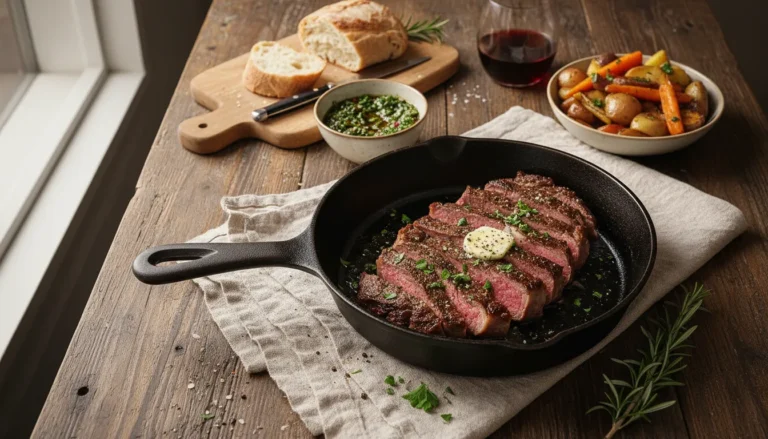
Transfer the steak to a warm plate and rest for 8–10 minutes. This is longer than you might rest a ribeye, and there is a reason for it. Sirloin tip steak is leaner, which means the muscle fibers have less intramuscular fat to cushion them. Resting allows those fibers to fully relax and the juices to redistribute evenly. Cut too soon, and the juice pools on the cutting board instead of staying inside the meat. Once rested, slice the steak thin, against the grain. This is the single most important step for tenderness at the table. Cutting with the grain on a tough cut like sirloin tip leaves long muscle fibers intact. Cutting against the grain shortens those fibers into small, tender bites.
Expert Tips for the Perfect Crust
Cast iron is essential. Sirloin tip steak is lean, which means it has less natural fat to protect it from overcooking. A cast iron skillet retains and distributes heat with unmatched consistency, giving you an even, deep sear across the entire surface without hot spots. Stainless steel is a backup — but cast iron is the tool for this job. Bring the steak to room temperature. Pull your steaks out of the refrigerator 30 minutes before cooking. A cold steak dropped into a hot pan causes the pan’s temperature to drop, which delays the sear and leads to uneven cooking. Room-temperature meat sears faster and more uniformly, which matters especially on a lean cut where every second of overcooking counts. Never crowd the pan. If your skillet cannot hold both steaks with space between them, cook one at a time. Crowding traps steam, and steam is the enemy of a good crust. On a lean cut like sirloin tip, a compromised sear means a compromised dish.
Serving Suggestions & Steakhouse Sides
Sirloin tip steak, sliced thin and fanned across the plate, looks stunning alongside classic steakhouse sides. Creamed spinach adds richness and a velvety contrast that complements the lean, beefy flavor without competing with it. Garlic mashed potatoes are a natural companion — pile them beside the steak and let any pan juices from the butter baste cascade over the top. Roasted asparagus with a squeeze of lemon brings brightness and a slight bitterness that cuts through the savory depth of the dish. For sauces, a vibrant chimichurri is an exceptional match for sirloin tip — its herby, acidic punch wakes up every bite and adds a layer of freshness. A rich peppercorn sauce made with heavy cream, brandy, and crushed green peppercorns is the other direction entirely: warm, indulgent, and deeply satisfying.
Storage & Reheating
Leftover sirloin tip steak stores beautifully in an airtight container in the refrigerator for up to 3 days. Slice it thin and use it in steak sandwiches, over a simple arugula salad with shaved parmesan, or alongside rice for a quick weeknight meal. When reheating, do not use the microwave. Microwaves distribute heat erratically and will turn an already-lean cut rubbery in seconds. Instead, preheat your oven to 275°F, place the sliced steak on a baking sheet, cover loosely with foil, and warm for 10–12 minutes until heated through. This gentle, low-temperature method preserves the texture and keeps the meat from drying out.
Frequently Asked Questions
How do I know when it’s medium-rare without a thermometer? A meat thermometer is the only reliable method for a lean cut like sirloin tip steak. There is very little room for error — overcook this cut by even 5–10°F and the texture shifts from tender to tough. If you absolutely do not have a thermometer, use the touch test: press the center of the steak with your fingertip. A soft, yielding feel with slight resistance indicates medium-rare. But invest in a thermometer. For this cut, it is not optional. Can I use a nonstick pan? You can, but the crust will suffer. Nonstick coatings are designed to prevent food from adhering, which also prevents the deep, high-heat surface contact needed for the Maillard reaction to develop. On a lean cut with less natural fat, a weaker sear means a less flavorful and less satisfying result. Cast iron or stainless steel will always outperform nonstick for searing sirloin tip steak. When do I put the butter in? The butter goes in during the final 30 seconds of cooking — never at the start. Butter burns at approximately 300°F, and your skillet during the sear is well above 400°F. Adding butter too early scorches it and turns the fat bitter. Reduce the heat to medium first, then add the butter along with the garlic and thyme. It should foam gently, not smoke.
Conclusion
Sirloin tip steak is proof that you do not need an expensive cut to eat like a king. The secret is not spending more money — it is understanding the cut and treating it with the technique it deserves. Marinate it to break down the tough fibers. Dry it thoroughly before the sear. Cook it hot and fast in a cast iron skillet. Butter baste it at the end for depth and richness. Rest it long enough for the juices to settle, then slice it against the grain for maximum tenderness. Master these steps, and sirloin tip steak becomes one of the most satisfying meals in your rotation. Give this recipe a try tonight and taste what this undervalued cut is truly capable of. Rate this recipe and tell us your favorite cut in the comments!