Beef pasta recipes How to Make Creamy Beef Sauce
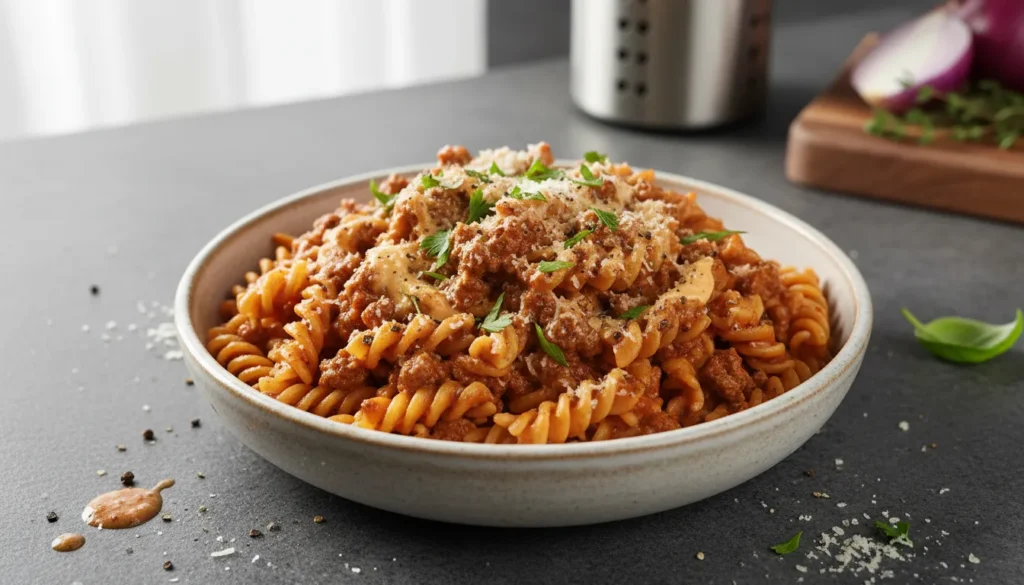
Create restaurant-quality creamy beef pasta with tender ground beef, rich cream sauce, and perfectly cooked noodles. This versatile recipe delivers comfort-food satisfaction in 30 minutes using simple pantry ingredients and foolproof techniques that guarantee silky, flavorful results every time.
Tired of watery, bland beef pasta that separates into a greasy mess? You’re not alone. The secret to restaurant-quality beef pasta recipes isn’t expensive ingredients—it’s understanding how to build a proper sauce, choose the right beef, and bring everything together without curdling or breaking.
This creamy beef pasta recipe solves those problems with a strategic approach: browning the beef properly to develop deep flavor through the Maillard reaction, creating a stable emulsion with cream and starch, and timing everything so your pasta absorbs maximum flavor. If you’re working with steak cuts instead of ground beef and want to understand the differences, our ultimate guide to beef cuts and cooking covers everything from marbling to cooking methods.
The magic happens when you combine properly seared beef (not steamed), a flour-thickened base that prevents separation, and the pasta cooking water that ties it all together. This starchy water is the secret ingredient that makes the sauce cling beautifully to every strand.
Here’s everything you need to know to master this weeknight hero that tastes like you spent hours in the kitchen.
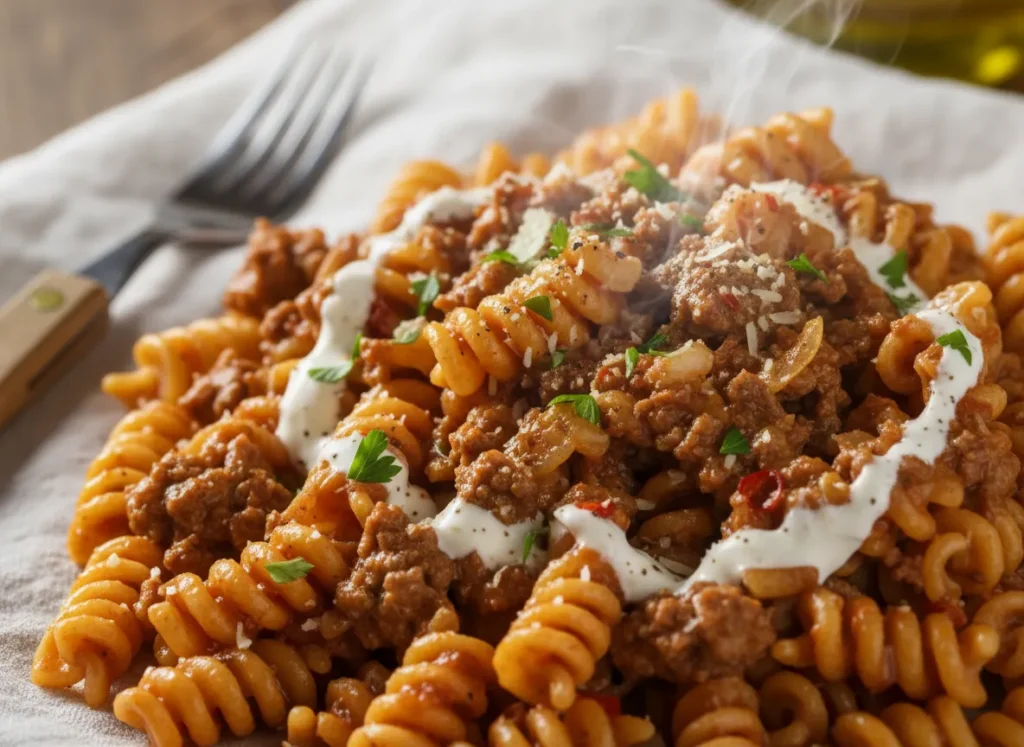
Why This Beef Pasta Recipe is a Keeper
- Ready in 30 minutes: Faster than waiting for delivery, with fresh ingredients you control
- One-pot option: Cook pasta, then use the same pot for the sauce—minimal cleanup
- Budget-friendly: Uses affordable ground beef that delivers maximum flavor when cooked right
- Crowd-pleaser: Creamy, comforting, and universally loved by kids and adults
- Endlessly adaptable: Easy to customize with different herbs, vegetables, or pasta shapes
- Meal-prep friendly: Makes excellent leftovers that reheat beautifully
Choosing the Best Cut of Beef for Beef Pasta Recipes
The Ideal Choice: 85/15 Ground Beef
For beef pasta recipes, ground beef with an 85/15 ratio (85% lean, 15% fat) is the sweet spot. This moderate fat content provides enough richness to flavor the sauce without creating excessive grease that separates from the cream. The fat also carries flavor compounds and helps create a silky mouthfeel when properly emulsified.
Why It Works Scientifically:
When you brown ground beef, the surface proteins undergo the Maillard reaction, creating hundreds of complex flavor compounds that give the sauce depth. The fat renders during cooking, carrying fat-soluble flavor molecules throughout the dish. According to Serious Eats, properly browning ground meat can increase flavor complexity by up to 300% compared to simply cooking it through.
The 15% fat content is crucial for creamy sauces. Too lean (90/10 or leaner) and your sauce tastes flat and dry. Too fatty (80/20) and you’ll have excess grease floating on top. The middle ground gives you richness without greasiness.
Substitutions:
If you want to experiment:
- Ground sirloin (90/10): Leaner option; add 1-2 tablespoons butter or olive oil for richness
- Ground chuck (80/20): More flavorful but greasier; drain thoroughly after browning
- Italian sausage (removed from casings): Adds fennel and garlic notes; reduce added seasonings
- Ground turkey or chicken (93/7): Lighter option; must add fat separately for proper texture
Buying Tips: Look for bright red color without brown spots or excessive liquid in the package. Choose packages with consistent texture—avoid those with large chunks of visible fat separated from the meat. Freshly ground beef from the butcher counter often has better flavor than pre-packaged options. For the best texture, use beef within 1-2 days of purchase or freeze immediately.
Ingredients List
| Quantity | Ingredient |
|---|---|
| 1 lb | Ground beef (85/15) |
| 12 oz | Pasta (penne, rigatoni, or fettuccine) |
| 2 tbsp | Olive oil or butter |
| 1 medium | Onion, finely diced |
| 4 cloves | Garlic, minced |
| 8 oz | Mushrooms, sliced (optional) |
| 2 tbsp | All-purpose flour |
| 1 cup | Beef broth (low-sodium) |
| 1 cup | Heavy cream |
| ½ cup | Parmesan cheese, grated |
| 2 tbsp | Tomato paste |
| 1 tsp | Italian seasoning |
| ½ tsp | Red pepper flakes (optional) |
| Salt and black pepper | To taste |
| 2 tbsp | Fresh parsley, chopped |
| For Enhanced Flavor (Optional): | |
| 2 tbsp | Worcestershire sauce |
| 1 tsp | Dijon mustard |
| ½ cup | White wine or additional broth |
Ingredients Notes
The Beef: Pat the ground beef dry if there’s excess moisture in the package. This seems counterintuitive, but surface moisture prevents proper browning. Break the beef into large chunks when adding to the pan—don’t pre-crumble it. Let it develop a deep brown crust before breaking it up.
Flour: This is your insurance against a broken sauce. The flour creates a roux that thickens the liquid and stabilizes the cream, preventing it from separating or curdling. Don’t skip this step.
Heavy Cream vs. Milk: Heavy cream (36-40% fat) is essential for a stable, luxurious sauce. Half-and-half works in a pinch but may separate slightly. Whole milk is too lean and will curdle unless you’re very careful with temperature.
Tomato Paste: This concentrated umami bomb adds depth without making the sauce tomato-forward. It enhances the beef flavor and adds a subtle sweetness that balances the cream.
Pasta Water: Reserve at least 1 cup before draining. This starchy liquid is liquid gold for adjusting sauce consistency and helping it cling to pasta. The starch acts as an emulsifier.
Parmesan: Use freshly grated Parmigiano-Reggiano, not the pre-grated stuff in the green can. Fresh Parmesan melts smoothly and adds nutty, complex flavor. Pre-grated cheese contains anti-caking agents that make sauces grainy.
Step-by-Step Instructions
Recipe Card
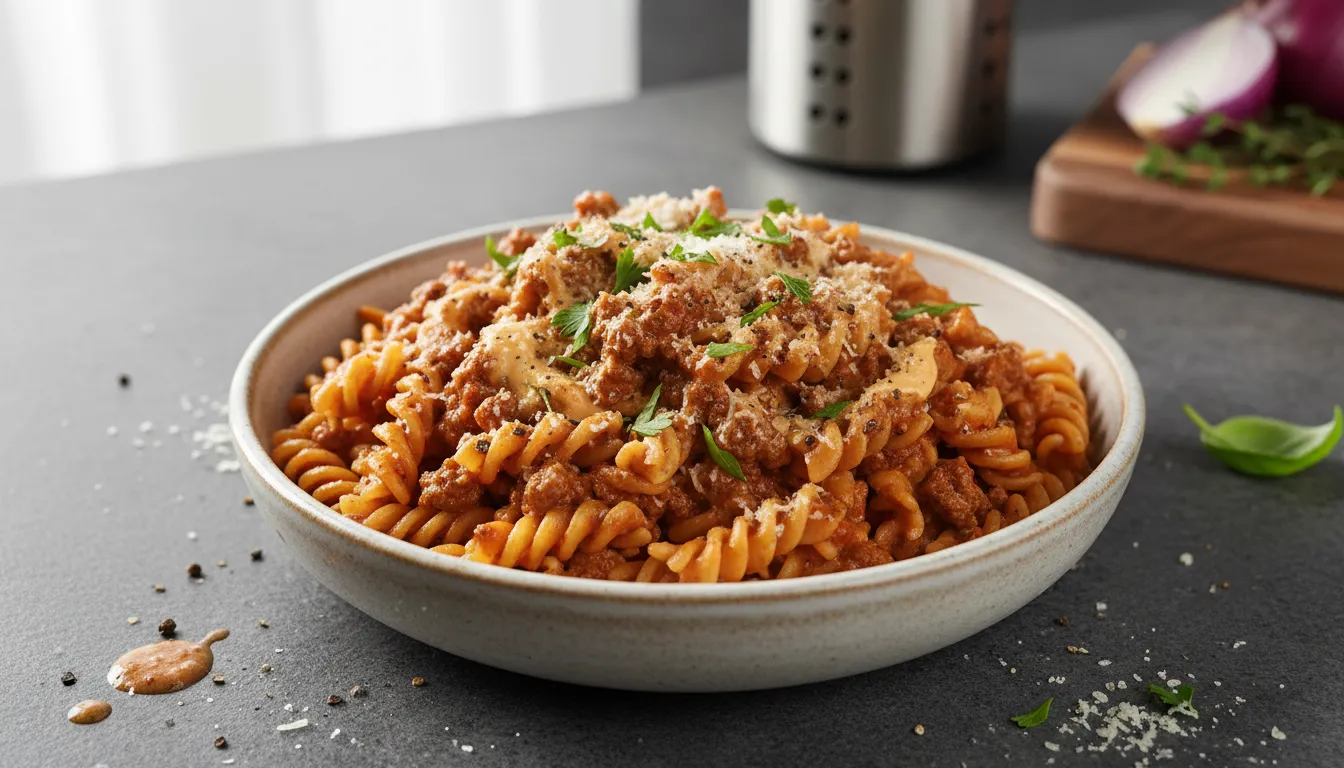
🛠 Equipment Needed
- Large pot for pasta
- large deep skillet or Dutch oven
- wooden spoon
- colander
- measuring cups and spoons
- cheese grater
Prep & Season
Bring a large pot of heavily salted water to a boil for the pasta. The water should taste like the sea. Cook pasta according to package directions until al dente (usually 1-2 minutes less than the package suggests). Reserve 1½ cups pasta water before draining. Set pasta aside.
While the pasta cooks, prep your ingredients: dice the onion, mince the garlic, slice the mushrooms, and measure out your liquids. Having everything ready (mise en place) is crucial since this sauce comes together quickly.
The Cooking Process
Heat a large, deep skillet or Dutch oven over medium-high heat. Add 1 tablespoon olive oil and the ground beef. Break it into large chunks and let it sit undisturbed for 3-4 minutes. You want to hear that sizzle and see deep brown caramelization forming on the bottom. This crust is pure flavor.
Break up the beef and continue cooking until no pink remains and the beef is deeply browned, about 6-8 minutes total. If there’s excessive fat (more than 2 tablespoons), drain some off. Transfer beef to a plate.
In the same pan, add the remaining tablespoon of oil. Add onions and mushrooms (if using), cooking until softened and golden, about 5 minutes. Add garlic and cook for 30 seconds until fragrant but not browned.
Sprinkle the flour over the vegetables and stir constantly for 1-2 minutes. This cooks out the raw flour taste and creates a base for the sauce. The mixture should look paste-like.
Add tomato paste and stir for 30 seconds, then slowly pour in the beef broth while whisking constantly to prevent lumps. Add Worcestershire sauce and Italian seasoning. Bring to a simmer.
Reduce heat to medium-low and stir in the heavy cream. Return the beef to the pan. Simmer gently for 3-5 minutes until the sauce thickens to coat the back of a spoon. Don’t let it boil vigorously or the cream may break.
Remove from heat and stir in the Parmesan cheese until melted and smooth. Add the cooked pasta directly to the sauce. Toss everything together, adding pasta water ¼ cup at a time until the sauce reaches your desired consistency—it should be silky and coat the pasta beautifully, not soupy.
Doneness Guide
For ground beef pasta, doneness is straightforward:
| Doneness | Visual Cue | Internal Temp |
|---|---|---|
| Undercooked | Pink visible, loose texture | Below 160°F |
| Perfect | No pink, crumbly, well-browned | 160°F |
| Overcooked | Dry, hard bits, gray color | Above 165°F |
Ground beef should always reach 160°F for food safety. The key is achieving that temperature while maintaining moisture through proper browning and sauce integration.
Resting
Unlike steaks, ground beef doesn’t require resting. The sauce itself acts as a resting environment, keeping the beef moist and flavorful. However, letting the finished dish sit for 2-3 minutes before serving allows the sauce to thicken slightly and the flavors to meld.
Expert Tips for Tender Beef Every Time
Tip 1: Don’t Stir Too Soon
When browning ground beef, resist the urge to immediately break it up and stir. Let large chunks sit undisturbed for 3-4 minutes to develop a deep crust. This crust equals flavor.
Tip 2: Control Your Heat
Brown the beef over medium-high heat, but reduce to medium-low once you add the cream. High heat can cause cream to break or curdle. Gentle simmering keeps the sauce smooth and silky.
Tip 3: Pasta Water is Magic
That starchy pasta water isn’t just for thinning—it’s an emulsifier that helps the sauce cling to pasta. Add it gradually and toss vigorously. The starch creates a glossy coating that makes everything cohesive.
Tip 4: Finish in the Sauce
Never just pour sauce over plain pasta. Always toss the pasta directly in the sauce for at least 1-2 minutes. This allows the pasta to absorb flavor and the sauce to cling properly.
Tip 5: Season in Layers
Season the beef while browning, season the sauce while building, and taste before serving. Layered seasoning creates depth that one final salt addition can’t match.
Serving Suggestions & Pairings
Traditional Service:
- Serve in shallow bowls with extra Parmesan and fresh parsley
- Crusty garlic bread for soaking up extra sauce
- Simple arugula salad with lemon vinaigrette
Side Dishes:
- Caesar salad with homemade croutons
- Roasted garlic green beans
- Garlic bread or focaccia
- Caprese salad for a fresh contrast
Pasta Shape Pairing:
- Penne or rigatoni: Tubes catch the sauce beautifully
- Fettuccine or pappardelle: Wide noodles for luxurious coating
- Shells or orecchiette: Cups hold the chunky beef bits
- Rotini: Spirals grip sauce in every crevice
Wine Pairing:
- Chianti or Sangiovese (medium-bodied Italian reds)
- Cabernet Sauvignon for a bolder option
- Pinot Noir for something lighter
Storage, Freezing & Reheating
Refrigerator Storage: Store in an airtight container for up to 4 days. The pasta will absorb more sauce as it sits, so it may seem drier. This is normal and easily fixed when reheating.
Freezing: Freeze for up to 3 months. Cream-based sauces can separate slightly when frozen, but they usually come back together when reheated and stirred. Portion into individual servings for easy weeknight meals. Cool completely before freezing to maintain texture.
Reheating: Stovetop is best. Add the pasta to a skillet with 2-3 tablespoons of milk, cream, or broth. Heat over medium, stirring frequently, until hot and creamy again. The added liquid revives the sauce. Microwave works (2-3 minutes at 70% power, stirring halfway), but add a splash of liquid to prevent drying. Avoid reheating at full power—it makes the beef rubbery.
Frequently Asked Questions
Can I use a different type of meat for beef pasta recipes?
- Absolutely! Ground pork, Italian sausage, ground turkey, or even ground lamb work well. For turkey or chicken, use 93/7 and add 2 tablespoons of butter or olive oil since they’re so lean. Italian sausage adds built-in seasoning, so reduce the added herbs and spices.
How long does it take to make creamy beef pasta from start to finish?
- Total time is 30-35 minutes: 5 minutes for prep, 10-12 minutes for pasta cooking, and 15-18 minutes for browning beef and building the sauce. Everything happens simultaneously, making this a true 30-minute meal.
Is this recipe gluten-free?
- Not as written. For gluten-free, use gluten-free pasta and substitute cornstarch for the flour (use 1 tablespoon cornstarch mixed with 2 tablespoons cold water). Add it to the sauce after the broth and bring to a simmer to thicken.
Can I make this dairy-free?
- Yes, but it changes significantly. Use full-fat coconut cream instead of heavy cream and nutritional yeast instead of Parmesan. The flavor profile shifts, but it’s still delicious. Add extra beef broth for a lighter, broth-based sauce without cream.
Conclusion
These beef pasta recipes prove that restaurant-quality comfort food is absolutely achievable on a weeknight. With properly browned beef, a stable cream sauce, and the magic of pasta water, you’ll create a dish that’s rich, satisfying, and miles beyond jarred sauce over noodles.
The beauty of mastering this foundation is versatility. Once you understand how to properly brown meat, build a roux, and emulsify cream into a sauce, you can adapt this technique to countless variations. Understanding the science—why the Maillard reaction matters, how starch stabilizes emulsions, and why pasta water is essential—transforms you from recipe-follower to confident cook. Ready to explore more beef techniques? Our ultimate guide to beef steak cuts and cooking covers everything from selecting cuts to mastering different cooking methods.
Ready to make dinner magic happen? Try this creamy beef pasta tonight, rate the recipe, and share your customizations! Did you add sun-dried tomatoes? Use a different pasta shape? Pin this to Pinterest so it’s ready when you need a quick, satisfying dinner!