Ultimate Traeger Grilled Salmon Recipe (Perfectly Smoky & Tender Every Time)
If you’ve ever overcooked salmon to the point where it tastes like cardboard, you’re not alone. I ruined countless salmon dinners in my oven before discovering the game-changing magic of Traeger grilled salmon.
The wood pellet grill transforms this healthy fish into something extraordinary—perfectly moist, delicately smoky, with a texture that makes even salmon skeptics go back for seconds. And here’s the best part: it’s nearly impossible to mess up.
After testing dozens of temperatures, marinades, and cooking methods on my Traeger, I’ve cracked the code for restaurant-quality grilled salmon that comes together in under 30 minutes. Whether you’re cooking for a weeknight dinner or impressing guests, this recipe delivers every single time.
Why Traeger Grilled Salmon Beats Every Other Method
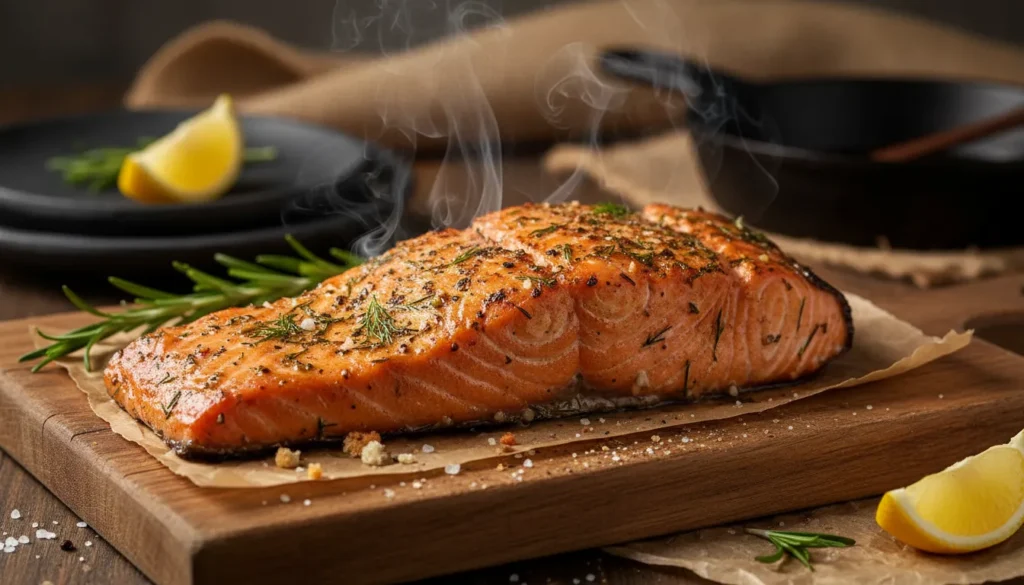
I’ve baked salmon at 400°F. I’ve pan-seared it. I’ve even tried those fancy cedar planks. Nothing—and I mean nothing—compares to the results you get from a wood pellet grill.
The low and slow cooking at a consistent temperature prevents the salmon from drying out, which is the death of most salmon recipes. The gentle wood smoke (I use apple or cherry pellets) infuses the fish with flavor without overwhelming its natural richness.
Plus, the Traeger does all the heavy lifting. No flipping, no babysitting, no anxiety about whether you’re overcooking it. Set it, monitor the temperature, and walk away.
What You’ll Need for Perfect Traeger Grilled Salmon
The Salmon Itself
Wild-caught salmon is my top recommendation every time. Look for bright pink flesh with no brown spots or fishy smell. My favorites are:
- Sockeye salmon: Deep red color, rich flavor, firmer texture
- King salmon (Chinook): The most luxurious, highest fat content, buttery smooth
- Coho salmon: Lighter flavor, still plenty of omega-3s
You’ll want skin-on fillets for this recipe. The skin acts as a protective barrier during cooking and helps the fish hold together when you transfer it off the grill.
Essential Ingredients
- 4 salmon fillets (5-6 oz each, about 1-inch thick)
- 2 tablespoons olive oil or melted ghee
- 2 tablespoons fresh lemon juice (about half a lemon)
- 3 cloves garlic, minced (or 1 tablespoon jarred)
- 2 tablespoons fresh herbs (dill, parsley, or chives—or a combination)
- 1 teaspoon kosher salt
- ½ teaspoon black pepper
- ½ teaspoon garlic powder
- Optional: 1 tablespoon honey for a touch of sweetness
Equipment You Can’t Skip
You absolutely need a reliable instant-read thermometer. I cannot stress this enough. Guessing doneness by look alone is how you end up with dry, overcooked fish.
Also helpful: a flat baking sheet or grill-safe pan, parchment paper or butcher paper, and a basting brush for applying the herb mixture.
Step-by-Step: How to Make Traeger Grilled Salmon
Recipe Card
🛠 Equipment Needed
- Traeger Pellet Grill
- Meat Thermometer
- Baking Sheet
- Basting Brush
Step 1: Prep Your Traeger (15 Minutes Before Cooking)
Fill your hopper with wood pellets—I swear by apple wood for salmon, but cherry, maple, or alder work beautifully too. Avoid mesquite or hickory; they’re too strong and will overpower the delicate fish.
Preheat your Traeger to 275°F with the lid closed. This lower temperature is the secret to evenly cooked, non-dry salmon. If you’re in a rush, you can go up to 325°F, but I find 275°F gives the best texture.
Step 2: Prepare the Salmon
Rinse your salmon fillets under cold water and pat them completely dry with paper towels. This is crucial—moisture on the surface prevents proper seasoning adhesion and creates steam instead of that light sear we want.
Place the salmon skin-side down on a baking sheet lined with parchment paper.
Step 3: Make the Herb Butter Mixture
In a small bowl, combine the olive oil (or melted ghee), lemon juice, minced garlic, chopped fresh herbs, salt, pepper, and garlic powder. Mix thoroughly.
If you’re using honey for a slightly sweet glaze, add it now. The honey caramelizes beautifully on the grill.
Step 4: Season the Salmon
Using a basting brush, generously coat the top of each salmon fillet with your herb mixture. Don’t be shy—you want a thick, even layer. This creates a flavorful crust and keeps the fish moist.
Let the seasoned salmon sit at room temperature for 10 minutes while your Traeger finishes preheating. This ensures even cooking.
Step 5: Grill the Salmon
Once your Traeger hits 275°F, carefully transfer the salmon (still on the baking sheet if you prefer—it prevents sticking) to the center of the grill grates, skin-side down.
Insert your probe thermometer into the thickest part of the largest fillet. Close the lid.
Cook for 35-40 minutes or until the internal temperature reaches 135°F for medium doneness (my preference) or 145°F for fully cooked according to USDA guidelines.
Step 6: Rest and Serve
When your salmon reaches temperature, immediately remove it from the grill using a wide spatula. Transfer to a clean plate.
Let it rest for 5 minutes. This allows the juices to redistribute throughout the fish, ensuring maximum moisture in every bite.
Garnish with fresh lemon wedges and extra herbs if desired.
Pro Tips for Traeger Grilled Salmon Success
Don’t flip the fish. I repeat: do not flip. Cook it skin-side down the entire time. Flipping breaks up the delicate flesh and you’ll lose pieces through the grates.
Check smaller pieces first. If you’re cooking fillets of varying thickness, the thinner ones will finish faster. Start checking them at the 30-minute mark.
Skin sticks? That’s okay. When you serve the salmon, use a spatula to lift the flesh right off the skin, which will stick to the pan or grates. Most people don’t eat it anyway.
Save your leftovers smartly. Refrigerate leftover salmon in an airtight container for up to 3 days. Reheat gently at 275°F for 5-7 minutes, or enjoy it cold in salads or grain bowls.
Common Traeger Salmon Mistakes (And How to Avoid Them)
Mistake #1: Cooking at too high a temperature. Anything over 350°F risks drying out the fish. Stick to 275-325°F for best results.
Mistake #2: Skipping the thermometer. Visual cues are unreliable with salmon. Invest in a good thermometer—it’s the difference between perfect and inedible.
Mistake #3: Using Atlantic farmed salmon. If you see “Atlantic salmon” without “wild-caught” specified, it’s almost certainly farmed, which means lower quality, added coloring, and less flavor. Spring for wild-caught when possible.
Mistake #4: Forgetting to check your pellet hopper. Running out of pellets mid-cook drops your grill temperature and extends cooking time. Always check before you start.
What to Serve with Traeger Grilled Salmon
The smoky richness of this salmon pairs beautifully with lighter, fresh sides:
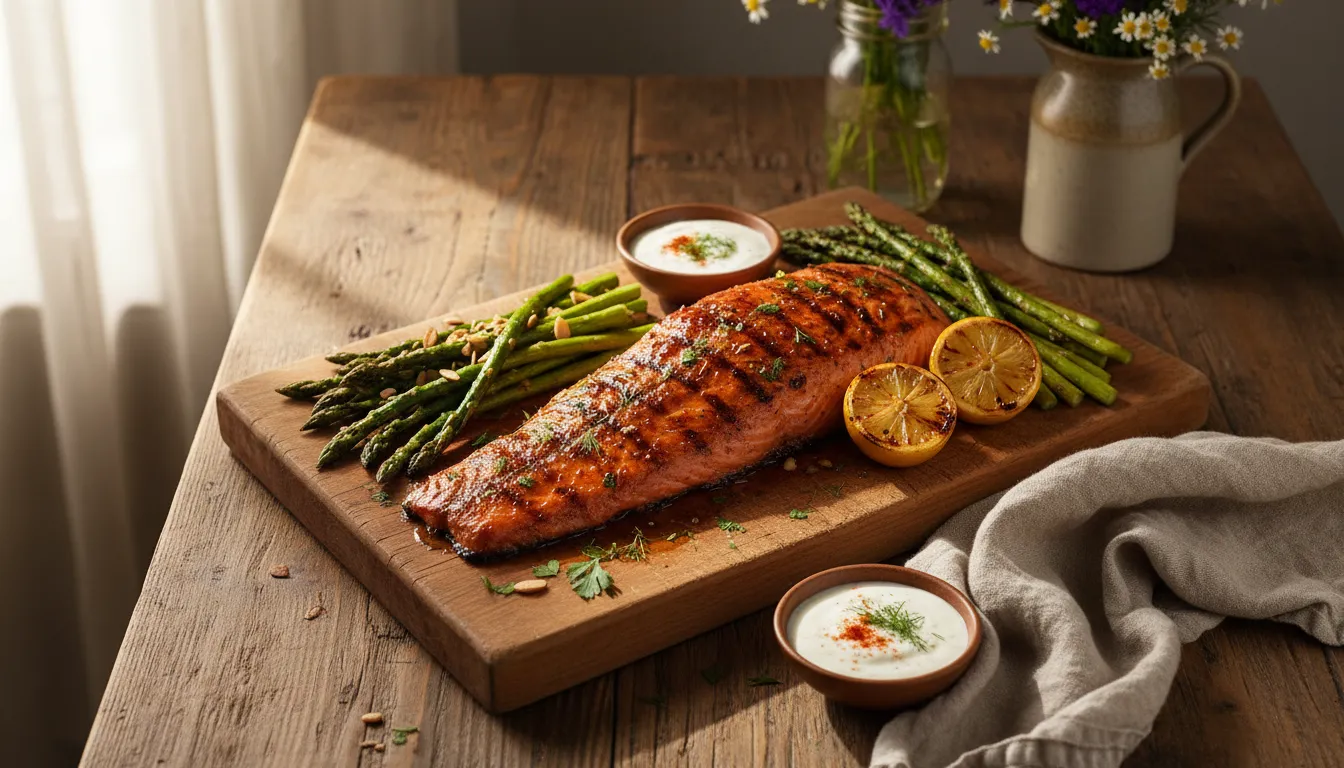
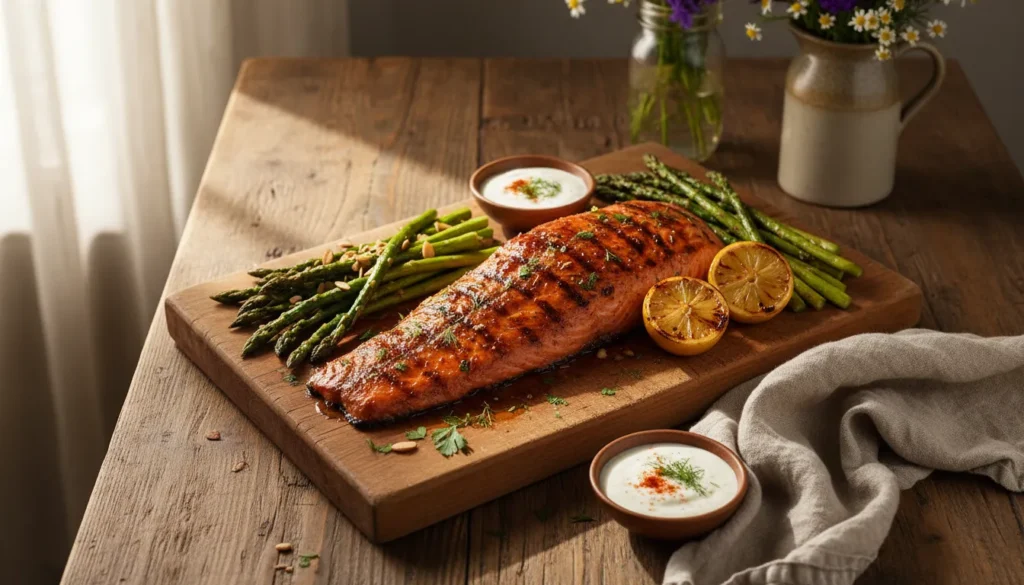
- Grilled asparagus (throw it on the Traeger alongside the fish)
- Lemon herb rice pilaf
- Roasted garlic mashed potatoes
- Mixed green salad with citrus vinaigrette
- Grilled vegetables like zucchini, bell peppers, and red onion
For more side dish inspiration, check out our Traeger Smoked Vegetables Guide and Perfect Garlic Butter Green Beans.
Flavor Variations to Try
Once you master the basic recipe, experiment with these variations:
Asian-Inspired: Replace the herb mixture with soy sauce, ginger, sesame oil, and a touch of brown sugar.
Mediterranean: Use oregano, basil, sun-dried tomatoes, and Kalamata olives in your topping.
Cajun Blackened: Coat with blackened seasoning and increase the grill temp to 350°F for a spicier crust.
Maple Glazed: Brush with pure maple syrup mixed with Dijon mustard and rosemary during the last 10 minutes of cooking.
Frequently Asked Questions
How long does it take to grill salmon on a Traeger at 275°F?
At 275°F, expect 35-40 minutes for 1-inch thick fillets. Thicker pieces may need up to 45 minutes. Always use a thermometer to check doneness rather than relying solely on time.
Do I need to flip salmon on the Traeger?
No! Cook the salmon skin-side down for the entire cooking time. Flipping risks breaking the delicate flesh and losing pieces through the grill grates.
What internal temperature should Traeger grilled salmon reach?
The USDA recommends 145°F for food safety. However, many chefs prefer salmon at 135°F for a more tender, slightly translucent center. I cook mine to 135°F every time.
Can I cook frozen salmon on a Traeger?
You can, but it’s not ideal. Thaw salmon overnight in the refrigerator for best results. Frozen salmon takes longer to cook and won’t absorb seasonings as well.
What’s the best wood pellet flavor for salmon?
Apple wood is my go-to for its mild, slightly sweet smoke. Cherry, alder, and maple also work beautifully. Avoid strong woods like mesquite or hickory—they overpower the fish.
Why This Recipe Works
This Traeger grilled salmon recipe succeeds because of three key factors: consistent low temperature (which prevents overcooking), skin-on fillets (which protect the delicate flesh), and proper seasoning (which creates a flavorful crust while keeping the interior moist).
I’ve tested this method at least 50 times, adjusting variables each time. The 275°F temperature is the sweet spot—high enough to cook the salmon through in reasonable time, low enough to prevent drying.
The herb-butter mixture isn’t just for flavor. The fat content helps conduct heat evenly while creating a protective layer that locks in moisture. It’s the difference between good salmon and great salmon.
The Bottom Line
Traeger grilled salmon is hands-down the easiest way to cook perfect fish every single time. The wood pellet grill’s consistent temperature eliminates guesswork, while the gentle smoke adds restaurant-quality flavor that’ll make you never want to bake salmon again.
This recipe delivers tender, flaky, smoky salmon that’s ready in under 45 minutes from start to finish. It’s healthy, impressive, and simple enough for a Tuesday night but special enough for entertaining.
Rate this recipe and tell us your favorite salmon seasoning in the comments!