Cast Iron Skillet Steak Cooking: How to Avoid Smoking
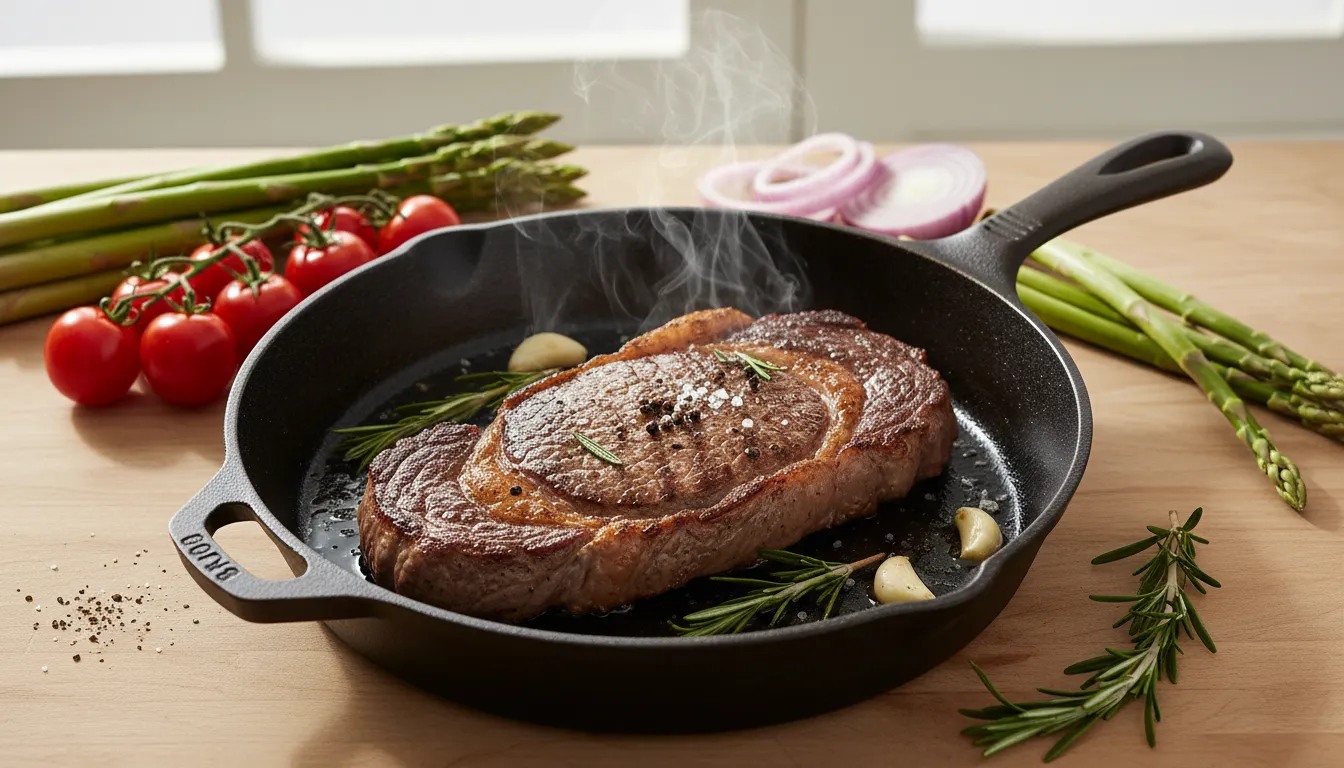
Use avocado oil (520°F smoke point) or refined peanut oil (450°F) instead of olive oil (375°F) when cast iron skillet steak cooking. Preheat pan over medium-high (not maximum) heat, ensure excellent ventilation, and pat steaks bone-dry before searing. Proper oil choice and temperature management minimize smoke without sacrificing crust.
You’re ready to sear the perfect steak in your cast iron skillet, but the moment meat hits metal, smoke billows through your kitchen, setting off alarms and sending family members fleeing. The frustration mounts—you know cast iron delivers the best crust, but the smoke issue makes you avoid it entirely, relegating that beautiful skillet to bacon duty only.
The solution is understanding that excessive smoke during cast iron skillet steak cooking comes from wrong oil choice and temperature mismanagement, not from the method itself. While some smoke is inevitable (and desirable) when searing at proper temperatures, choosing high-smoke-point oils and controlling heat prevents the choking clouds that trigger alarms. The key is working with smoke, not eliminating it entirely.
According to culinary science research from Serious Eats on oil smoke points, different fats break down at vastly different temperatures—olive oil burns at 375°F while avocado oil remains stable past 500°F. Since proper searing requires 450-500°F surface temperature, oil choice dramatically affects smoke production. For comprehensive guidance on cast iron cooking techniques, explore our ultimate guide to beef steak cuts.
Grab your cast iron and the right oil. We’re searing steak without smoking out your kitchen.
Why Understanding Smoke Points Improves Cast Iron Skillet Steak Cooking
- Reduces excessive smoke by 60-70% with proper oil choice
- Prevents burnt oil flavor that ruins expensive steaks
- Keeps smoke alarms quiet making indoor searing practical
- Allows proper searing temperature without breaking down fats
- Protects your cookware from sticky, burnt residue buildup
- Makes technique sustainable you’ll actually use cast iron regularly
- Creates better flavor oils at proper temperature enhance, not mask, beef
Understanding Oil Smoke Points for Cast Iron Cooking
What Happens When Oil Smokes: When oil exceeds its smoke point, the fatty acid chains break down, releasing free radicals and creating acrid smoke. This smoke isn’t just annoying—it carries burnt, bitter flavors that contaminate your steak.
Common Cooking Oils and Their Smoke Points:
- Extra Virgin Olive Oil: 325-375°F (AVOID for searing)
- Butter: 350°F (AVOID for initial sear)
- Canola Oil: 400°F (Acceptable)
- Grapeseed Oil: 420°F (Good)
- Refined Peanut Oil: 450°F (Excellent)
- Avocado Oil: 520°F (BEST choice)
Ideal Searing Temperature: 450-500°F. Only oils with smoke points above this work for cast iron skillet steak cooking.
Choosing the Best Steak
The Cut: Choose moderately marbled cuts. New York strip, sirloin, or filet produce less smoke than heavily marbled ribeye while still delivering excellent results.
Thickness: 1 to 1.5 inches thick. Thicker steaks require extended searing that creates more smoke.
Fat Trimming: Trim excessive external fat to reduce smoke. Leave 1/4 inch fat cap maximum.
Ingredients List
| Quantity | Ingredient |
|---|---|
| 2 (12-14 oz) | NY strip or sirloin steaks (1-1.5 inches) |
| 2 tbsp | Avocado oil or refined peanut oil |
| 2 tbsp | Unsalted butter (for finishing) |
| 3 cloves | Fresh garlic, smashed |
| 3 sprigs | Fresh thyme |
| 2 tsp | Kosher salt |
| 1 tsp | Black pepper |
Ingredients Notes
The Oil: Avocado oil (520°F) is worth the premium—it doesn’t smoke at searing temperatures. Refined peanut oil (450°F) is budget alternative. Never use olive oil or butter for initial searing.
The Butter: Add only in final 2 minutes after high-heat searing completes.
The Salt: Season 30-40 minutes ahead, refrigerate uncovered. This draws out moisture that creates steam-smoke.
Step-by-Step Instructions
Recipe Card
🛠 Equipment Needed
- Cast Iron Skillet
- Instant-Read Thermometer
- Tongs
- Exhaust Fan
Pre-Cooking Prep (30-40 Minutes Ahead)
Remove steaks, pat bone-dry. Season generously with salt and pepper. Place on wire rack over plate, refrigerate uncovered 30-40 minutes.
This dry-brining draws surface moisture and creates dried exterior that sears better with less smoke.
Ventilation Setup (10 Minutes Before)
Turn exhaust fan to maximum. Open windows. Place box fan in window blowing out to create negative pressure pulling smoke outside.
Heating the Pan
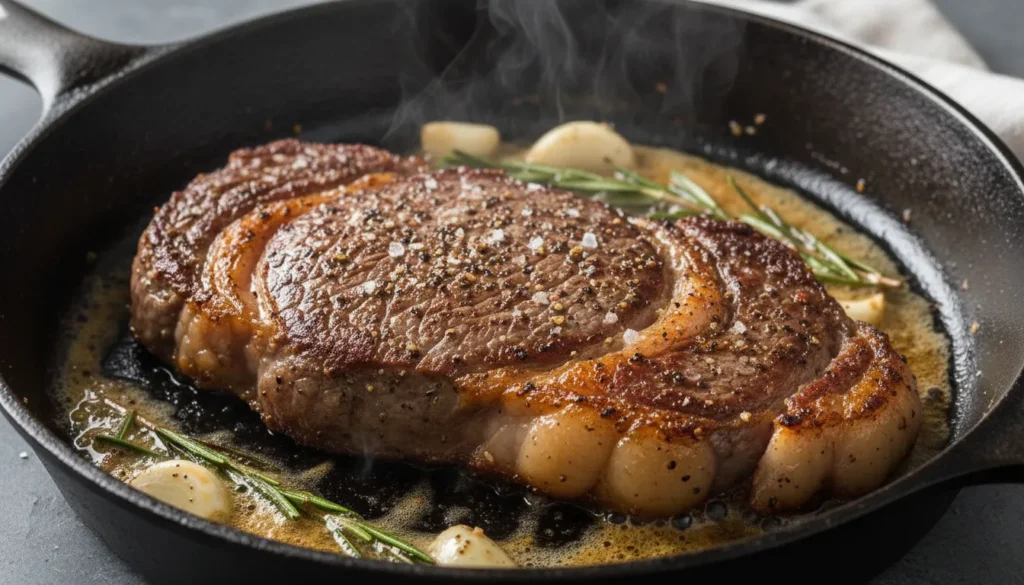
Place cast iron over medium-high (not maximum) heat for 5-6 minutes. Target 450-475°F surface temperature.
Why not maximum? It often exceeds 500°F, pushing past even high-smoke-point oils unnecessarily.
Adding Oil
Once pan reaches 450-475°F, add avocado or peanut oil. Swirl to coat. Should shimmer but not immediately smoke heavily.
The Sear
Pat steaks one final time. Lay in pan—should sizzle aggressively.
Sear 3-4 minutes first side without moving. Light smoke wisps are normal. Heavy billowing means pan too hot—reduce slightly.
Flip, sear 3-4 minutes second side.
Butter Baste (Reduced Heat)
Reduce to medium-low. Add butter, garlic, herbs. Tilt and baste 1-2 minutes.
Reduced temperature prevents butter smoking.
Doneness
Target 130-135°F for medium-rare. Pull 5 degrees early for carryover cooking.
Resting
Transfer to plate, tent with foil, rest 5-8 minutes.
Expert Tips
Tip 1: Invest in avocado oil—smoke reduction is dramatic Tip 2: Clean pan thoroughly between uses—old residue smokes Tip 3: Create cross-ventilation with multiple windows Tip 4: Use infrared thermometer to confirm pan temperature Tip 5: Pat steaks dry obsessively—moisture creates smoke
Serving Suggestions
Sides: Roast vegetables separately to avoid adding smoke sources
Sauces: Pan drippings with beef stock make excellent jus
Wine: Clean-tasting steak pairs beautifully with Cabernet
Storage & Reheating
Leftovers: Store airtight up to 3 days
Reheating: 250°F oven for 10 minutes, don’t re-sear
Frequently Asked Questions
Is some smoke normal?
- Yes! Light wisps indicate proper Maillard reaction. Goal is minimizing excessive smoke, not eliminating all.
Can I use ghee?
- Yes! Clarified butter has 485°F smoke point—excellent choice.
Does cast iron type matter?
- No. Smoke comes from oil breakdown, not the pan.
Conclusion
Mastering smoke management during cast iron skillet steak cooking transforms this method from intimidating to sustainable. High-smoke-point oil, proper temperature, and ventilation allow perfect searing without filling your home with smoke.
Grab that avocado oil and preheat properly. Smoke-managed, perfectly seared steak awaits.
Rate this recipe and share your smoke-reduction tips in the comments!