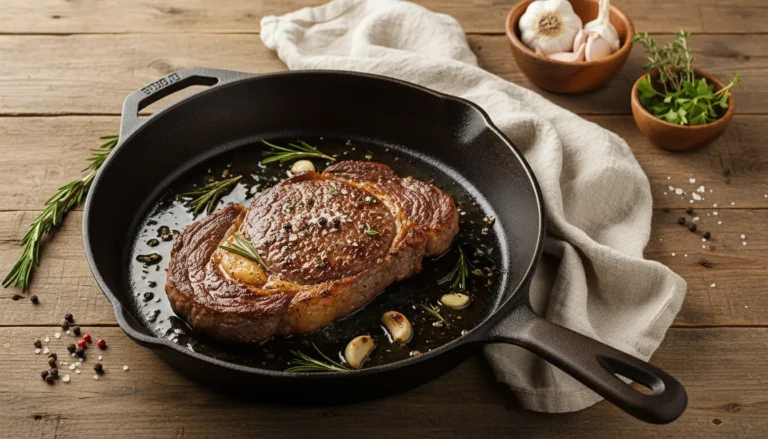
Lamb Loin Steaks Recipes: How to Pan Sear Perfectly
Sear seasoned lamb loin steaks in a smoking-hot skillet for 2-3 minutes per side until internal temperature reaches 130-135°F for medium-rare. The delicate, tender loin cooks quickly—overcooking ruins its buttery texture. Rest 5 minutes before serving for elegant, restaurant-quality results.
You’ve walked past the lamb section at the butcher counter, intimidated by unfamiliar cuts and worried about that “gamey” flavor you’ve heard about. Meanwhile, date night approaches and you want something more sophisticated than another chicken breast or beef steak. The hesitation is understandable—lamb loin steaks are less forgiving than beef, and cooking them wrong results in expensive disappointment.
The solution is understanding that lamb loin steaks are one of the most tender, mild-flavored cuts of lamb available—far from the strong-tasting mutton of reputation. When sourced from young lamb and cooked properly to medium-rare, loin steaks rival filet mignon in texture while offering subtle, sophisticated flavor. This lamb loin steaks recipe delivers restaurant elegance with weeknight timing.
The key to success is respecting lamb loin’s delicate nature. Unlike heavily-marbled beef ribeye that forgives overcooking, lean lamb loin becomes tough and dry beyond medium doneness. Quick, high-heat searing develops crust while preserving the pink, buttery interior that makes this cut special. For broader context on different protein cuts and cooking approaches, explore our ultimate guide to beef steak cuts for transferable techniques.
Grab your best skillet and prepare to impress. We’re making date-night-worthy lamb loin steaks.
Why This Lamb Loin Steaks Recipe is Better Than Restaurant Versions
- Ready in 15 minutes from pan to plate
- Impressive presentation for romantic dinners or special occasions
- Naturally tender requires no marinating or tenderizing
- Mild, sophisticated flavor appeals even to lamb skeptics
- Cost-effective luxury at $12-18 per pound versus $45+ at restaurants
- Simple technique achieves professional results
- Versatile pairing options work with countless flavor profiles
Choosing the Best Lamb Loin Steaks
The Cut: Lamb loin (also called lamb loin chops when bone-in, or noisettes when boneless) comes from the back of the lamb between the ribs and leg. It’s the equivalent of beef tenderloin—exceptionally tender with minimal fat. Look for boneless loin steaks for the easiest cooking and eating experience.
Color and Freshness: According to the USDA’s lamb quality standards, high-quality lamb should be light to dark pink (never grey), with white, firm fat. Darker meat comes from older sheep and has stronger flavor. For this lamb loin steaks recipe, choose the lightest pink available.
Thickness: Buy steaks 3/4 to 1 inch thick. Thinner steaks overcook in seconds; thicker ones are harder to cook evenly. The 1-inch thickness provides the best margin for achieving perfect medium-rare.
Fat Cap: Unlike beef, lamb fat is more polarizing. Some find it delicious; others dislike the flavor. Look for loin steaks with minimal external fat—the lean nature is part of the cut’s appeal. A thin fat cap is acceptable and can be trimmed after cooking if desired.
Buying Tips: Purchase from butchers who specialize in lamb or ethnic markets (Middle Eastern, Greek) where turnover is high and freshness guaranteed. Avoid pre-packaged lamb that’s been sitting for days.
Ingredients List
| Quantity | Ingredient |
|---|---|
| 4 (4-6 oz) | Boneless lamb loin steaks (3/4 to 1 inch thick) |
| 2 tbsp | High-heat oil (avocado or grapeseed) |
| 2 tbsp | Unsalted butter |
| 4 cloves | Fresh garlic, smashed |
| 4 sprigs | Fresh rosemary (traditional pairing) |
| 2 tsp | Kosher salt |
| 1 tsp | Coarse black pepper |
| 1 tsp | Fresh thyme leaves (optional) |
| 1/2 tsp | Garlic powder (optional) |
Optional Flavor Additions:
| Quantity | Ingredient |
|---|---|
| 1 tsp | Dijon mustard (for brushing before searing) |
| 1/2 tsp | Fresh mint, chopped (for finishing) |
| Pinch | Red pepper flakes (for subtle heat) |
Ingredients Notes
The Oil: High smoke-point oils are essential for the intense heat required. Lamb loin cooks so quickly that you need maximum heat without burning oil. Avocado oil (520°F) is ideal. Never use butter alone for searing—it burns before the pan gets hot enough.
The Rosemary: This classic pairing with lamb is nearly sacred in European cuisine. Rosemary’s pine-like aromatics complement lamb’s subtle flavor without overwhelming it. Fresh rosemary is vastly superior to dried for this application.
The Salt Timing: For lamb loin, salt immediately before cooking rather than hours ahead. The delicate meat can become mushy with extended salting. Pat dry, season, and sear within 5 minutes.
Mint Consideration: Mint sauce is traditional with lamb in British cuisine, but use sparingly. Fresh mint as a garnish adds brightness; too much makes the dish taste like toothpaste.
Step-by-Step Instructions for Lamb Loin Steaks
Recipe Card
🛠 Equipment Needed
- Cast Iron Skillet or Heavy Stainless Steel Pan
- Instant-Read Thermometer
- Kitchen Tongs
- Basting Spoon
Prep & Seasoning
Remove lamb loin steaks from refrigeration 20-30 minutes before cooking to reach room temperature. Lamb cooks faster than beef, so it needs less time out of the fridge.
Pat both sides completely dry with paper towels. Any surface moisture prevents proper browning and creates steam instead of sear.
Season both sides generously with kosher salt and black pepper. Press the seasoning into the meat. Optional: brush lightly with Dijon mustard for additional flavor and crust development.
Heating the Pan
Heat a cast iron skillet or heavy stainless steel pan over high heat for 4-5 minutes until wisps of smoke appear. Lamb loin requires aggressive heat to develop crust quickly before the interior overcooks.
Add high-smoke-point oil and swirl to coat the bottom. The oil should shimmer immediately and nearly smoke.
The Sear
Carefully place lamb loin steaks in the pan, laying away from you to avoid oil splatter. Don’t overcrowd—cook in batches if necessary, leaving 2 inches between steaks.
Critical: Do not move the steaks for 2-3 minutes. Lamb loin is so tender that excessive handling can damage the delicate texture. Let physics work—the steak will release naturally when the crust forms.
Timing for 1-inch Steaks:
- Rare (120-125°F): 2 minutes per side
- Medium-Rare (130-135°F): 2.5-3 minutes per side – RECOMMENDED
- Medium (140-145°F): 3.5-4 minutes per side
Flip using tongs. The first side should display rich brown caramelization with some charred edges.
The Butter Baste
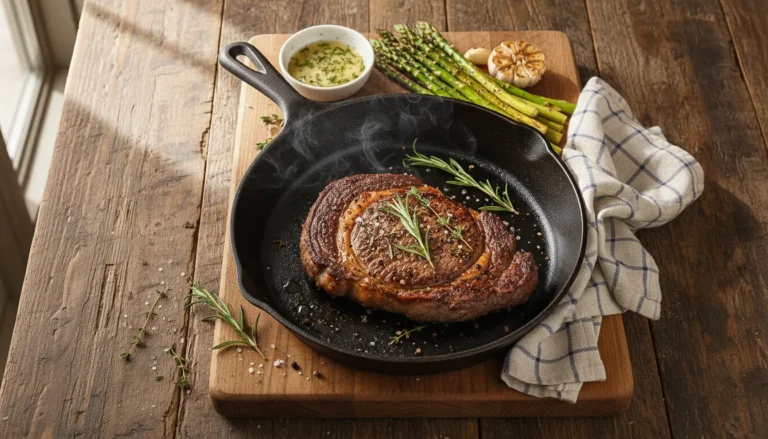
After flipping, immediately reduce heat to medium and add butter, smashed garlic, and fresh rosemary sprigs. Tilt the pan slightly and use a large spoon to baste the lamb continuously with the aromatic butter for 1-2 minutes.
This French technique (arroser) adds richness while the rosemary and garlic infuse the butter with flavor that then coats the meat. The butter also gently finishes cooking the top surface without additional flipping.
Doneness Guide
Lamb loin is best served medium-rare to medium. Beyond 145°F, the texture becomes disappointingly tough and dry:
- Rare: 120-125°F (cool pink-red center, very tender)
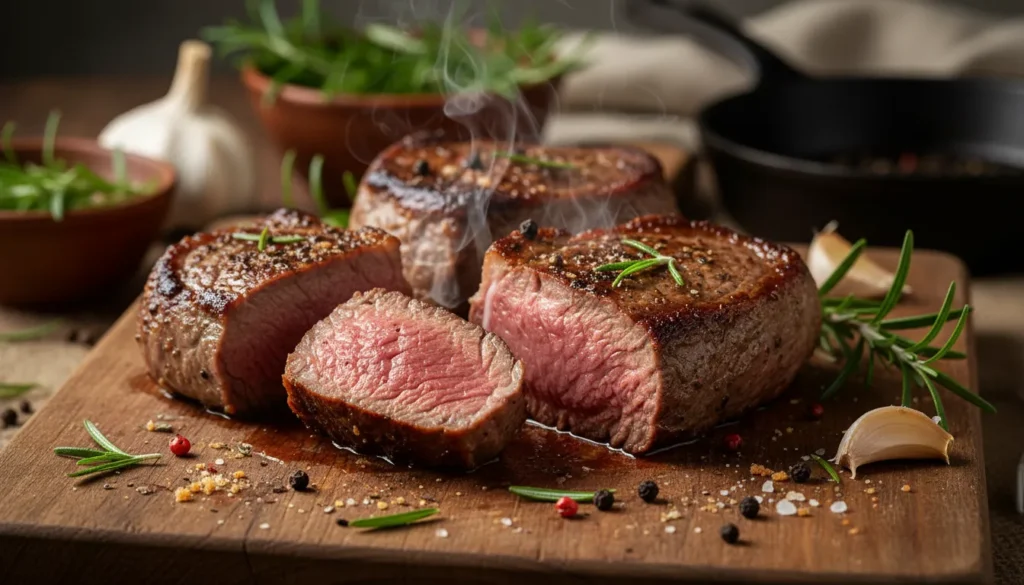
- Medium-Rare: 130-135°F (warm pink center, ideal texture) – STOP HERE
- Medium: 140-145°F (hot pink center, acceptable but firmer)
- Beyond Medium: NOT RECOMMENDED for loin
Insert an instant-read thermometer horizontally into the thickest part. Pull steaks at 130°F for perfect medium-rare after resting.
Resting
Transfer lamb loin steaks to a warm plate or cutting board. Tent loosely with foil and rest for 5 minutes minimum. The small size means resting is quick but still essential—cutting immediately releases those flavorful juices.
During rest, internal temperature will rise 5 degrees due to carryover cooking.
Expert Tips for Perfect Lamb Loin Steaks
Tip 1: Don’t Overcook This is the single most important rule for lamb loin steaks recipes. The cut’s tenderness disappears entirely if cooked past medium. When in doubt, undercook slightly—you can always return it to the pan for 30 seconds, but you can’t undo overcooked lamb.
Tip 2: Pat Dry Religiously Lamb naturally contains more moisture than beef. Triple-check that the surface is bone-dry before seasoning and searing. Wet lamb steams and never develops proper crust.
Tip 3: Room Temperature Matters Cold lamb straight from the fridge hits the hot pan and the interior stays cool while the exterior overcooks. The 20-30 minute rest at room temperature ensures even cooking.
Tip 4: Use Fresh Herbs Generously Dried rosemary tastes like pine needles on lamb. Fresh rosemary, thyme, and oregano are worth the expense—their aromatic oils bloom in the butter and make the dish memorable.
Tip 5: Source Quality Lamb Domestic American lamb (especially from Colorado or California) tends to be milder than imported Australian or New Zealand lamb. If you’ve had negative lamb experiences, try domestic sources.
Serving Suggestions & Elegant Pairings
Sides: Mediterranean-inspired sides complement lamb beautifully: roasted baby potatoes with lemon and oregano, ratatouille, grilled asparagus, or creamy polenta. Greek-style orzo with feta and herbs makes an impressive pairing.
Sauces: Red wine reduction with rosemary, mint pesto (not mint sauce—fresh mint blended with olive oil, pine nuts, and garlic), or chimichurri add sophistication. Many prefer just a drizzle of the garlic-rosemary butter from the pan.
Wine Pairing: Lamb’s subtle gaminess pairs beautifully with medium-bodied reds. Try Côtes du Rhône, Pinot Noir, or Merlot. For white wine lovers, oaked Chardonnay has enough body to match the richness.
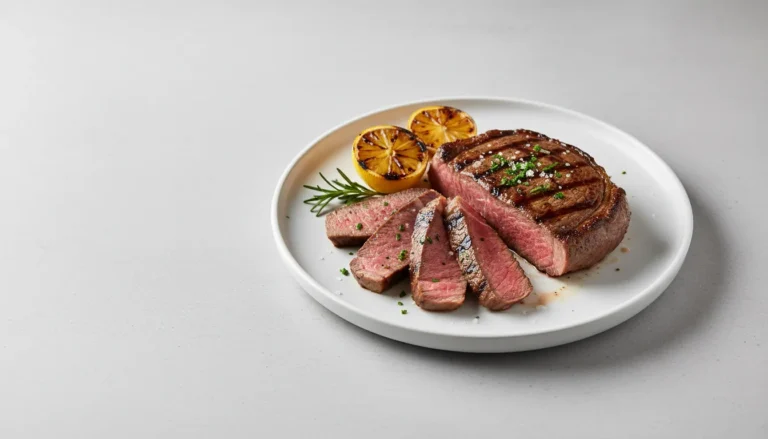
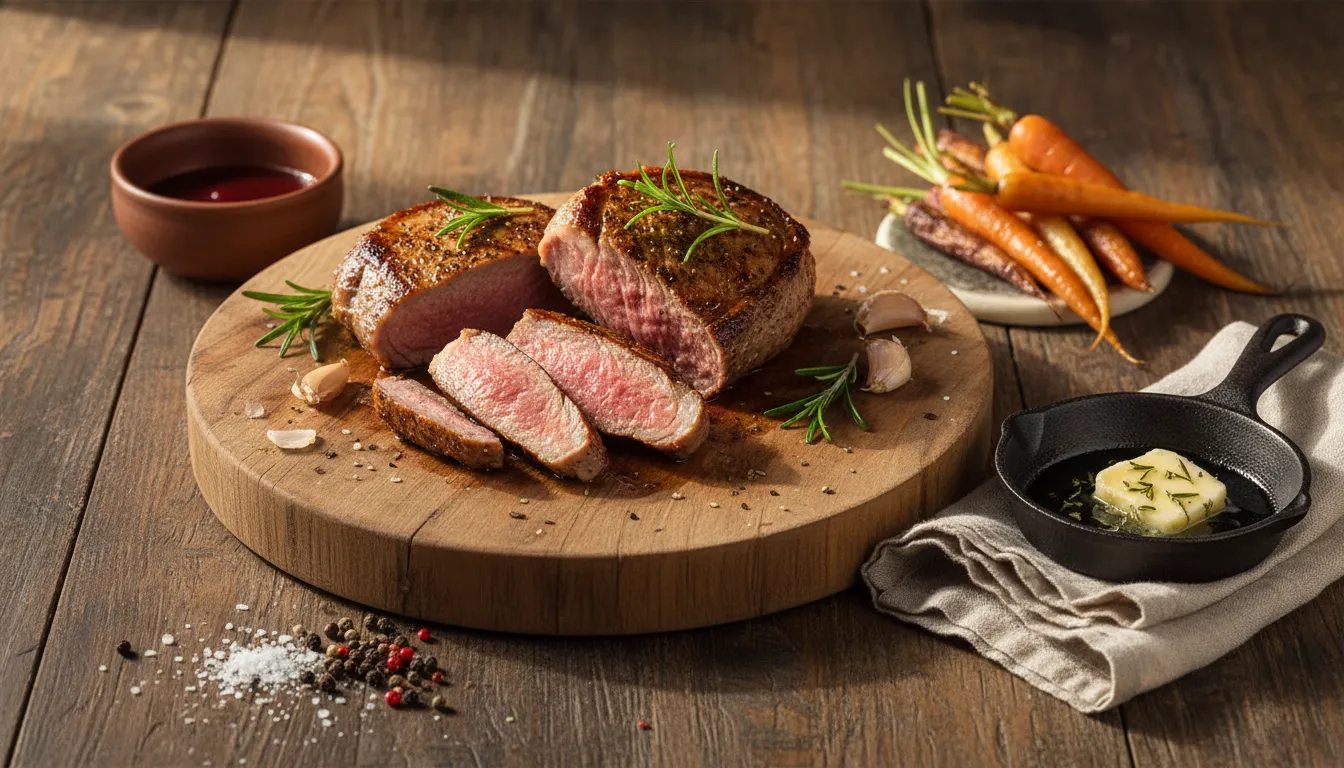
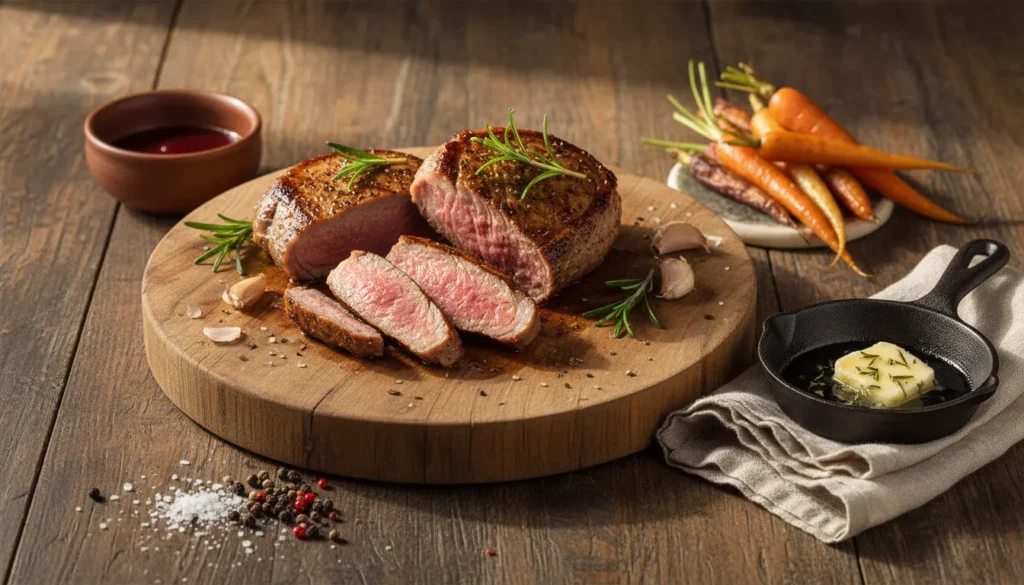
Presentation: Slice lamb loin steaks on the bias to showcase the pink interior. Fan the slices slightly on the plate. Garnish with fresh rosemary sprigs and a drizzle of finishing oil.
Variations on Lamb Loin Steaks Recipes
Greek-Inspired: Marinate for 2 hours in olive oil, lemon juice, garlic, oregano, and a pinch of cinnamon. Serve with tzatziki sauce.
Moroccan Spice: Rub with ground cumin, coriander, cinnamon, and paprika before searing. Finish with honey-harissa glaze.
Provençal Style: After searing, deglaze pan with white wine and Dijon mustard. Add fresh thyme and tarragon.
Asian Fusion: Marinate in soy sauce, ginger, sesame oil, and rice vinegar. Serve with stir-fried bok choy.
Storage & Reheating
Leftovers: Store in an airtight container for up to 2 days maximum. Lamb’s delicate flavor deteriorates faster than beef. Slice thinly for the best leftover experience.
Reheating: Bring to room temperature, then warm gently in a 250°F oven for 8-10 minutes. Alternatively, slice cold lamb and serve over salad—the Mediterranean approach.
Creative Uses: Leftover lamb loin is exceptional in grain bowls with farro, arugula, roasted vegetables, and tahini dressing. Greek-style lamb wraps with hummus and cucumber also excel.
Frequently Asked Questions
Will lamb loin taste gamey?
- Properly sourced young lamb loin is one of the mildest cuts available—often milder than some grass-fed beef. If you’ve disliked lamb in the past, it was likely older mutton or overcooked. This lamb loin steaks recipe showcases the meat’s subtle, sophisticated flavor.
Can I use lamb loin chops instead of steaks?
- Yes. Bone-in loin chops cook identically but look more dramatic on the plate. The bone conducts heat, so they may finish 30 seconds faster than boneless steaks of equal thickness.
How do I know when it’s done without a thermometer?
- The touch test is less reliable with lamb than beef due to its lean nature. Invest in an instant-read thermometer ($15)—it’s the only way to consistently nail medium-rare without cutting into the steak.
Why does my lamb stick to the pan?
- Either the pan wasn’t hot enough, you moved the steak too early, or surface moisture remained. Wait until you see smoke before adding oil, pat steaks completely dry, and don’t touch them for 2-3 minutes.
Is it safe to eat lamb medium-rare?
- Yes. According to the USDA, lamb is safe at 145°F (medium), though many chefs and diners prefer 130-135°F (medium-rare) for optimal texture and flavor. Use quality lamb from reputable sources.
Conclusion
This lamb loin steaks recipe proves that sophisticated, restaurant-quality meals don’t require complex techniques or expensive ingredients—just respect for the protein and attention to timing. Lamb loin’s natural tenderness and mild flavor make it accessible even to those who think they don’t like lamb. The quick cooking time and impressive presentation make it ideal for date nights or special occasions when you want to look like a culinary genius without the stress.
Once you’ve experienced perfectly cooked lamb loin—that tender, rosy interior with aromatic rosemary-butter coating—you’ll add it to your regular rotation. It’s proof that sometimes the simplest preparations highlight ingredients best.
Heat that pan to screaming hot and trust the process. Your most elegant dinner awaits.
Rate this recipe and tell us your favorite lamb pairing in the comments!