Asian Cuisine Recipes Easy: How to Balance Sweet and Sour
Master the sweet-and-sour sauce formula in 15 minutes with just three pantry staples — soy sauce, rice vinegar, and sugar — and use it on stir fries, noodles, or glazed proteins. The shortcut? A simple ratio (2:1:1 soy to vinegar to sugar) that you can memorize and never need a recipe again. This is the weeknight sauce hack that makes everything taste like takeout.
You’ve tried making Asian food at home and it tasted… fine. Not bad, but nowhere close to your favorite takeout. The chicken was cooked, the veggies were acceptable, but the sauce — that glossy, perfectly balanced coating that makes restaurant food addictive — was missing entirely.
The problem isn’t your cooking. It’s your sauce ratios. These asian cuisine recipes easy teach you the one formula that professional cooks use to balance sweet, sour, salty, and savory flavors. Once you learn it, every stir fry, noodle bowl, and glazed protein in your kitchen levels up instantly.
If you’re looking for more easy weeknight dinner ideas beyond Asian cooking, our ultimate guide on what to cook for dinner has dozens of quick meals across every cuisine.
Why this works: Asian sauces are built on balance. Soy sauce provides salt and umami, vinegar provides tang and brightness, and sugar rounds out the sharp edges. When these three elements are in the right proportion, the sauce tastes complex and layered — even though it took 30 seconds to mix.
Put down the takeout menu. We’re mastering sweet and sour sauce in 15 minutes.
Why This Sweet and Sour Method Is a Weeknight Lifesaver
- Only 3 core ingredients — soy sauce, rice vinegar, and sugar
- One ratio to memorize — 2:1:1 works every time
- Pairs with anything — chicken, shrimp, tofu, pork, or vegetables
- 15 minutes total — mix the sauce, cook the protein, toss together
- No specialty ingredients — all available at any grocery store
- Endlessly customizable — add garlic, ginger, chili, or sesame for variations
Ingredients & Swaps
The Basics: The sweet-and-sour formula starts with three ingredients you likely have right now. Everything else is customization built on top of this foundation.
Flexible Swaps — Don’t have X? Use Y:
- No rice vinegar? Apple cider vinegar works — it’s slightly fruitier but balances the same way.
- No soy sauce? Tamari (gluten-free) or coconut aminos (lower sodium) are direct swaps.
- No white sugar? Brown sugar adds a caramel depth, or honey creates a silky glaze.
- No cornstarch for thickening? Reduce the sauce over high heat for 2 extra minutes until it naturally thickens.
- No sesame oil? Skip it — the sauce is excellent without it. Or add a sprinkle of toasted sesame seeds for similar nutty flavor.
Ingredients List
| Quantity | Ingredient |
|---|---|
| 3 tbsp | Soy sauce |
| 1½ tbsp | Rice vinegar |
| 1½ tbsp | Sugar (white or brown) |
| 1 tbsp | Cornstarch (mixed with 2 tbsp water) |
| 1 lb | Protein (chicken, shrimp, pork, or tofu) |
| 3 cups | Vegetables (bell pepper, pineapple, onion) |
| 2 cloves | Garlic, minced |
| 1 tbsp | Vegetable oil |
| 1 tsp | Sesame oil (optional, for finishing) |
| 1 tsp | Fresh ginger, grated (optional) |
Ingredient Notes
Pre-Prepped Items:
- Mix the sauce in advance — combine soy sauce, vinegar, and sugar in a jar or small bowl before you start cooking. Having the sauce ready means you can pour it in the moment everything is hot, which is critical for stir frying. Pre-mixed sauce keeps in the fridge for up to 2 weeks, so make a double batch.
Flavor Bombs:
- The cornstarch slurry is what makes sauce glossy. Restaurant sauces cling to food because they’re thickened with cornstarch — not because they simmer for hours. Mix 1 tablespoon cornstarch with 2 tablespoons cold water, add it to the hot sauce, and it transforms from thin liquid to glossy, clingy perfection in 30 seconds.
- A splash of ketchup (1 tablespoon) is the secret ingredient in many Chinese-American sweet-and-sour sauces. It adds color, tomato sweetness, and body. According to Healthline’s guide to soy sauce, soy sauce is rich in umami flavor compounds that enhance the taste of other ingredients.
Step-by-Step Instructions
Recipe Card
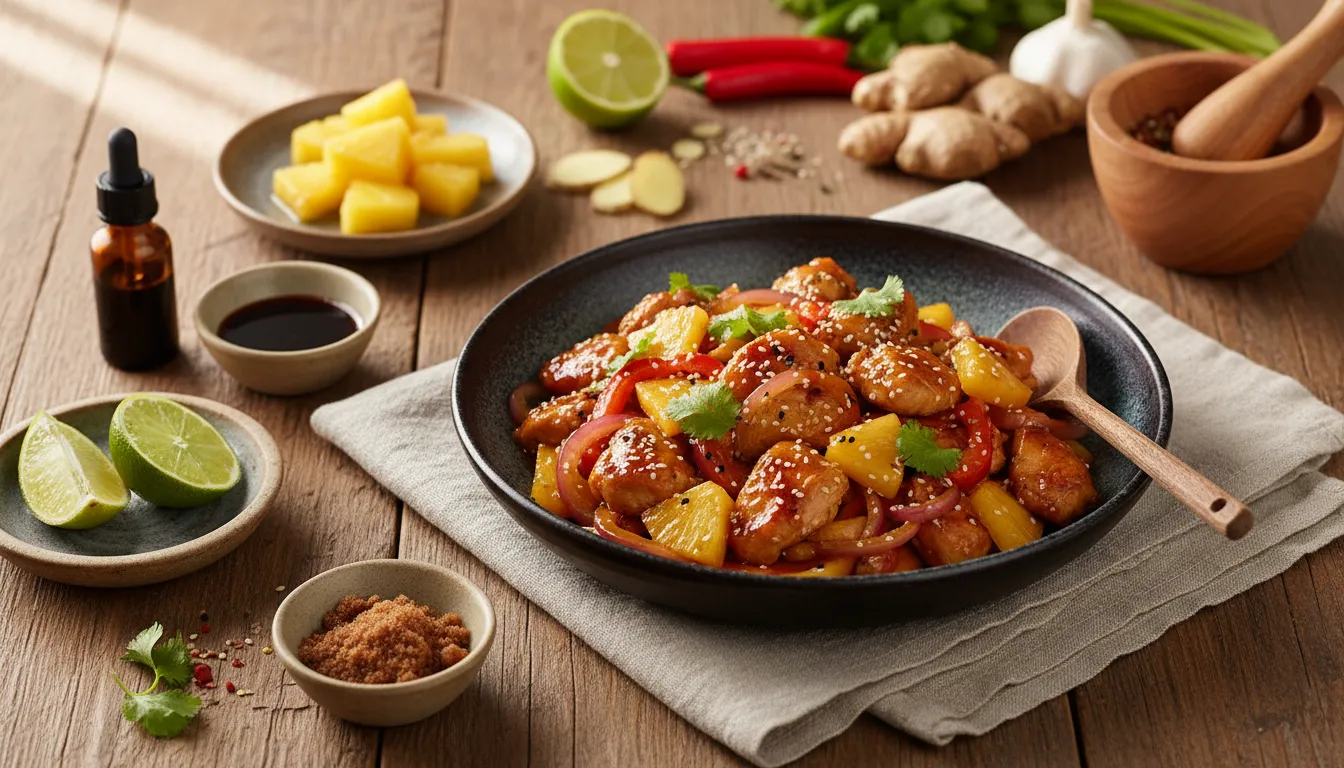
🛠 Equipment Needed
- One Large Skillet or Wok
- Small Mixing Bowl
Prep (5 Minutes)
Mix the sauce first — it takes 30 seconds and everything else depends on it. Whisk soy sauce, rice vinegar, and sugar together in a small bowl until the sugar dissolves. In a separate tiny bowl, mix the cornstarch with cold water. Set both near the stove.
The Method
- Cut your protein into bite-sized pieces. Use kitchen shears for chicken — it’s faster than a knife.
- Heat vegetable oil in a large skillet or wok over high heat until it shimmers.
- Cook the protein in a single layer for 2 to 3 minutes per side until golden. Remove to a plate.
- Add vegetables to the same hot pan. Cook for 2 to 3 minutes until crisp-tender.
- Return the protein to the pan. Add garlic and ginger, stir for 30 seconds.
- Pour in the sauce mixture. Toss everything to coat.
- Add the cornstarch slurry and stir constantly for 30 seconds. The sauce will thicken and turn glossy almost immediately.
- Finish with sesame oil (if using) and serve over steamed rice.
The Shortcut
The 2:1:1 ratio eliminates recipe-hunting forever. Two parts soy sauce, one part vinegar, one part sugar. Scale it up or down for any amount of food. Making dinner for two? Use 2 tbsp soy, 1 tbsp vinegar, 1 tbsp sugar. Cooking for a crowd? Use 6 tbsp soy, 3 tbsp vinegar, 3 tbsp sugar. Same perfect balance every time, no recipe needed.
Finish
The dish is done when the sauce is glossy and coats the back of a spoon, the protein is cooked through, and the vegetables are bright and crisp-tender. Taste and adjust — need more tang? Splash of vinegar. Too sharp? Pinch more sugar. Too salty? Squeeze of lime juice.
3 Tips for Faster Cleanup
- One Pan, Start to Finish: Cook protein, remove, cook vegetables in the same pan, add protein back, sauce, done. One pan total.
- Pre-Mix Sauce Jars: Make a batch of the 2:1:1 sauce mixture on Sunday and store it in a mason jar. Pour and cook all week — zero mid-week measuring.
- Soak the Pan Immediately: Sweet-and-sour sauce caramelizes and hardens fast. Fill the pan with hot soapy water the moment you plate — it’ll practically wash itself.
Serving Suggestions
Instant Sides: Microwavable steamed rice, instant ramen noodles (skip the seasoning packet and use your sweet-and-sour sauce instead), or a simple cucumber salad with rice vinegar.
Toppings: Sliced green onions, toasted sesame seeds, a drizzle of sriracha, or crushed peanuts add texture and visual appeal.
Storage & Leftovers
Fridge: Store leftovers in an airtight container for up to 3 days. Reheat in a skillet over medium heat — the microwave works but the sauce won’t be as glossy.
Freezer: Freeze the cooked dish (protein and sauce) in ziplock bags laid flat for up to 2 months. Cook fresh rice and vegetables when you reheat. The pre-mixed sauce (without cornstarch) freezes indefinitely — thaw, add cornstarch slurry fresh when cooking.
Frequently Asked Questions
Can I double this recipe? Absolutely. The ratio stays the same no matter the quantity. Just use a bigger pan and cook protein in batches to keep the heat high.
Is this spicy? Not at all as written. This is a sweet-and-sour profile, not a spicy one. Add red pepper flakes, chili garlic sauce, or a diced fresh chili to individual portions for heat. The base recipe is completely kid-friendly.
Can I make this in a slow cooker instead? Yes — combine the protein, vegetables, and sauce (skip the cornstarch) in the slow cooker. Cook on low for 3 to 4 hours. Stir in the cornstarch slurry during the last 15 minutes on high to thicken. The flavor deepens beautifully with slow cooking.
Conclusion
You just learned the one sauce ratio that makes every Asian-inspired dish in your kitchen taste like takeout — 2:1:1, soy to vinegar to sugar. Memorize it, scale it, and customize it. You’ll never need another bottled sauce again.
Ready for more asian cuisine recipes easy enough for any weeknight? Explore our ultimate guide to quick and easy meals for your next dinner idea.
Saved your evening? Rate this recipe 5 stars!